Why Korean Culture Became So Popular Worldwide
Twenty years ago, many people outside Asia knew very little about South Korea. Some recognized Samsung or Hyundai. Others vaguely remembered Korean War history. But for most people, Korea was not considered a major cultural influence globally.
Today, the situation looks completely different.
K pop groups sell out stadiums across continents. Korean dramas dominate global streaming platforms. Korean skincare became mainstream in Western beauty markets. Korean food appears in cities worldwide. Millions of people study Korean online every year.
Even Korean dating culture, fashion, lifestyle habits, and convenience store culture became international conversation topics. So what actually happened? Why did Korean culture suddenly become so globally powerful?
The answer is more complicated than simply “K pop became famous.”
Korean culture became popular worldwide because it combined emotional storytelling, visual perfection, internet timing, modern identity, and cultural relatability in ways that connected deeply with younger global generations. And perhaps most importantly, Korea learned how to make people emotionally curious.

Korean Entertainment Focuses Strongly on Emotion
One major reason Korean culture spread globally is emotional storytelling. Korean dramas especially became internationally successful because they focus heavily on emotional tension, vulnerability, relationships, ambition, loneliness, family pressure, sacrifice, heartbreak, and personal growth. These themes feel deeply human everywhere.
Even viewers who know nothing about Korean society often emotionally connect to the characters quickly. Korean dramas also tend to build emotional intensity carefully over time rather than relying only on action or fast pacing. This creates strong emotional attachment for viewers. Many foreigners who first became interested in Korea often started through emotional connection to Korean dramas rather than through music or tourism.

K Pop Was Built for the Internet Era
K pop also arrived at the perfect historical moment. Social media platforms like YouTube, TikTok, Instagram, and Twitter allowed Korean entertainment companies to spread content globally without depending on traditional Western media gatekeepers.
K pop groups were visually polished, highly choreographed, emotionally engaging, and extremely active online. Fans worldwide could instantly access performances, livestreams, interviews, dance clips, and fan communities from anywhere.
Unlike older entertainment industries that depended heavily on television networks or local distribution systems, K pop expanded globally through internet culture itself. This made younger international audiences feel personally connected to Korean artists in ways previous generations rarely experienced.
Korea Feels Both Modern and Traditional Simultaneously
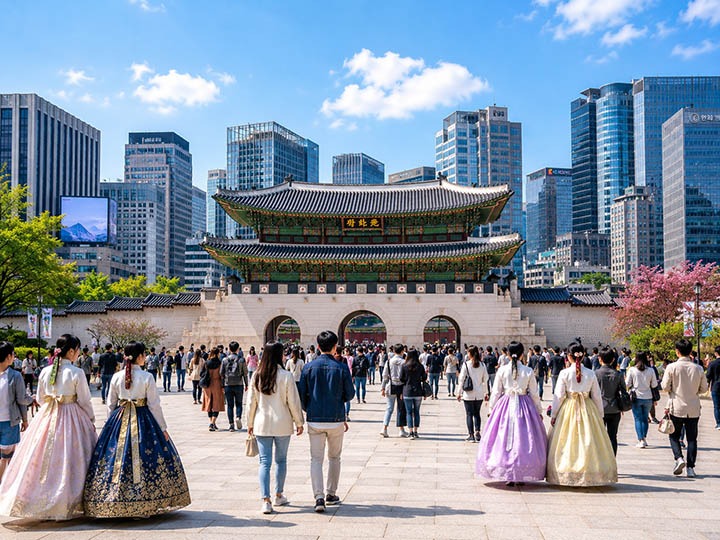
Another reason Korean culture feels interesting globally is the balance between modernity and tradition. Seoul looks futuristic and technologically advanced. At the same time, Korean society still strongly values family, emotional loyalty, respect toward elders, and social connection. For many foreigners, this combination feels emotionally fascinating.
Korea appears modern without completely abandoning traditional emotional values. Many people especially find Korean relationships, family culture, and social interaction emotionally different from highly individualistic Western societies. This creates curiosity far beyond entertainment itself.

Korean Beauty Culture Changed Global Standards
K beauty became globally successful because Korea approached beauty differently from many Western brands. Instead of focusing only on heavy makeup or luxury image, Korean skincare emphasized prevention, skin health, hydration, layering, and daily routines.
Korean beauty marketing also felt younger, cleaner, softer, and more approachable visually. Social media helped spread Korean skincare routines rapidly because the products photographed well and showed visible results. Today, Korean skincare products are sold globally not only because of trends but because many consumers genuinely trust Korean beauty innovation.

Korean Food Became Emotionally Marketable
Korean food also expanded globally very quickly over the past decade. Part of the reason is visual appeal. Foods like tteokbokki, Korean fried chicken, ramyeon, kimchi, and samgyeopsal look highly appealing online and fit modern food content culture perfectly. But another reason is emotional atmosphere.
Korean meals often feel communal and social. Sharing food together, grilling meat at the table, side dishes, drinking culture, late night meals, and emotional comfort foods all became emotionally attractive to global audiences. Many foreigners now associate Korean food with warmth, friendship, and social experience rather than simply taste alone.

Korean Culture Feels Aspirational to Many Young People
For many international fans, Korea represents ambition, self improvement, style, emotional sensitivity, and creativity. Korean fashion, skincare, cafes, city aesthetics, study culture, and entertainment industries all create an image of highly motivated modern life.
Of course, real Korean society also contains intense pressure, burnout, competition, and emotional exhaustion. But internationally, many young people still view Korea as exciting, dynamic, and emotionally stylish. This aspirational image became extremely powerful online.
The Korean Language Became Part of the Experience
Another interesting shift is language itself. Years ago, very few foreigners learned Korean casually. Today, millions of people study Korean through apps, online videos, university courses, and fan communities. Words like oppa, unnie, daebak, saranghae, and aegyo became globally recognizable among younger audiences.
Language learning created deeper emotional attachment to Korean culture itself. People no longer only consumed Korean content. They wanted to understand Korea directly.
Korea Became Extremely Skilled at Visual Presentation
Korean media industries also became masters of visual detail. Music videos, dramas, fashion photography, cafes, packaging, skincare branding, food presentation, and even convenience stores are designed with strong visual identity. Everything feels intentional.
This visual consistency works extremely well in the social media era where aesthetics strongly influence attention. Korean culture became highly shareable online because it looked visually satisfying everywhere.
Global Fans Also Created Korean Culture’s Success
One important reality many people overlook is this: Korean culture did not spread globally alone. International fans helped build the Korean Wave together.
Fan communities translated content, organized online events, promoted artists, shared information, and introduced Korean culture to local communities worldwide. In many ways, Korean culture became global because audiences emotionally participated in spreading it themselves. That emotional participation created unusually strong loyalty compared to many other entertainment industries.
Korean Culture Changed Korea’s Global Image Completely
Perhaps the biggest transformation is how the world emotionally sees Korea today. In the past, Korea was often associated mainly with war history, manufacturing, or political tension. Today, millions of people associate Korea with music, beauty, food, fashion, romance, emotional storytelling, and creativity instead. That emotional transformation changed Korea’s global influence dramatically.
And as Korean culture continues evolving internationally, its influence will likely continue growing far beyond entertainment alone. Because at its core, Korean culture succeeded globally not only through marketing or trends. It succeeded because it made people feel emotionally connected to a country many previously barely understood.