
Why Were Koreans Forced to Central Asia?
The saddest history in the world
“Did you happen to know that about 500,000 Koreans, known as ‘Koryo-saram,’ are living in Central Asia? From now on, I would like to tell you the grand epic story of the ‘Koryo-saram,’ who have the saddest history in the world.”

Although the Korean Chinese and Koryo-saram had similar beginnings, when we look at the course of history, the results were completely different. After China’s Cultural Revolution, Korean Chinese were assimilated into China, partly by choice and partly by force, due to policies that erased the culture of ethnic minorities.
However, Koryo-saram scattered across Central Asia have continued to make great efforts even to this day so that they would not forget their roots and identity as “the Korean people” from beginning to end. Let us take a closer look at the Koryo-saram, whom many of us have not known well.

Why Koryo-saram Were Forcibly Relocated to Central Asia
The forced relocation of Koryo-saram to Central Asia is one of the most important events in modern Korean history and Soviet history. This event centers on the forced relocation that occurred in 1937, and it clearly shows the oppression and suffering that Koreans experienced within the Soviet Union at the time.
The term “Koryo-saram” began to be used in earnest after the forced relocation to Central Asia in 1937. In Korean academic circles, the terms “Koreans” and “Koryo-saram” are generally used to distinguish before and after the forced relocation.
Most Koryo-saram people still call themselves “Koryo-saram” or “Koryo people” today, based on the fact that many of them originally came from the northern part of the Korean Peninsula, where Goguryeo once existed.
1. The Background of Koreans Living in the Soviet Union
When and for what reason did Koreans migrate to the Far East and begin living there?
The first migration began around 1864 in a village called “Jisinhyeo” in Primorye, where about 60 households first settled and began building their lives. After that, around 1,000 Koreans were living there in 1867, and in 1869, because of floods and famine in northern Joseon, around 4,500 Koreans migrated in large numbers to Primorye.
Starting from this period, according to Russian census records, by around 1914, after the beginning of Japanese colonial rule, a total of 64,309 Koreans were recorded as living around Primorye. Considering the situation of Joseon at the time, it is believed that many Koreans, including independence activists, crossed the border unofficially and lived there, so the actual number of residents is thought to have been far higher than this figure.
The main cause of this migration was the Jinju Peasant Uprising, which occurred nationwide in 1862, the 13th year of King Cheoljong of Joseon. It seems that several factors worked together, including the disorder of the three tax systems, the tyranny and oppression of corrupt officials, the hardship of military service, and famine caused by natural disasters at the time.
Later, after Japan’s invasion of Joseon and the Japan Korea Annexation Treaty of 1910, land exploitation and economic hardship deepened in Joseon, and many Koreans chose to migrate to Primorye to escape this.

Koryo-saram who settled in Primorye were also active there during the Japanese colonial period, with anti-Japanese independence armies fighting for independence. It was also during this period that General Hong Beom-do raised a righteous army and began independence activities around Primorye. General Hong Beom-do joined the righteous army around 1895, and anti-Japanese independence forces in Primorye were active mainly around Gapsan and Musan in North Hamgyong Province.
Primorye, a region in the Russian Far East, was geographically close to the Korean Peninsula and had fertile land, making it a good place for Koreans to migrate. There were 200,000 Koreans living in Far Eastern Siberia, centered around Primorye. Koreans who migrated to Primorye mainly worked in agriculture and formed communities.
Koreans coexisted relatively peacefully with the Russian government in the Primorye region while maintaining their culture and language. Local Russians called them “Kareski,” meaning Korean people.
However, after the Russian Revolution in 1917 and the establishment of the Soviet Union, Koryo-saram came to face political changes.
2. The Background of the Forced Relocation in 1937
The history of Koryo-saram begins in Primorye, the Far Eastern region of Russia.
In the 1930s, the Soviet Union was undergoing rapid political and economic changes under Stalin’s regime. The Soviet Union highly valued the ability of Koreans who had turned the barren land of Primorye into fertile land, and it was planning to send them into Central Asia as well to promote industrialization and agricultural collectivization. However, there was little justification for relocating Koreans.
Meanwhile, because of the Second Sino-Japanese War, the Japanese Empire occupied Manchuria and gradually began threatening Soviet territory. The leaders of Stalin’s government suspected that Koryo-saram might collaborate with the Japanese Empire. They spread groundless claims that Koryo-saram had engaged in Japanese espionage, arrested and purged many Korean leaders, and Koryo-saram became objects of “distrust.”
As a result, Soviet leaders gained a pretext to forcibly relocate Koryo-saram from the Far East to other regions within the Soviet Union, and they decided to carry out the relocation. On August 21, 1937, the Soviet Council of People’s Commissars received Stalin’s approval, and the order was immediately implemented.
The decree was as follows.
“All Koreans in the Far East shall be relocated to Kazakhstan and Uzbekistan. The relocation shall be carried out immediately and completed by January 1, 1938. Koreans may take movable property and livestock with them, but if they give them up, compensation shall be provided. For the relocation of Koreans, 3,000 troops shall be mobilized.”
In this way, the forced relocation of Koreans from Primorye and Far Eastern Siberia to Central Asia began. According to official Soviet statistics, the total number of people relocated was 171,781. However, including those who were not counted in the statistics, the dominant view is that the number was around 200,000.
However, the relocation order was not carried out immediately and was delayed for 20 days. The reason was that they waited for Korean farm households to finish the harvest. It was a scheme to seize the agricultural products that Koreans had harvested. At that time, in the Siberian Primorye region, all harvests were completed in August and September.
When the harvest ended, the Soviet Union drove all Koreans out of the lands where they had lived and cultivated for decades.

3. The Process of Forced Relocation
A hell-like forced relocation began.
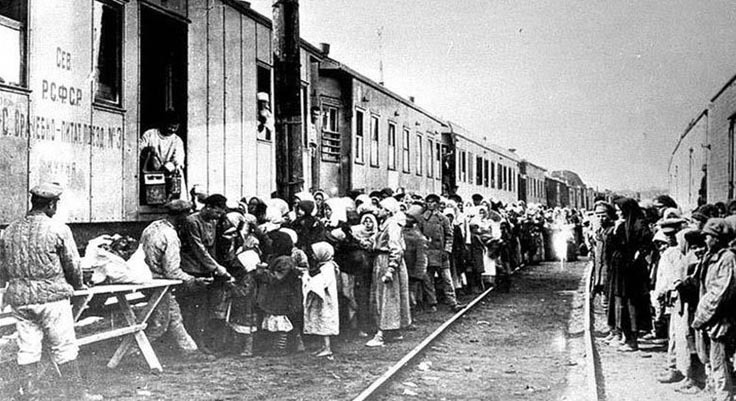
From September to the end of December 1937, the forced relocation began urgently, and the relocation at the time was carried out in a very inhumane way. Koreans in the densely populated areas of “Posyet” and “Grodekovo” were the first targets, and the number was 11,807 people.
There was no advance notice at all before relocation. Koreans boarded trains with only a few clothes and some food. For the remaining household goods and houses, they were given only a single exchange certificate. Travel expenses were 5 rubles per person per day, and at most, one person received 370 rubles. Even that was given only to a small number of obedient people.
Agents of the Soviet secret police, the NKVD, went from house to house and notified the targets of relocation. The secret police agents ordered them to carry only simple belongings and follow them within 30 minutes. Naturally, there were also Koreans who expressed dissatisfaction with the sudden relocation order.
Those who were dissatisfied with the relocation and refused were arrested. That number is estimated at 2,500, and most of them were executed. After Korean leaders who resisted were executed as examples so that no one could resist, 200,000 Koreans were driven into danger in just two months. It was a crime of ethnic cleansing committed by the Soviet Communist Party.
At the time, the train stations were scenes of chaos, filled with Koryo-saram who were forcibly loaded into freight trains like luggage. Koreans were taken away almost without any preparation, not knowing why they were being dragged away or where their destination was, and were loaded like cargo onto brutally cold Trans-Siberian freight trains. The trains were wooden freight trains usually used to carry goods or animals.
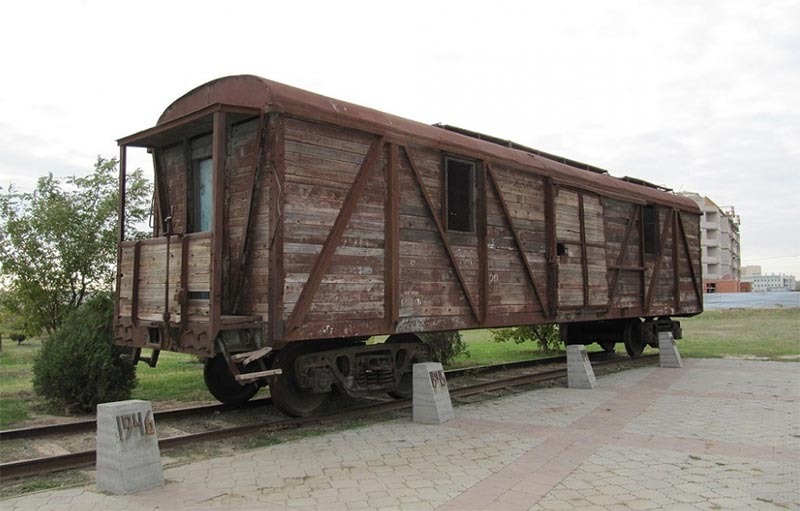
The trains carrying Koreans traveled 6,500 kilometers, and 124 trains were mobilized. The trains ran for about 40 days in severe cold, and people were dispersed and settled in places such as Kyzylorda, Tashkent, and Uzbekistan. In this process, countless people were separated from their families.
There were people who gave birth inside the moving trains. Because of the brutally cold climate, poor sanitation without toilets, food shortages, malnutrition caused by hunger during the journey, pneumonia, disease, and train derailments, it is estimated that more than 21,000 people died during the train transport alone. The bodies of those who died on the trains had no choice but to be thrown outside the trains.
On October 25, 1937, the relocation of Koreans from the Far East was completed. A total of 36,442 households and 171,781 people were relocated by 124 collective transport trains. The relocation of Koreans was not limited to the Far East. Koreans in central Siberia, such as Buryatia and Chita, also had to be forcibly relocated, and even Koreans living in Murmansk, next to Finland in northern Europe, were moved to Altai Krai. That is why estimates say that more than 200,000 Koreans were forcibly relocated.
The destinations of forcibly relocated Koryo-saram were mainly Kazakhstan and Uzbekistan in Central Asia. These regions were part of the Soviet Union at the time and were barren areas with nothing but empty open land. Koryo-saram had to survive under the harsh conditions of these regions.

4. The Lives of Koryo-saram After Forced Relocation
The Koreans placed in Uzbekistan numbered 16,272 households and 76,525 people, while the Koreans placed in Kazakhstan numbered 20,170 households and 95,256 people.
After the forced relocation, Koryo-saram had to face great challenges for survival in their new regions. Central Asia, where they arrived, was an unfamiliar environment, and the language and cultural differences were also very large. However, even amid these difficulties, Koryo-saram maintained their communities and gradually adapted to the new environment.
5. The Countries Where the Forced Relocation Took Place
Koryo-saram Who Settled in Kazakhstan
Kazakhstan was one of the main countries where Koryo-saram were forcibly relocated at the time. This region consisted of barren reed fields and desert areas, making it an extremely harsh and infertile environment for Koryo-saram in the early stage of settlement. During the settlement process, because of food shortages and disease, the elderly and the weak died helplessly almost every day.

The Koryo-saram abandoned in Ushtobe, Kazakhstan, a desolate place without a single tree, dug into the ground and built cave shelters to avoid the severe cold of Central Asia and maintain their livelihood, but they were in a hopeless situation, not knowing what to do or how to survive. At that time, Kazakh nomads took pity on them and occasionally brought chunks of meat, which is said to have reduced the number of those who were dying.
Although the Kazakhs had just suffered the tragedy of the great famine of the early 1930s, in which 2.5 million people died, they helped the relocated Koryo-saram settle in many ways. According to various records, there are moving stories of Kazakhs giving up their homes to Koryo-saram or bringing meat and bread on donkeys to share with them. Even today, Koryo-saram have not forgotten the hospitality and kindness of the Kazakhs at that time.
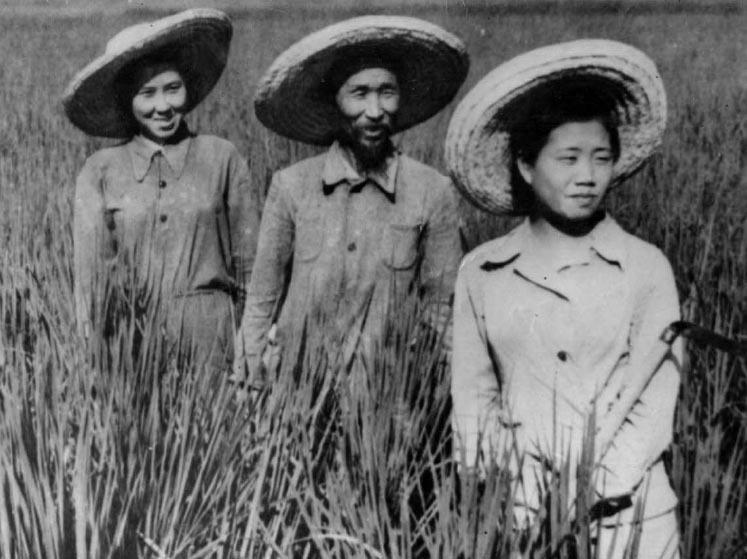
In Kazakhstan, a strange land where there was nothing, Koryo-saram cultivated the land with tears, blood, and sweat and began farming by planting the rice seeds they had brought with them. Through diligence and sincerity, they successfully established rice farming in particular and came to play an important economic role in Kazakhstan.
According to testimony from the time, when Koryo-saram arrived in the empty fields after being loaded onto relocation trains, winter was just beginning, and 60 percent of children died from the cold and measles. They relied on each other’s body heat and barely endured the harsh Central Asian winter by making ondol floors with baked tiles made from kneaded clay.

Even today, on Bastobe Hill in Kazakhstan, where Koryo-saram spent their first winter after relocation, dugout shelters and a communal cemetery remain. On the monument built at the site of these dugouts, Korean letters are engraved, saying, “This is the initial settlement site where Koryo-saram forcibly relocated from Wondong, Primorye, built dugouts and lived from October 9, 1937 to April 10, 1938.” Koryo-saram called Primorye Wondong.
Koryo-saram who settled in Kazakhstan later became active in various industries according to changes in Soviet policy, and they also made progress in education and culture. Today, more than 100,000 Koryo-saram live in Kazakhstan, and they are recognized as one of the most important ethnic minorities in Kazakh society.

Koryo-saram Who Settled in Uzbekistan
Uzbekistan was also one of the main regions where Koryo-saram were forcibly relocated. Koryo-saram abandoned in the desolate reed fields of Uzbekistan had to survive somehow. They cut rough reeds to build huts and began clearing the barren reed fields to turn them into cotton fields.
When settling in Uzbekistan, most Koryo-saram lived in collective farms. Kim Byeong-hwa, known as a hero of Koryo-saram, led one of the most representative cotton farms to success together with Koryo-saram through sweat and tears. Thanks to his leadership in turning wasteland into fertile farmland, the farm achieved far higher yields than farms in other regions. Later, he received the title of “Hero of Socialist Labor” twice, in 1948 and 1951.
After Koryo-saram migrated and settled there, they came to work in agriculture and industry. In particular, in Uzbekistan, Koryo-saram often worked in jobs related to cotton agriculture and played an economically important role in local society.
At the time, the Soviet Union began large-scale rice and cotton cultivation projects in Central Asia, and the collective farms of Koryo-saram achieved more than twice the annual production of rice and cotton designated by the Soviet Union. They achieved the Soviet seven-year plan in just four years.
The Soviet Union evaluated Koryo-saram as a diligent, sincere, and sound people, and their reputation improved. As a result, the Koryo language, which had been banned, came to be used again, and education in the ethnic language was also allowed.
In Central Asia, Koryo-saram later stood out in education, culture, and the economy as well. Koryo-saram contributed greatly to rice farming in Kazakhstan and Uzbekistan and played an important role in the development of the local economy. In addition, Koryo-saram made efforts to preserve their language and culture, and they also operated schools and newspapers that used the Korean language.
6. The Impact of Forced Relocation and Koryo-saram Today
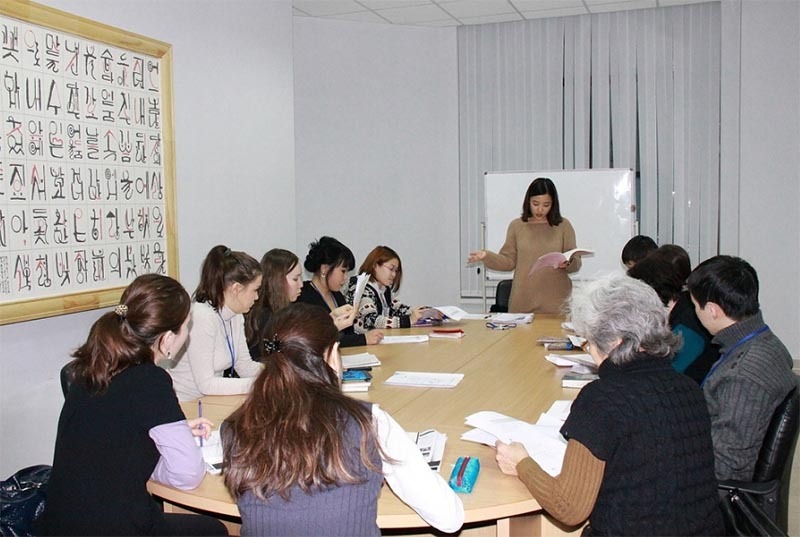
The forced relocation left deep wounds on Koryo-saram. They had to leave their hometowns and survive in unfamiliar lands, and they made great efforts to preserve their identity. In Central Asia, Koryo-saram have continued their efforts to protect their culture and language, and these efforts continue to this day.
However, after the forced relocation, the identity of Koryo-saram became complicated. Under Soviet influence, many Koryo-saram learned Russian and assimilated into Soviet culture. Also, after the collapse of the Soviet Union, with the independence of Central Asian countries, the legal status and social position of Koryo-saram also changed. Some Koryo-saram returned to Korea, while others migrated to Russia or other countries.
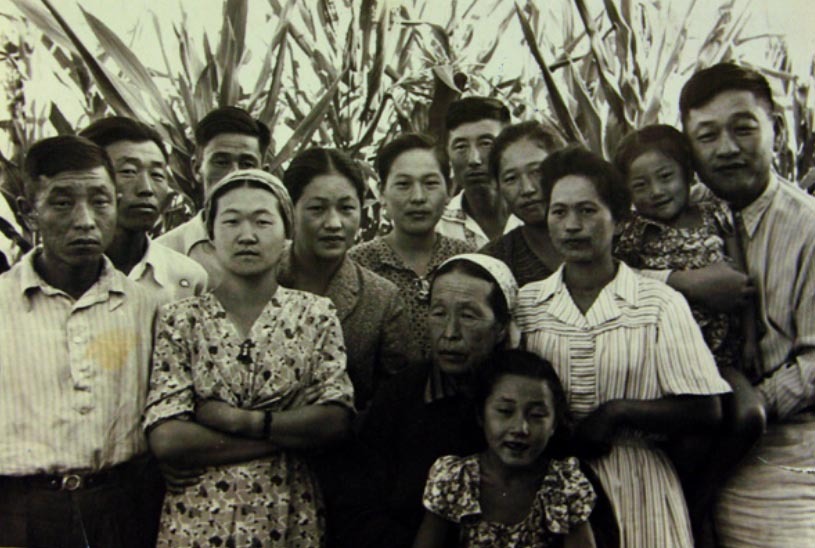
7. The Historical Significance of the Forced Relocation of Koryo-saram
The forced relocation of Koryo-saram is one of the representative examples of oppressive policies against ethnic minorities in Soviet history. Under Stalin’s regime, Koryo-saram were suspected of collaborating with Japan without any concrete evidence and were forcibly relocated. This event is regarded as an example of Soviet political oppression and human rights violations.
Also, this incident became one axis of the Korean people being forced to leave the land where they had lived and move to another region to form a community. It showed the strong vitality and cultural adaptability of the Korean people. Koryo-saram survived, developed, and preserved their culture in Central Asia by creating something from nothing, and this remains an important historical example that shows the strength and solidarity of the Korean people.
After the collapse of the Soviet Union, a survey was conducted on whether Koryo-saram in Central Asia would return to Primorye in Far Eastern Siberia. However, they decided not to return. They were already settled and living well in Central Asia, and the Primorye authorities of the Soviet Union did not want Koryo-saram to return.
They also considered returning to Korea, but the reality was not easy, so there was no large-scale migration back to the homeland. Currently, there are 500,000 Koryo-saram living across Russia and Central Asia. The roots of Koryo-saram go back 150 years, but the official name Koryo-saram began after the forced relocation from Primorye. For more than 80 years, Koryo-saram have put down roots from the first generation to the fifth generation and have fully settled and lived there.
8. The Final Fate of Those Responsible for the Forced Relocation of Koreans
The people who were responsible for the forced relocation of Koreans served Stalin loyally like dogs, but in the end, they were purged. “Yezhov,” who was in charge of the overall relocation of Koreans, was dismissed from all positions in March 1939, arrested on April 10, accused of embezzling government funds and being a German spy, and secretly executed near Moscow on February 4, 1940.
The NKVD police chief in charge of the Far East, who led the practical work of the forced relocation of Koreans, was “Genrikh Lyushkov.” He was loyal to Stalin’s regime, but eventually felt his life was threatened and fled to Japan in June 1938.
He was the person who falsely accused Koreans in Primorye of being Japanese spies and took the lead in the forced relocation. He collaborated with Japan, and after Japan’s defeat, he died on September 19, 1945. There are theories that he committed suicide and theories that he was shot to death, but it seems certain that he died by gunfire.
Special Support for Korean Migration for Koryo-saram in Central Asia