How K-Pop Transformed the Streets of Liberdade: The Korean Wave in Brazil
If you walk through Liberdade São Paulo’s historic Asian-cultural quarter today, the first thing that strikes many visitors isn’t just the lanterns, noodle shops, or sushi signs. It’s the rhythm. The dance crews rehearsing K-pop choreography in the plazas, the echo of BTS and BLACKPINK drifting out of cafés, and the way K-pop fan culture has become part of the beat of the street itself.
Liberdade started as a Japanese immigrant neighborhood, complete with its iconic red torii gate and traditional markets. Over time it grew into a pan-Asian cultural space with Chinese, Taiwanese and Korean communities living, working and sharing culture together.
Maintaining its vibrant Asian identity, the district now reflects not just food and language, but youth culture and global trends and K-pop has become one of the most visible expressions of that transformation.
The Korean Wave: From Screens to Street Culture in Brazil
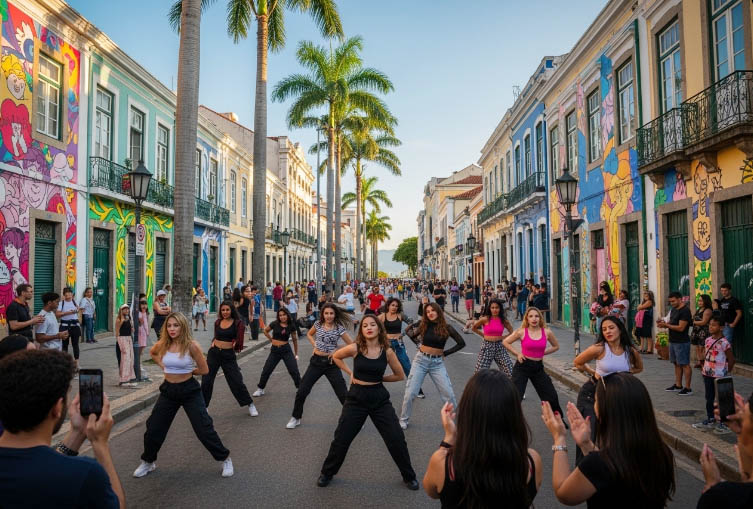
When K-pop music and Korean dramas first reached Brazil, it was mostly through screens YouTube, streaming services, Instagram and TikTok. Brazilian fans embraced the beats, visuals and choreography with a passion that matched their own love of music and dance. Today, a walk through Liberdade on a weekend afternoon reveals proof of that cultural exchange in real life.
Young Brazilians, many wearing K-pop-inspired fashion, gather near the Centro Cultural São Paulo (CCSP) and other public spaces to practice routines, exchange song tips and make new friends.
Videos of these gatherings frequently make the rounds on social media, turning what once might have been a niche fandom into a visible urban culture that breathes life into the neighborhood’s streets.
A Community Alive with Rhythm and Fan Culture
One of the most striking things about the K-pop influence here is how it fosters creativity and community. In Liberdade, fans don’t just watch content they participate in it. Dance crews, multi-lingual fan clubs, and weekly rehearsals have become a kind of unofficial street festival.
Groups of teenagers from many parts of São Paulo and even from surrounding cities show up on Sundays to practice choreography, exchange fan merchandise, and record content. There’s a sense of personal ownership and creativity in how Brazilian fans have taken the Korean Wave and made it their own.
This is more than kids mimicking moves they saw online. It’s a form of cultural expression that bridges languages, geography and backgrounds a synthesis of Brazilian energy and Korean precision.
Many dancers record and upload their own versions of K-pop choreography online, turning these public spaces into informal performance stages that ripple across social platforms.
Liberdade as a Cultural Crossroads
Liberdade itself has always been a melting pot, first shaped by Japanese diaspora and later enriched by other Asian communities, including Koreans who settle or open businesses in and around the district.
Today, you can walk down Galvão Bueno Street and find Korean barbecue next to ramen shops, posters in Hangul beside Portuguese signage, and young Brazilians chatting about their favorite K-pop comebacks all blending in a vibe that feels both global and local at once.
It’s that everyday immersion hearing Korean pop songs from boutique speakers, seeing fan-made banners at cultural festivals, and watching mixed groups of Brazilians and Asian-Brazilian youth celebrate their shared interests that transforms the neighborhood into something more than just a historic quarter. Liberdade becomes a living canvas of cultural exchange.
K-Pop Events and Fan Activities that Shape Street Life
Part of what keeps the Korean Wave alive on the streets are organized events and fan communities. Festivals like “Korean Culture Day” and informal street gatherings bring people together to celebrate music, fashion, dance and food. They weave Korean pop culture into daily life, not as an outsider trend but as something that can be lived, practiced and shared.
These events often attract people who don’t even identify as hardcore fans; they come because there’s movement, music and youthful energy. It ripples through Liberdade’s cafés, shops and pedestrian plazas, turning ordinary weekends into mini-celebrations of shared culture.
The Brazilian Twist on Hallyu
While Korean pop culture started with exported music and TV shows, Brazilian fans have shaped their own interpretation of it. Samba and funk rhythms live in the country’s musical identity, mix that with K-pop’s tight choreography and visual style, and you get something uniquely Brazilian: expressive dance, experimental mix covers, and creative reinterpretations that sometimes get shared internationally.
Even at global events like Brazil’s Carnival where a K-pop group performed alongside local artists that blend of Korean and Brazilian pop cultures showed how deeply the Korean Wave has infiltrated mainstream cultural spaces, not just niche fandom ones.
The Korean Wave’s Broader Impact Beyond Music
What’s fascinating about how K-pop has reshaped Liberdade isn’t just the music it’s how it opens doors:
- Korean language study groups and cultural centers give Brazilians opportunities to learn Korean and understand the culture from a more grounded and educational perspective.
- Korean restaurants, supermarkets and community spots make everyday life in Liberdade feel like a little piece of Seoul.
- Youth groups use K-pop as a starting point for broader cultural exchange and creativity, organizing events, shows and online content that celebrates both Brazilian and Korean influences.
This blending isn’t one-way. It shows how a global cultural phenomenon can plant roots in a local community and grow into something organic a vibrant street culture shaped by mutual appreciation and participation.