
K-Pop Demon Hunters
Why Duffy Is Blue, and Why That Detail Matters More Than You Think
“I’m excited to share some intriguing behind-the-scenes stories in this K-Pop Demon Hunters review the kind of deep-cut cultural secrets you won’t find anywhere else.”
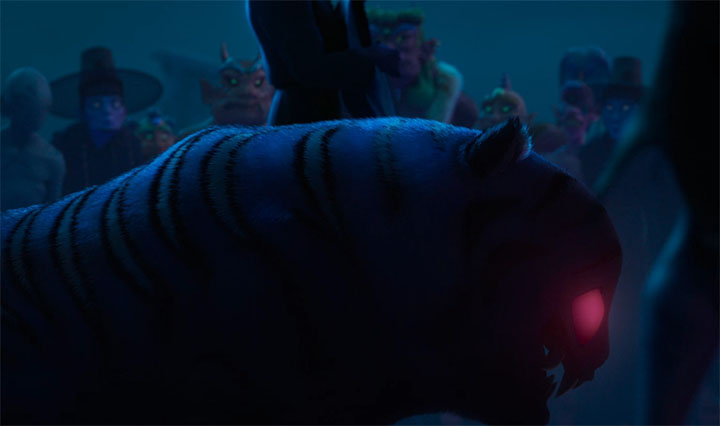
At the very beginning of K-Pop Demon Hunters, a shadowy figure appears alongside Jinwoo in the demon world. At first glance, the silhouette feels unsettling, even ominous. No one could have predicted that this mysterious presence would soon become one of the most beloved characters in the entire film.
That character is Duffy. Deadly cute, oddly familiar, and impossible to forget.
Is Duffy a tiger? A cat? Something in between? In this article, I want to talk about Duffy the tiger and his constant companion, the magpie Seossi, and explain how these characters are deeply rooted in Korean traditional art, symbolism, and history often in ways even Koreans themselves had long forgotten.
The Forgotten Roots of Duffy: Horjakdo, the Tiger and the Magpie

To understand Duffy, we need to go back to Horjakdo, a traditional folk painting style from late Joseon Korea. Horjakdo paintings almost always depict a tiger and a magpie together.
In Korean symbolism, the tiger represents strength, protection, and the power to ward off evil. The magpie, on the other hand, is a clever bird believed to bring good news and welcome guests. Because of these meanings, painters often paired them as a kind of visual blessing.
Interestingly, if you look up Horjakdo paintings today, you’ll notice something strange. The tigers look… wrong. Their faces are exaggerated, their bodies awkward, sometimes even funny. Many modern viewers assume the artists were intentionally being humorous.
The truth is far more fascinating. During the Joseon era, tigers did exist across the Korean Peninsula, but they lived deep in remote mountains. Most ordinary people and even many painters never saw one in real life. There were no photographs, no detailed references. Tigers were creatures of rumor and fear, known mostly through word of mouth.
So artists painted tigers based on stories, imagination, and secondhand descriptions. That’s why every Horjakdo tiger looks different, strange, and oddly expressive. Meanwhile, the magpies in those same paintings look realistic and detailed because magpies were common and familiar. Duffy’s unusual appearance comes directly from this tradition.
Why Duffy Confused Global Audiences and Then Won Them Over

When Duffy first appears in K-Pop Demon Hunters, many international viewers weren’t sure what he was. Koreans immediately recognized him as a tiger, but others saw a cat, a fantasy creature, or something else entirely. That confusion didn’t last long.
Duffy’s clumsy movements, unexpected bravery, and absurdly cute behavior quickly made him a fan favorite. Today, he’s one of the most sought-after character goods from the film. Ironically, Horjakdo a folk art many Koreans barely noticed has been reborn as a global cultural icon through animation.
The Tiger as Korea’s Eternal Symbol
The tiger is not just an animal in Korea. It is the symbol.
Korea is the only country in the world with such an extensive body of folklore, mythology, and national symbolism centered on tigers. From ancient legends to modern sports mascots, the tiger has always been there.
The 1988 Seoul Olympics featured Hodori the tiger. The PyeongChang Winter Olympics introduced Soohorang, the white tiger. Korea’s national football team is symbolized by a white tiger as well. And now, in 2025, K-Pop Demon Hunters introduces something never seen before: a blue tiger.

Why Is Duffy Blue? The Answer Lies in Korean Philosophy
At first, Duffy’s blue color seems random. If the creators wanted him to be cute, there were countless other color options. But nothing in this film is accidental. In Korean geomancy and East Asian philosophy, directions are tied to colors. This concept is known as the Five Directional Colors.
East is blue
West is white
South is red
North is black
Center is yellow
Korea has long been known as a country of the East often called “the Land of the Morning Calm.” While white tigers symbolize the western mountain ranges of the peninsula, blue represents Korea’s position in the world.
Director Maggie Kang deliberately chose blue to represent Korea as an eastern nation, not just a geographic location on a map, but a cultural identity. Duffy, who acts as a neutral guardian and messenger connecting Jinwoo and Rumi, embodies this idea perfectly. Blue is also one of the core colors of the Korean flag, deeply associated with harmony and balance.
From Folk Painting to House Cat: How Duffy Was Designed
Maggie Kang has shared that Duffy’s design was inspired not only by Horjakdo tigers, but also by her own Himalayan cat. That distinctive flat face? That’s intentional. Duffy is a fusion of a mythical tiger and a very real, very stubborn house cat.
Even Duffy’s most memorable gag the flowerpot scene comes from real cat behavior. Cats love knocking things over. Kang flipped that instinct and made Duffy desperately try to fix what he broke, creating a moment that made audiences around the world laugh. That moment alone turned Duffy into a cultural phenomenon.
Seossi the Magpie and the Power of Three
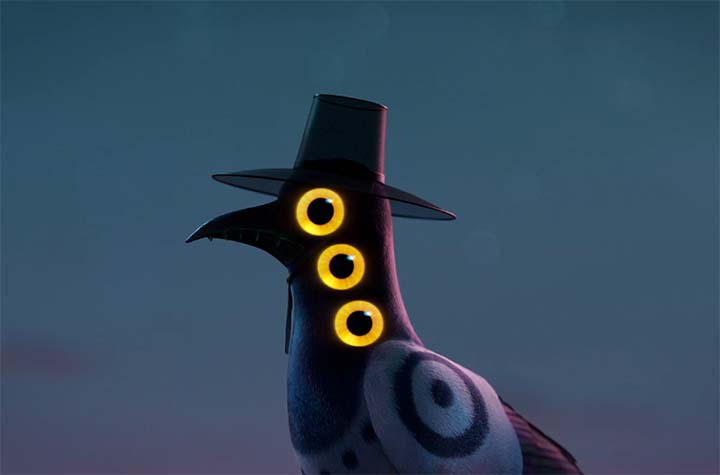
Duffy never appears alone. Beside him is Seossi, the magpie with three eyes and a traditional Korean gat on his head. The gat immediately signals Korean heritage. Even the lion characters wear it, reinforcing its symbolic importance. The three eyes, however, carry layered meaning.
On the surface, they reference modern technology a playful nod to triple-lens smartphone cameras. Seossi even makes camera shutter sounds when blinking.
But beneath that lies something deeper. In Korean tradition, the number three represents balance, completion, and harmony. Heaven, earth, and humanity. Three bows in ceremonies. Three gates in palace architecture.
Three-legged crows in ancient Goguryeo symbolism. Three tastes in food. Three rounds in games. Three bows in rituals. The number three is everywhere in Korean life. By giving Seossi three eyes, the film quietly embeds this philosophy into the character.
More Than Characters: Cultural Messengers
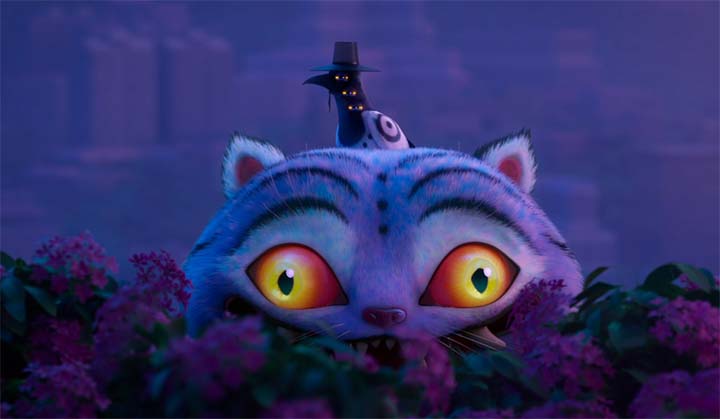
Duffy and Seossi were never meant to be just cute side characters. They are messengers connecting not only Jinwoo and Rumi, but global audiences with Korea’s cultural heritage.
Through K-Pop Demon Hunters, Maggie Kang didn’t just tell a story. She reminded Koreans of the value of their traditions and introduced those traditions to the world in a way that felt natural, modern, and unforgettable. Sometimes, the smallest characters carry the deepest meanings. And sometimes, a blue tiger can tell the story of an entire country.