
What Foreigners Need for a Korean Job Application
Finding a job in South Korea is an exciting opportunity, but many foreign applicants quickly discover that the hiring process is different from what they are used to at home. While qualifications and experience are important everywhere, Korean employers also pay close attention to preparation, professionalism, and whether an applicant understands Korean workplace culture.
Having lived in Korea and met many international students, professionals, and job seekers, I have seen that successful applicants are not always those with the strongest resumes. They are usually the ones who understand what Korean employers expect before they submit their first application.
If you are planning to work in Korea, this guide explains the essential documents, qualifications, and practical steps that can help improve your chances of getting hired.
Understand Your Visa Eligibility First
Before preparing your application, make sure you understand whether you are legally allowed to work in Korea. Different jobs require different visa categories, and employers usually ask about your visa status early in the hiring process.
Some foreigners already living in Korea may qualify for employment under visas that allow broader work opportunities, while others need employer sponsorship before beginning work. Knowing your visa options before applying saves time for both you and the employer.
Prepare a Professional Resume
Unlike some countries, Korean companies often expect resumes to include more personal information. Many employers request your nationality, current visa status, language abilities, education history, and recent work experience.
Your resume should be clear, organized, and easy to read. Avoid overly creative designs unless you are applying for creative industries such as marketing or graphic design. Most Korean recruiters appreciate resumes that present information in a straightforward and professional format.
Write a Strong Cover Letter
Many Korean companies still place significant importance on the cover letter. Rather than simply repeating your resume, explain why you want to work in Korea, what interests you about the company, and how your skills match the position.
Employers appreciate applicants who have researched the company instead of sending identical applications everywhere. A thoughtful cover letter often leaves a stronger impression than an unusually long resume.
Gather Your Educational Documents
Employers commonly request copies of your academic qualifications. These may include university diplomas, transcripts, certificates, or professional licenses relevant to the position.
Some companies also ask for officially translated documents if your originals are not in Korean or English. Preparing digital copies before beginning your job search makes the application process much faster.
Highlight Your Korean Language Ability
Not every position requires advanced Korean skills. International companies and some technology firms may operate primarily in English. However, even basic Korean communication demonstrates commitment to living and working in Korea.
If you have completed the Test of Proficiency in Korean, include your score clearly on your resume. Even conversational Korean can become a valuable advantage during interviews.
Show Relevant Work Experience
Korean employers generally value practical experience more than simply listing many qualifications. Focus on accomplishments rather than responsibilities. Instead of writing that you managed projects, explain what you achieved, improved, or completed successfully.
Whenever possible, include measurable results. Numbers often make your experience more convincing.
Prepare Recommendation Letters
Although recommendation letters are not required for every position, they can strengthen your application. Letters from previous supervisors, professors, or professional mentors help demonstrate your reliability and work ethic.
If the letters are written in another language, consider preparing English translations that employers can easily understand. Strong references often become particularly valuable for applicants with limited work experience.
Understand Korean Interview Culture
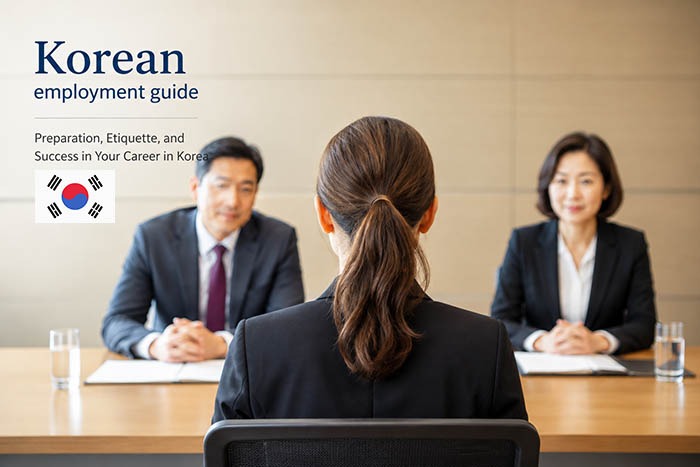
Interviews in Korea are generally polite, structured, and professional. Employers often ask why you chose Korea, how long you plan to stay, and whether you can adapt to Korean workplace culture.
Researching the company’s business, products, and recent achievements before the interview shows genuine interest. Punctuality is extremely important. Arriving early demonstrates respect and professionalism.
Dress Professionally
First impressions matter. Business formal clothing is usually the safest choice unless the company specifically indicates a more casual dress code. Clean and conservative clothing helps create a professional image. Good grooming, confident posture, and polite communication often influence interviewers just as much as technical qualifications.
Prepare Digital Copies of Important Documents
Many companies now accept online applications. Having organized digital copies of your passport, visa documents, certificates, resume, cover letter, and recommendation letters allows you to respond quickly when opportunities appear. Creating clearly labeled PDF files also demonstrates professionalism.
Research Korean Workplace Culture
Employers appreciate candidates who understand basic workplace expectations.
- Respect for colleagues.
- Professional communication.
- Teamwork.
- Responsibility.
- Adaptability.
These qualities are frequently mentioned during Korean recruitment. Demonstrating cultural awareness shows employers that you are prepared for daily life in a Korean office.
Build a Professional Online Presence
Many recruiters review LinkedIn profiles or professional portfolios before contacting applicants. Ensure your online profile matches the information on your resume.
Include recent experience, professional achievements, certifications, and language abilities. If you work in software, design, writing, or marketing, an online portfolio can significantly strengthen your application.
Common Mistakes Foreign Applicants Make
Many applicants submit resumes without adapting them for each company. Others apply without checking whether they qualify for the required visa. Some underestimate the importance of the cover letter or fail to research the employer before the interview.
Another common mistake is assuming that English alone guarantees employment. While English can open many opportunities, demonstrating an interest in Korean language and culture often makes applicants more competitive. Avoiding these simple mistakes can dramatically improve your chances of receiving interview invitations.
Final Thoughts
Applying for a job in South Korea involves more than preparing a resume. Success comes from understanding Korean hiring expectations, organizing your documents carefully, demonstrating professionalism, and showing that you are genuinely interested in becoming part of the local workplace.
From my experience living in Korea, employers appreciate candidates who are prepared, respectful, and willing to adapt. You do not need perfect Korean language skills or decades of experience to find opportunities here.
With the right documents, thoughtful preparation, and a positive attitude, many foreigners successfully begin rewarding careers in South Korea every year. Taking the time to prepare properly before applying can make the entire process much smoother and greatly increase your chances of receiving a job offer.