
With a History Spanning Over a Thousand Years, How Many Kinds of Korean Food Are There?
The Korean food you’ve seen in photos or videos, or even tasted yourself, is just the tip of the iceberg. Korean cuisine is so incredibly diverse and extensive that even Koreans themselves don’t know just how many different dishes exist. Simply put, there is no exact number, and it would be virtually impossible to count them all.
Ask someone outside Korea to name Korean food and you will probably hear kimchi, bulgogi, bibimbap, tteokbokki, and Korean barbecue. Those dishes are important, but they represent only a tiny corner of Korean cuisine.
Living in Korea, you quickly realize how difficult it would be to count every Korean dish. Travel from Seoul to Jeonju, Busan, Jeju, Gangwon, Jeolla, or Gyeongsang and familiar ingredients begin appearing in completely different forms.
So how many kinds of Korean food are there?
The most accurate answer is that nobody has one definitive number. There are thousands of documented dishes and variations, and the number becomes much larger when regional and household recipes are included.
Korean Food Is Much Older Than K Pop Korea
Modern Korea may be internationally associated with technology, K pop, dramas, and beauty products, but its food traditions developed over centuries.
Agriculture, geography, seasons, Buddhism, royal courts, regional ingredients, wars, trade, and methods of preserving food all influenced what Koreans eat today. This is why Korean cuisine cannot really be understood through one famous dish.
A Korean Meal Is Built Differently
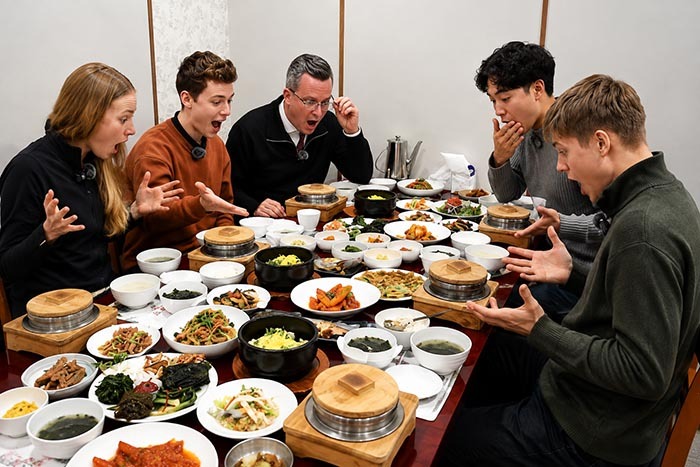
A traditional Korean meal usually revolves around rice, soup or stew, and several side dishes called banchan. Instead of receiving one large plate containing everything, diners often share multiple dishes placed in the center of the table.
For foreigners eating Korean food for the first time, this can be one of the biggest surprises. A simple restaurant order may suddenly fill the table with kimchi, vegetables, sauces, pickles, and other small dishes.
Kimchi Alone Shows How Diverse Korean Food Is
Internationally, kimchi often means spicy fermented napa cabbage. In Korea, that is only the beginning. Different regions and families make kimchi with cabbage, radish, cucumber, green onions, mustard greens, and many other ingredients. Recipes also change according to season and local traditions.
Kimjang, the traditional practice of making and sharing large quantities of kimchi, was inscribed by UNESCO on its Representative List of the Intangible Cultural Heritage of Humanity in 2013.
Soups and Stews Could Fill an Entire Food Guide
Koreans eat an enormous variety of soups and stews. Doenjang jjigae uses fermented soybean paste, kimchi jjigae develops a completely different flavor from fermented kimchi, and sundubu jjigae centers on soft tofu.
Then there are dishes such as galbitang, seolleongtang, samgyetang, miyeokguk, yukgaejang, and countless regional soups. Some are everyday meals, while others are connected to birthdays, seasons, health traditions, or particular regions.
Korean Barbecue Is Only One Part of Meat Culture
Korean barbecue became internationally famous because grilling meat directly at the table is social and fun. Samgyeopsal, galbi, and bulgogi are now recognized far beyond Korea.
But Korean meat dishes extend much further. Bossam, jokbal, dakgalbi, galbijjim, samgyetang, and different grilled or braised dishes show how differently meat can be seasoned, cooked, wrapped, shared, and combined with vegetables.
Fermentation Is One of Korea’s Most Important Food Traditions
If you want to understand Korean flavor, learn about fermentation. Kimchi is famous, but doenjang, ganjang, and gochujang are equally important foundations of Korean cooking.
These traditional sauces and pastes can transform very simple ingredients into deeply flavored meals. In 2024, UNESCO also inscribed the knowledge, beliefs, and practices related to jang making in Korea on its Intangible Cultural Heritage list.
Every Region Adds Something Different
One of the best ways to discover Korean food is to leave Seoul.
Jeonju is famous for bibimbap and a rich food culture. Busan is known for seafood and dishes connected to its port city identity. Jeju has black pork, seafood, and local specialties shaped by island life.
Other regions have their own noodles, soups, seafood, rice dishes, fermented foods, vegetables, and seasonal specialties. This regional diversity is one reason counting Korean dishes becomes almost impossible.
Royal Cuisine Shows Another Side of Korean Food
Korean food is not only rustic soups and barbecue. The royal courts of the Joseon period developed elaborate meals involving careful preparation, seasonal ingredients, balance, and presentation.
Visitors interested in Korean history can still experience restaurants inspired by royal court cuisine. It reveals a completely different side of Korean food from the spicy street dishes most tourists first encounter.
Temple Food Can Surprise Foreign Visitors
Korean Buddhist temple cuisine offers another fascinating branch of the country’s food culture. It traditionally emphasizes plant based ingredients and avoids certain pungent vegetables used heavily in ordinary cooking.
The result can be subtle, seasonal, and surprisingly complex. For travelers who think Korean food is always dominated by meat, garlic, and chili, temple cuisine can completely change that impression.
Street Food Created Its Own Food Culture
Then there is the Korea people see at markets and busy shopping streets.
Tteokbokki, eomuk, hotteok, gimbap, mandu, twigim, and other inexpensive foods are closely connected to everyday Korean life. They may not have the ceremony of royal cuisine, but they are just as important to understanding how modern Koreans actually eat.
Some Foods Are Connected to Specific Days
Korean food also carries cultural meaning. Miyeokguk, a seaweed soup, is traditionally eaten on birthdays. Tteokguk is associated with the Lunar New Year, while songpyeon is strongly connected with Chuseok.
Samgyetang is famously eaten during hot summer periods. To foreigners, eating a steaming chicken soup during the hottest part of the year may seem unusual, but it reflects the traditional idea of restoring energy during summer.
So How Many Korean Foods Actually Exist?
There is no reliable official total that can capture Korean cuisine completely. Any number depends on what is counted as a separate dish and whether regional versions, historical recipes, temple foods, royal cuisine, side dishes, kimchi varieties, and household recipes are counted individually.
It is safer to think in terms of thousands of dishes and variations rather than searching for one magical number. Korean cuisine has continued evolving for centuries, and new interpretations are still appearing today.
Why Foreigners Are Discovering More Korean Food
Korean dramas and K pop initially introduced many people to foods such as ramyeon, fried chicken, tteokbokki, and Korean barbecue. Once visitors actually come to Korea, they usually discover that the food culture is far more diverse.
A small neighborhood restaurant may introduce them to a dish they have never seen online. A traditional market may offer another, and traveling to a different province can change the menu again.
That discovery is one of the most enjoyable parts of traveling around Korea.
Final Thoughts
There is no single answer to how many kinds of Korean food exist. Korean cuisine has been shaped by centuries of history, regional geography, seasons, fermentation, Buddhism, royal traditions, agriculture, and ordinary family cooking.
Kimchi and Korean barbecue may be the doorway, but behind them is a much larger food culture containing countless soups, stews, noodles, rice dishes, side dishes, seafood, temple foods, royal cuisine, street foods, fermented foods, and regional specialties.
If you visit Korea, do not try only the dishes you already recognize from social media. Walk into a traditional market, visit a regional restaurant, try a local soup, and ask what people in that area are known for eating.
That is when Korean food becomes much more interesting than a list of famous dishes.