
What Do Korean Families Expect from Foreign Spouses?
One of the biggest concerns many foreigners have before marrying a Korean is not the wedding, the visa process, or even learning the language.
It is meeting the family.
Questions such as “Will my future in laws accept me?” and “What do Korean parents expect from a foreign son in law or daughter in law?” are incredibly common among people entering international relationships.
The good news is that Korean society has become much more accepting of multicultural families than it was a generation ago. However, family remains an important part of Korean culture, and understanding what Korean families value can make the transition into married life much smoother.
After years of observing multicultural families and speaking with foreign spouses living across Korea, I have noticed that most Korean families are not expecting perfection. In reality, they are often looking for qualities that have very little to do with nationality.
Understanding these expectations can help foreign spouses build stronger relationships with their Korean relatives from the very beginning.
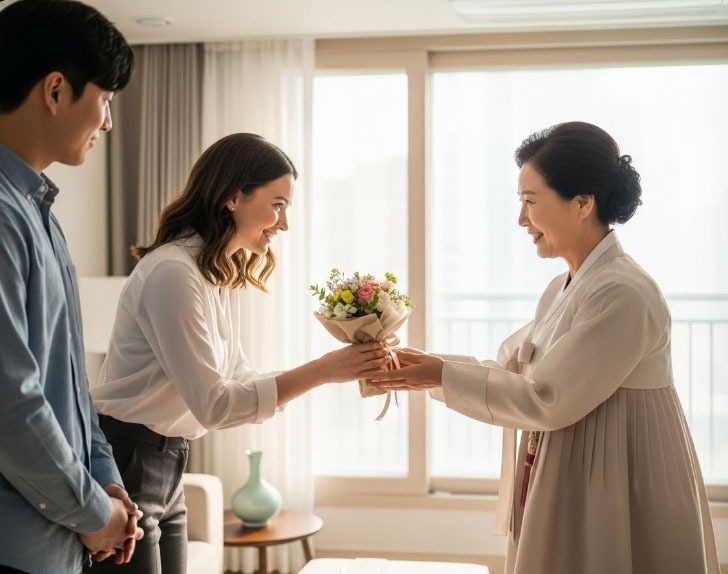
They Want to Know That You Truly Care About Their Son or Daughter
More than anything else, Korean parents want reassurance that their child will be happy. Foreigners sometimes worry that they will be judged primarily because they come from another country. In reality, most parents focus on much more practical concerns.
They want to know whether the relationship is serious, stable, and built on genuine affection. Questions about future plans, career goals, living arrangements, and long term commitment often matter far more than nationality.
Many foreign spouses discover that once Korean parents see how much the couple genuinely cares for each other, most concerns begin to disappear.
Respect Matters More Than Perfection
One of the biggest misconceptions about Korean families is that foreign spouses must fully understand every cultural tradition immediately.
Most families do not expect that. What they do appreciate is effort.
Simple actions such as greeting elders politely, showing interest in family traditions, and demonstrating good manners often leave a strong positive impression. Korean parents generally understand that foreigners may not know every social custom.
What matters is a willingness to learn and show respect. Many international spouses report that their relationships with in laws improved significantly simply because they consistently showed kindness and consideration.
Effort to Learn Korean Is Often Appreciated
Not every foreign spouse becomes fluent in Korean. Fortunately, most families do not expect immediate fluency. However, making an effort to learn even basic Korean phrases is often viewed very positively.
Language is more than communication. It signals interest, commitment, and respect for the family. Parents frequently appreciate seeing a foreign son in law or daughter in law attempting to speak Korean, even when mistakes are made.
Many foreign spouses say that learning Korean helped strengthen relationships with grandparents and older relatives who may not speak English.
Stability Is Highly Valued
Like parents everywhere, Korean parents often worry about their children’s future. As a result, stability tends to be one of the most important qualities they look for. This includes financial responsibility, employment, long term planning, and emotional maturity.
Foreign spouses sometimes assume they are being evaluated because of their nationality when, in reality, parents are often simply assessing whether the couple can build a secure future together. A clear plan for work, housing, and family life usually helps reassure concerned relatives.
Family Relationships Continue After Marriage
In some cultures, marriage is viewed primarily as a relationship between two individuals. In Korea, marriage is often seen as the joining of two families. This does not mean parents expect constant involvement in every aspect of married life.
However, maintaining family connections is generally considered important. Holiday gatherings, family celebrations, birthdays, and important milestones often involve relatives.
Foreign spouses who participate in these events and make an effort to build relationships with family members are usually appreciated. Over time, many discover that these family networks become valuable sources of support.
Understanding Korean Holidays Helps a Lot
Many foreign spouses are surprised by the significance of holidays such as Chuseok and Lunar New Year. These occasions often involve family gatherings, shared meals, and traditional customs. Participation does not require perfection.
Families usually appreciate effort more than expertise. Simply showing interest, asking questions, and joining activities demonstrates respect and willingness to become part of the family. Many multicultural families create their own traditions by blending Korean customs with those from the foreign spouse’s culture.
Parents Often Worry About Cultural Differences
Even when parents are supportive, they may have concerns. These concerns are usually practical rather than negative. Questions often include:
Will the couple be able to communicate effectively? How will future children be raised? Which language will be spoken at home? Will cultural differences create conflict?
These concerns are natural. Parents simply want reassurance that the relationship has a strong foundation. Open communication and clear plans often help reduce uncertainty.
Nationality Is Becoming Less Important
One of the most significant changes in Korean society is the decreasing importance of nationality in family acceptance. Younger generations have grown up in a much more globalized environment.
Many Koreans study abroad, work internationally, and interact with people from different cultures every day. As multicultural families become more common, acceptance continues to grow.
Today, many Korean parents focus far more on personal qualities than on where someone comes from. Kindness, responsibility, honesty, and commitment usually matter much more than nationality.
The Biggest Expectation Is Commitment
If there is one expectation that appears consistently across many Korean families, it is commitment. Parents want to know that the relationship is genuine. They want confidence that both partners are serious about building a future together.
This expectation is not unique to Korea. However, because family relationships remain important within Korean culture, commitment often carries particular significance. Foreign spouses who demonstrate reliability and long term dedication usually gain trust over time.
What Foreign Spouses Often Discover
Many foreigners approach their first meeting with Korean parents feeling nervous. They worry about saying the wrong thing or making cultural mistakes. Yet countless international spouses later describe a very different experience.
They discover that Korean parents are often more welcoming than expected. They find that effort matters more than perfection.
Most importantly, they realize that parents ultimately want the same things parents everywhere want. They want their children to be loved, respected, and happy.
Final Thoughts
So what do Korean families expect from foreign spouses?
Despite common stereotypes, the answer is surprisingly simple. They expect respect, sincerity, stability, commitment, and genuine care for their son or daughter. Most Korean parents do not expect foreigners to become perfect Koreans overnight.
What they appreciate is effort. A willingness to learn, participate, communicate, and build relationships often matters far more than language fluency or cultural expertise.
As Korea becomes increasingly multicultural, more families are discovering that strong relationships are built not on nationality but on trust, understanding, and shared values.
For foreign spouses willing to embrace those values, acceptance often comes much more easily than they ever imagined.