Ukrainian-Korean Marriage Process
A Local Korean’s Guide
International marriage is romantic, exciting, and yes a little bureaucratic. If you’re Ukrainian and planning to marry a Korean partner, you’ll soon find that love is only the first step. Understanding how the Korean and Ukrainian systems work together will save you time, stress, and confusion.
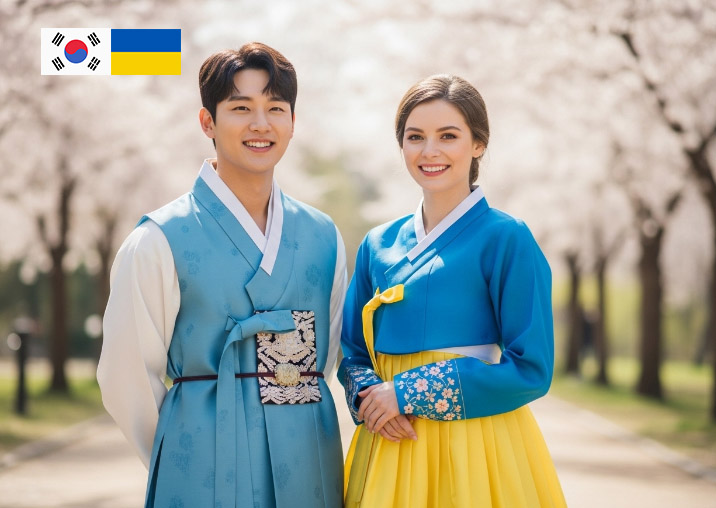
1. Deciding Where to Register Your Marriage First
Before you begin any paperwork, choose whether to register your marriage in Ukraine first or Korea first. Each path has pros and cons. Most couples choose to marry in Ukraine first, because once the marriage is legally registered there, it’s often simpler to bring that recognition into the Korean system later. You’ll need your documents translated and properly apostilled so they are valid internationally.
2. Preparing and Translating Required Documents
Both countries require certain key documents:
- Passports for both partners
- Proof of unmarried status (for each person)
- Birth certificates
- Translations and Apostille certification on official documents
In Ukraine, Korean partners will need to provide official certificates proving they’re free to marry. These must be translated into Ukrainian and sometimes authenticated with an apostille stamp so they are legally recognized there. Translation and apostille steps can be tedious, but they’re essential. If you skip a step, ZAGS (the Ukrainian civil registry office) won’t accept the paperwork.
3. Registering the Marriage in Ukraine
Once all documents are ready, you and your partner visit the Ukrainian ZAGS office together to file for marriage. This is the formal civil process where the state legally recognizes you as a married couple. Waiting periods and interview requirements differ by region, but usually you can complete it in a few days. It’s common for couples to take photos at this stage that’s your first official couple portrait!
4. Bringing Your Marriage Back to Korea
After your marriage is registered in Ukraine, you’ll need to record the marriage in Korea for it to be recognized domestically. This involves:
- Obtaining your Ukrainian marriage certificate
- Getting it translated into Korean
- Having the translation certified with an apostille
- Submitting both to your local Korean district office
Once accepted, Korea will issue its own marriage registration record. This ensures your marriage is legally recognized on both sides.
5. Applying for a Korean Spouse Visa (F-6)
If your Ukrainian partner plans to live in Korea, the next big step is applying for an F-6 marriage immigration visa. This process usually includes:
- Submitting your Korean marriage record and Ukrainian marriage certificate
- Providing evidence of your relationship (photos, messages, travel records)
- Proof of income and stable housing in Korea
- Interview at the immigration office or Korean embassy/consulate
Immigration officers want to see that your marriage is genuine, not solely for immigration reasons. That’s why you’ll collect evidence of your shared life together. Processing times can vary, and requirements may change, so always check with your local immigration office or Korean embassy for the most current list of documents.
6. Cultural Considerations Make a Big Difference
While the paperwork is essential, understanding cultural expectations is equally important. Ukrainian couples often bring a family-centric, traditional energy to marriage, and this can mesh beautifully with Korean values but only if both partners communicate openly about everything from family roles to daily life expectations.
In Korea, marriage is not only a union of two people but often a joining of families. Respecting elders, learning a few Korean phrases, and participating in traditions like pyebaek (a post-wedding family meeting) can make a huge positive impression.
7. Life After Marriage Settling in Korea
Once the visa is approved and your Ukrainian spouse arrives in Korea, it’s time to focus on daily life together. Korea has many support services for multicultural families, including language classes and community groups. Learning basic Korean will help with everything from shopping to navigating public services.
Many international couples tell me that adapting to customs, food, and even humor is part of the adventure and it’s worth embracing with an open heart.