
The Truth About Korean Skincare That Tourists Discover Too Late
When you fall down the global internet rabbit hole of K-beauty, it is incredibly easy to paint a highly romanticized picture of what skincare looks like in South Korea. You read articles about the elaborate ten step routines, you see viral videos of influencer hauls, and you stare at images of local celebrities with that impossibly radiant, poreless glass skin.
Naturally, the moment your flight lands at Incheon International Airport, one of your absolute first stops is a massive, multi-story Olive Young flagship store in Myeongdong or Hongdae. You grab a massive plastic basket, determined to load up on every viral serum, toner pad, and sunscreen that has graced your social media feeds.
But as thousands of western tourists and expats discover every single year, there is a massive gap between the idealized western marketing of K-beauty and the actual reality of how skincare is practiced on the ground in Seoul.
Stepping into the local beauty ecosystem without knowing how the system truly operates can result in a lot of wasted money, broken skin barriers, and immense frustration.
If you want to navigate the Korean beauty scene like a true local and actually achieve that luminous complexion, you need to understand the structural truths that most visitors figure out far too late.
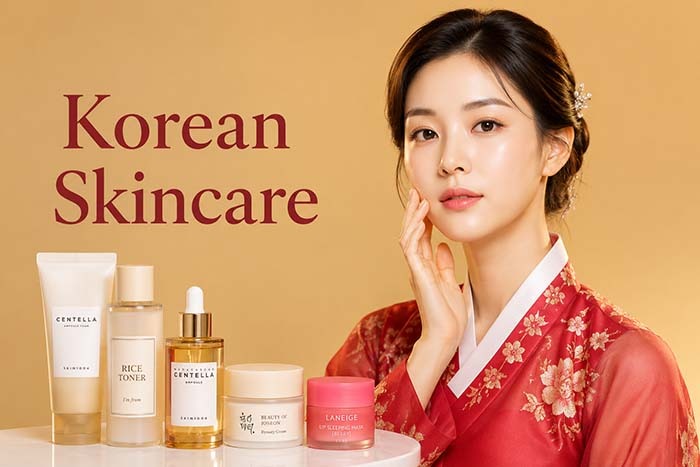
The Myth of the Complicated Ten Step Routine
Perhaps the biggest cultural disconnect between western consumers and real Korean beauty culture is the obsession with the legendary ten step routine. If you walk into a trendy apartment in Seoul and look at a local woman’s vanity table, you will almost never find someone layering ten different products onto their face every single morning and night.
The idea that locals spend an hour wiping, misting, patting, and massaging a dozen different liquids into their skin is largely a clever marketing narrative constructed for the western export market.
In reality, the current trend among skincare-savvy locals is something called skinimalism. Korean skin philosophy is deeply rooted in respect for the skin barrier. Over-cleansing and overloading your face with a chaotic cocktail of competing active ingredients is viewed as a surefire way to trigger inflammation and redness.
The authentic local approach focuses on intelligent minimalism. A standard daily routine typically consists of a gentle double cleanse if you are wearing makeup, a deeply hydrating essence-toner hybrid, a targeted high-efficacy serum, and a lightweight moisturizer followed by a world-class sunscreen.
Locals prioritize a few high-performance, multi-tasking products that contain soothing, barrier-supporting botanical ingredients like heartleaf, centella asiatica, and fermented postbiotics. They do more with less, focusing on building a resilient, calm foundation rather than stripping their skin with endless layers.
The True Secret Lies in the Inexpensive Dermatology Clinics
Tourists often marvel at the smooth, radiant complexions of the people walking down the streets of Gangnam, assuming that it is entirely the result of bottled lotions and sheet masks. The truth that surprises many westerners is that topical skincare is only half of the equation.
In South Korea, professional dermatological care is not treated as a rare, ultra-expensive luxury reserved only for the wealthy or for major life events like weddings. It is viewed as routine, preventative maintenance, much like going to the dentist for a regular cleaning.
The sheer density of skin clinics in Seoul has created an incredibly competitive market, driving prices down to a fraction of what they would cost in the United States or Europe. Locals regularly pop into neighborhood clinics during their lunch breaks or after work for affordable laser treatments, chemical peels, and specialized vitamin injections.
More importantly, the massive trend dominating the local scene is the transition of clinical ingredients into daily home care. Tourists who wander around local shops looking for traditional anti-aging products often miss out on the cutting-edge regenerative ingredients that locals are actually buying.
Products featuring PDRN, which is a regenerative cell-repair ingredient derived from salmon DNA, and at-home micro-needle spicule technologies like the viral Reedle Shot are the real secrets behind that deep, structural glow. Topical skincare is used to maintain and support the heavy lifting done by affordable medical technology.
Understanding the Crucial Difference Between General and Functional Cosmetics
When you are browsing the overwhelming aisles of a Korean beauty retailer, it is easy to get blinded by beautiful packaging, cute logos, and trendy textures. Many tourists simply grab whatever is popular on social media, only to realize weeks later that the product did not actually do anything for their specific skin concerns. This happens because visitors do not understand how the Korean government regulates skincare.
In South Korea, cosmetics are legally divided into two distinct categories: general cosmetics and functional cosmetics. For a brand to claim that a product brightens dark spots, actively reduces the appearance of fine lines, or provides legitimate anti-aging benefits, it must undergo strict evaluation by the Ministry of Food and Drug Safety.
Products that pass these rigorous tests are officially stamped with the term Functional Cosmetics on the packaging. Local consumers know exactly how to flip a bottle over to look for this specific designation before making a purchase.
If you are buying products based solely on aesthetic appeal without checking for this official regulatory approval, you might just be paying for expensive hydration rather than active, evidence-backed skin transformation.
The Sunscreen Renaissance and the Evolution of Glass Skin
Another major revelation for tourists is the sheer superiority and texture of Korean sun protection. In many western countries, sunscreen is often viewed as a thick, heavy, unpleasant necessity that leaves a ghostly white cast, clogs pores, and ruins makeup application. This is because western chemical UV filters have not seen significant regulatory updates in decades.
South Korea treats UV protection as the absolute foundation of slow aging. Because of this, the country has pioneered a total sunscreen renaissance, formulating SPFs that feel completely indistinguishable from high-end, lightweight morning serums.
Locals do not just look for the standard SPF rating; they pay close attention to the PA rating, which measures protection against UVA rays, the specific wavelengths responsible for long-term deep tissue damage and premature aging.
Furthermore, the local concept of glass skin has evolved into a much more realistic, barrier-first philosophy. The older trend of achieving a high-shine, almost wet look has been replaced by a focus on smooth texture, refined pores, and a natural, healthy luminosity from within.
Local sun serums absorb like water, leaving a weightless, protective shield that provides an instant, non-greasy glow while preserving the integrity of the skin barrier throughout the day.
The Danger of Over-Exfoliation on a Vacation Timeline
The final mistake that catches tourists completely off guard is the urge to immediately use everything they buy while they are still on vacation. When you purchase a massive haul of new toners, peeling pads, ampoules, and creams, the temptation to completely overhaul your routine overnight is incredibly high.
Visitors start using multiple new active ingredients simultaneously, hoping to achieve instant results before their flight home. This sudden, aggressive shift in your environment, combined with the stress of travel, changing air humidity, and an onslaught of unfamiliar cosmetic formulas, is a recipe for a skincare disaster.
Many tourists find themselves breaking out in random rashes, experiencing sudden sensitivity, or dealing with a severely compromised skin barrier by the end of their trip.
Real Korean beauty culture emphasizes patience, gradual introduction, and deep listening to your skin’s daily needs. True experts advise tourists to buy their products in Seoul, take advantage of the incredible tax-free discounts, but wait until they return home to systematically introduce one new product at a time into their steady routine.
The ultimate truth of K-beauty is that it is not a magical, instant cure hiding inside a single bottle; it is a lifelong, gentle philosophy of consistent protection, deep hydration, and respectful skin barrier preservation.