
Average Salary in Korea for Foreign Workers
A Local Korean’s Perspective
If you’re thinking about working in Korea, one question that always comes up is: How much do foreign workers actually earn here? It’s a sensible thing to ask.
Living in Korea has its perks great public transport, vibrant cities, and relatively affordable daily costs but without a clear idea of what you can earn, planning your move can feel like navigating a maze.
As someone living here and watching both local and foreign workers build their careers, I’ll break down the current salary landscape for foreign workers in Korea in a real-world, honest way.
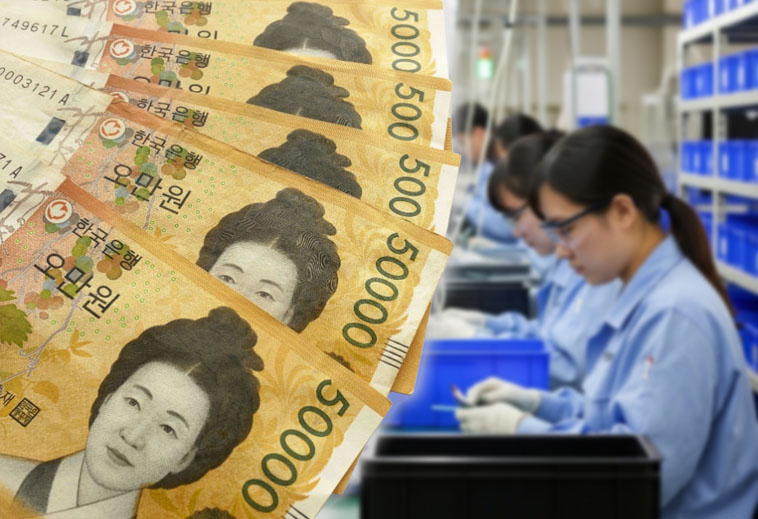
A Snapshot of Salaries for Foreign Workers
Recent official surveys show that more than half of foreign workers in Korea earn between 2 million and 3 million Korean won per month that’s roughly USD 1,500 to 2,000 depending on the exchange rate.
A detailed government employment survey revealed:
- About 51% of foreign wage workers fall into this 2 M–3 M won monthly salary range.
- Larger proportions of international students and less experienced workers tend to earn on the lower end (1 M–2 M won per month).
When you think about this in practical terms, for many foreign workers especially those in non-professional or manual jobs average monthly earnings often sit around this 2.0 M–3.0 M won bracket. It doesn’t mean everyone earns exactly that, but it’s where the largest share clusters.
Annual Income in Context
Another way to look at it is on a yearly basis: A recent study on economic activity among foreigners in Korea showed that average annual earnings for foreign residents reached about 31.8 million Korean won which breaks down to roughly 2.65 million won per month before taxes.
That figure includes all sectors and experience levels, so don’t be surprised if entry-level jobs, part-time roles or student work fall below the annual average.
Why Salaries Often Sit Below the National Average
If you compare foreign worker earnings with the overall average Korean monthly salary which recent data suggests is around 3.33 million won you’ll notice that many foreign workers earn less than the national average.
There are a few reasons for this:
- Many foreigners are employed in non-professional, manual or service roles, which tend to pay less.
- Language and cultural barriers can limit access to higher-paying positions.
- Contract work, part-time jobs, and seasonal roles are common among students or short-term residents.
That doesn’t mean all foreign workers are stuck in lower-paying jobs, but the largest proportion currently is in sectors where wages typically aren’t high especially compared to professionals in IT, finance, or technical fields.
Different Job Types, Different Pay
Just like in other countries, how much you earn in Korea depends heavily on job type, industry, and skill level.
Entry-Level or Manual Jobs
Foreign workers in manufacturing, hospitality, construction, retail, and basic service work usually fall into the lower end of the salary spectrum around 2 M to 3 M won per month.
Professional or Skilled Roles
If you’re working in a field that requires specialized skills or degrees for example IT, engineering, teaching (especially at universities), finance, or multinational companies salaries can stretch well above the average worker range. Anecdotal reports from foreigners suggest mid-level professional salaries often sit around 4 M–5 M won per month or more, and highly specialized roles can go significantly higher, though these cases are less common than the statistics for manual roles.
Part-Time or Student Work
International students and part-time workers typically earn closer to minimum wage or slightly above, depending on hours and visa restrictions. In 2025 Korea’s minimum wage is just over 10,000 won per hour, which gives a baseline for many part-time positions.
How Location Affects Your Salary
Where you work in Korea also influences earnings.
- Seoul and the metropolitan area generally offer higher pay and more job opportunities but the cost of living there, particularly housing, is also significantly higher.
- Regional cities like Busan, Daegu, or Gwangju may offer lower salaries but also typically lower living expenses.
This pattern is common across many countries large cities pay more, but you often end up spending more too.
Salary Trends: Are Things Improving?
Income levels for foreign workers have been rising gradually. Annual wage figures for foreign residents increased from previous years a sign that economic activity and integration are improving.
At the same time, debates around wage gaps, job quality, and career mobility continue especially discussions about how to support foreigners in securing higher-paying positions with better prospects.
Tips for Foreign Workers in Korea
1. Learn Korean: Even basic language skills can unlock better job opportunities and higher pay.
2. Check industry standards: Research typical salaries in your field before accepting a job offer.
3. Understand your visa rules: Some visas restrict the type or hours of work you can do, which affects earnings.
4. Negotiate smartly: In professional roles, don’t be afraid to discuss salary expectations especially if your experience is relevant.
Final Thoughts
The average salary for foreign workers in Korea tends to fall into the 2 million to 3 million won per month range, with annual averages around 31.8 million won but this masks a wide diversity based on job type, skill level, and location.
While many people earn livable wages in Korea, the figures reflect both opportunities and challenges especially when compared to local averages and the cost of living in cities like Seoul. If you’re planning to work here, understanding these realities helps you set expectations and negotiate your path forward with confidence.