
The Difference Between People Who Are Good at Korean and Those Who Aren’t
When watching Korean TV programs about international marriages, it is easy to find foreign women who have been married to Koreans for 10 to 20 years and have raised children in Korea, yet still struggle with Korean pronunciation and have difficulty expressing themselves naturally in Korean.
Likewise, there are many foreign workers who came to Korea for employment and have lived there for 3 to 5 years, but still cannot speak even basic Korean properly.
On the other hand, I once watched a Japanese woman in her 20s on YouTube who came to Korea as a tourist without knowing a single word of Korean, but eventually decided to live there.
Interestingly, she said she never attended a Korean language academy. Instead, she taught herself Korean by watching YouTube videos and Korean dramas. In just two years, she was speaking Korean with pronunciation that sounded almost identical to a native Korean speaker. During interviews, she answered difficult questions clearly, confidently, and without hesitation.
These days, many foreign women in their 20s, regardless of what country or region they come from, develop very smooth and natural Korean pronunciation after living in Korea for only two or three years.
In particular, participants from King Sejong Institute Korean speech contests around the world often speak Korean so perfectly that they sound almost like native speakers.
So why is it that some people still struggle with Korean even after living in Korea for more than 10 years, while others can master Korean perfectly without even living in Korea for very long? That is the question we want to explore.

Living in Korea Does Not Automatically Create Natural Pronunciation
One of the biggest misconceptions foreigners have is believing that living in Korea automatically improves Korean pronunciation naturally. In reality, many foreigners develop survival Korean instead of natural Korean.
They learn enough Korean to function. Ordering food. Using transportation. Working. Handling daily routines. But communication ability and pronunciation mastery are completely different things.
A person can survive socially for years using heavily accented Korean without ever seriously changing pronunciation habits. Once those speech habits stabilize emotionally, improvement becomes much harder later. This is why some foreigners remain stuck at similar pronunciation levels even after a decade.
The Best Korean Speakers Listen Constantly
Foreigners who develop near native pronunciation almost always share one habit: Extremely deep listening. Not passive listening. Active listening. They repeatedly imitate Korean speech patterns obsessively.
K-dramas. Podcasts. YouTube. Livestreams. Ordinary Korean conversations. They do not only memorize vocabulary. They study sound emotionally.
How Koreans pause. How intonation rises. How sentences soften. How emotions appear through tone. How casual speech flows naturally. Over time, these learners stop hearing Korean as separate words.
They begin hearing Korean as rhythm and emotional movement. That changes pronunciation dramatically.
Many Long Term Learners Never Train Their Ears Properly
This is another major difference. Some foreigners focus heavily on grammar, reading, or vocabulary while neglecting listening discrimination. But Korean pronunciation depends heavily on hearing subtle sound differences accurately first.
Especially tense consonants.
- ㅂ, ㅍ, ㅃ.
- ㄷ, ㅌ, ㄸ.
- ㄱ, ㅋ, ㄲ.
For many foreigners, these differences initially sound almost identical. Some learners never fully train their ears to distinguish them naturally. As a result, incorrect pronunciation patterns become permanent habits over time.
Meanwhile, strong learners spend huge amounts of time training their ears early. Once listening improves, pronunciation often improves surprisingly fast afterward.
Near Native Speakers Usually Imitate Aggressively
Many foreigners feel embarrassed copying Korean pronunciation too strongly. They worry about sounding fake, awkward, or unnatural. So they unconsciously continue speaking Korean using speech patterns from their own language.
But foreigners who improve rapidly often imitate Korean very aggressively. They copy emotional reactions. Speech rhythm. Sentence endings. Pauses. Mouth movement. Voice softness. Tone changes. At first, this imitation can feel uncomfortable psychologically.
But over time, their pronunciation becomes much more natural because their brain adapts to Korean speech patterns directly rather than translating constantly.
Pronunciation Is Deeply Connected to Emotion
One hidden truth about Korean pronunciation is that emotional delivery matters enormously. Korean carries emotional nuance strongly through tone, pacing, and speech endings. Even simple phrases change feeling dramatically depending on delivery.
Foreigners who sound natural usually imitate Korean emotional patterns well. Not only technically correct sounds. They imitate emotional timing itself. Embarrassment. Excitement. Respect. Warmth. Casual intimacy. Politeness.
Koreans often judge “natural sounding Korean” emotionally more than academically. This surprises many language learners.
Some Foreigners Spend Most of Their Time Around Other Foreigners
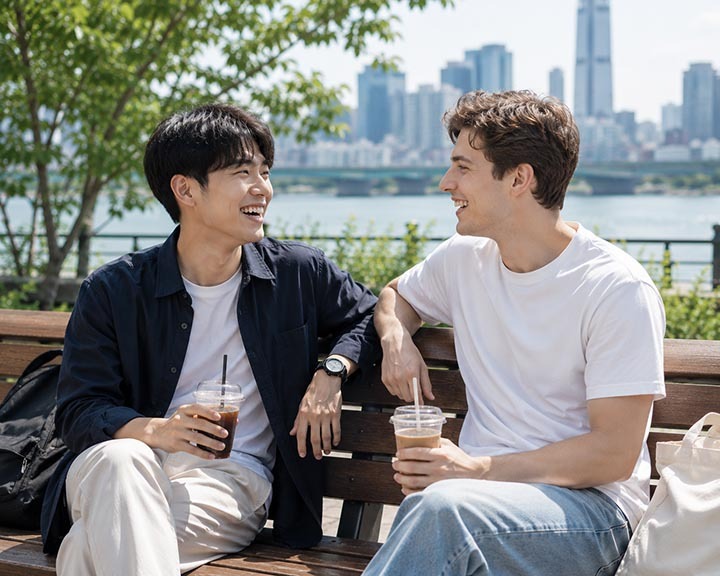
Social environment also changes everything. Many long term foreigners in Korea spend most of their daily lives surrounded by other foreigners. As a result, they repeatedly hear heavily accented Korean every day. Over time, these pronunciation patterns reinforce each other socially.
Meanwhile, foreigners who improve rapidly often spend huge amounts of time around native Korean speakers naturally. Coworkers. Partners. Family members. Friends. Roommates. Classmates.
Constant exposure to ordinary Korean speech slowly changes pronunciation subconsciously. Especially emotional rhythm.
Korean Rhythm Matters More Than Individual Words
Many beginners focus too heavily on individual syllables. But Korean pronunciation depends heavily on flow. Native sounding Korean usually feels smooth rhythmically.
Words connect naturally. Sentence endings soften fluidly. Speech pacing feels emotionally balanced. Foreigners who sound natural eventually stop speaking Korean word by word. Instead, entire phrases begin flowing together naturally. This rhythm shift is one of the biggest differences Koreans notice immediately.
Identity Also Influences Pronunciation
Psychology plays a surprisingly powerful role too. Some foreigners emotionally resist sounding “too Korean.”
Others fully embrace Korean speech identity naturally. People who improve fastest often become comfortable temporarily stepping outside their native speech habits emotionally.
They allow themselves to sound Korean rather than constantly protecting familiar pronunciation patterns from their original language. This psychological flexibility speeds improvement dramatically.

Adults Can Still Develop Excellent Pronunciation
Some people believe only children can sound natural in Korean. But many foreigners in Korea prove adults can improve pronunciation dramatically too.
However, adults usually require conscious effort. Passive exposure rarely works alone. Foreigners who improve quickly often practice pronunciation intentionally every day.
Recording themselves. Repeating difficult sounds. Comparing speech patterns. Shadowing conversations. Listening repeatedly. Paying attention constantly. This active training matters far more than simply living physically inside Korea.
Confidence Changes Pronunciation Too
Interestingly, pronunciation also improves when learners stop fearing mistakes constantly. Many foreigners speak Korean too cautiously. Their speech becomes tense and fragmented.
Meanwhile, stronger speakers often sound more relaxed emotionally. Even if they make occasional grammar mistakes, their speech rhythm flows naturally. That confidence makes pronunciation sound more native overall.
Why Some Foreigners Improve So Fast
Ultimately, the foreigners who develop near native Korean pronunciation usually approach Korean differently psychologically. They do not only study Korean.
They absorb Korean emotionally. They imitate deeply. Listen constantly. Adapt rhythm naturally. Accept temporary awkwardness. Pay attention obsessively to sound itself. Over time, Korean stops feeling translated inside their head. It begins feeling emotionally automatic.
And that is usually the moment Koreans suddenly react with surprise. Because the foreigner no longer simply sounds like someone speaking Korean. They sound like someone emotionally thinking in Korean rhythm itself.