
High Paying Jobs for Skilled Welders and Engineers
For many years, South Korea has been recognized as one of the world’s leading manufacturing economies. Global companies build everything from ships and automobiles to semiconductors, batteries, robotics, heavy machinery, and advanced industrial equipment. Behind every successful factory and engineering project is a highly skilled workforce that keeps these industries moving forward.
Today, however, Korea faces a growing shortage of experienced technical workers. As the population ages and fewer young Koreans choose physically demanding industrial careers, companies are increasingly looking for skilled professionals from overseas. This has created new opportunities for qualified welders, engineers, machinists, technicians, and industrial specialists who want to build long term careers in Korea.
For foreign professionals with the right experience, Korea offers much more than competitive salaries. It provides access to world class technology, stable employment, modern workplaces, and valuable international career experience.
Why Korea Needs More Skilled Technical Workers
The Korean economy depends heavily on manufacturing and advanced technology. Industries such as shipbuilding, automotive production, aerospace, semiconductor manufacturing, renewable energy, and industrial automation continue expanding while experienced workers retire every year.
At the same time, many younger Koreans prefer careers in office based professions, finance, software, or creative industries rather than heavy manufacturing.
As a result, employers increasingly recruit experienced international workers who already possess practical technical skills and can contribute immediately after joining the company. This growing demand is expected to continue for many years.
The Industries Offering the Best Opportunities
Several industries consistently hire skilled foreign professionals. Shipbuilding remains one of Korea’s largest employers of certified welders, pipe fitters, steel fabricators, and mechanical technicians. Large shipyards regularly require experienced workers for commercial vessels, offshore platforms, and specialized marine equipment.
The automotive industry also offers opportunities for mechanical engineers, production engineers, quality control specialists, automation technicians, and manufacturing supervisors.
Semiconductor companies seek electrical engineers, process engineers, maintenance technicians, equipment specialists, and automation professionals as Korea continues investing billions in advanced chip production.
Construction, renewable energy, robotics, and industrial machinery manufacturers are also expanding their recruitment of experienced technical professionals.
Welders Continue to Be in High Demand
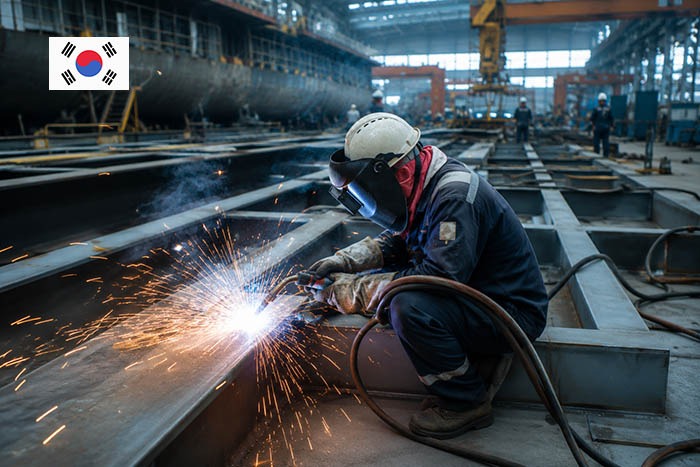
Among technical occupations, welding remains one of the most consistently requested skills. Certified welders are essential for shipbuilding, heavy equipment manufacturing, industrial construction, pipelines, pressure vessels, and large steel structures.
Employers often value practical experience as much as formal education. Workers who understand modern welding techniques, safety procedures, blueprint reading, and quality inspection are highly respected.
Specialized welding certifications can significantly improve employment opportunities and earning potential, particularly for professionals experienced in industrial or marine projects.
Engineers Have Excellent Career Prospects
Engineering remains one of Korea’s strongest professional sectors. Mechanical engineers help develop advanced manufacturing systems and production equipment. Electrical engineers work with power systems, industrial controls, automation, and electronic manufacturing.
Civil engineers participate in major infrastructure projects while chemical engineers contribute to battery technology, advanced materials, and semiconductor production. Industrial engineers improve production efficiency through data analysis, quality management, and process optimization.
Engineers with international project experience are particularly attractive to companies expanding into global markets.
Do You Need to Speak Korean
This is one of the first questions many applicants ask. The answer depends largely on the employer and the position.
Large multinational corporations often operate in English for engineering documentation, technical meetings, and international projects. Employees with strong technical expertise may begin working even while improving their Korean language skills.
Smaller companies usually prefer candidates who can communicate comfortably in Korean because daily instructions, safety briefings, and teamwork rely on effective communication. Even learning basic workplace Korean demonstrates commitment and greatly improves long term career prospects.
Salary Depends on Skills and Experience
Many people assume every technical job pays the same. In reality, salaries vary depending on experience, certifications, industry, company size, project complexity, and individual responsibilities.
Professionals working in advanced manufacturing, semiconductor production, offshore engineering, industrial automation, or highly specialized welding often receive higher compensation than entry level positions.
Additional benefits may include housing assistance, overtime pay, performance bonuses, transportation support, meals, annual leave, and professional training opportunities. Rather than focusing only on the starting salary, experienced professionals often evaluate the complete compensation package when comparing job offers.
Modern Korean Workplaces Have Changed
Some foreigners still imagine Korean factories as outdated industrial environments. Modern manufacturing facilities are often surprisingly advanced.
Many factories use robotics, artificial intelligence, automated inspection systems, digital production monitoring, and smart manufacturing technologies.
Safety standards have also improved significantly over the past decade. Companies increasingly invest in protective equipment, safety education, and workplace training because employee safety directly affects productivity and long term business success.
Foreign professionals are often impressed by the level of technology used throughout Korean manufacturing.
Building a Long Term Career
Many skilled workers initially arrive in Korea planning to stay only a few years. After gaining experience, however, some move into supervisory positions, quality management, engineering support, production planning, technical consulting, or international project coordination.
Others continue developing specialized expertise through additional certifications or advanced technical training provided by their employers.
Because Korean companies increasingly operate around the world, experienced employees may eventually participate in overseas projects or collaborate with international engineering teams. For motivated professionals, technical careers in Korea can become the foundation for a successful international career.
Challenges Every Applicant Should Understand
Like any country, Korea presents challenges alongside its opportunities. Workplace culture may differ from what foreign professionals are accustomed to. Teamwork, punctuality, attention to detail, and following standardized procedures are highly valued.
Some projects involve shift work or production schedules that require flexibility. Learning technical Korean vocabulary takes time, especially for workers handling machinery, engineering documentation, or safety procedures.
Fortunately, many foreign professionals say these challenges become much easier after several months as they gain confidence and become familiar with their workplace.
What Employers Look For
Technical ability is always important, but employers often evaluate several additional qualities. Reliable attendance, strong safety awareness, problem solving skills, teamwork, and willingness to learn are frequently mentioned during recruitment.
Professional certifications, previous industrial experience, and the ability to understand technical drawings or engineering documentation also strengthen an application.
Companies appreciate employees who remain curious, continuously improve their skills, and adapt to new technologies as manufacturing evolves. These qualities often matter just as much as formal qualifications.
Final Thoughts
South Korea is no longer only a destination for teachers, office workers, or international students. It has become one of Asia’s most attractive countries for skilled technical professionals seeking stable employment and long term career growth.
Whether you are an experienced welder, mechanical engineer, electrical engineer, automation technician, or manufacturing specialist, Korea offers opportunities to work with some of the world’s most advanced industries while developing valuable international experience.
Success requires more than technical knowledge. Professionals who combine strong practical skills with continuous learning, respect for Korean workplace culture, and a willingness to improve their language ability often build rewarding careers that continue growing for many years.
For skilled workers ready to take the next step, Korea is no longer simply a place to find a job. It is a place where technical expertise can open the door to an exciting international future.