The Pros and Cons for English Instructors in Korea
You’ve got your E-2 visa, your degree, and a one-way ticket. Now comes the biggest decision for teaching in Korea: Do you join the stability of the Public School system (like EPIK/GEPIK) or the high-energy environment of a private academy (Hagwon)?
As a local who’s seen thousands of foreign instructors thrive (and occasionally struggle) in both settings, I can tell you that neither is perfect. Your best choice depends entirely on your personal priorities: do you value work-life balance and structure, or do you prefer higher pay and more hands-on teaching?
Here is the honest, side-by-side comparison to help you choose your classroom battlefield!
1. Public School System (EPIK/GEPIK): The Stability Champion
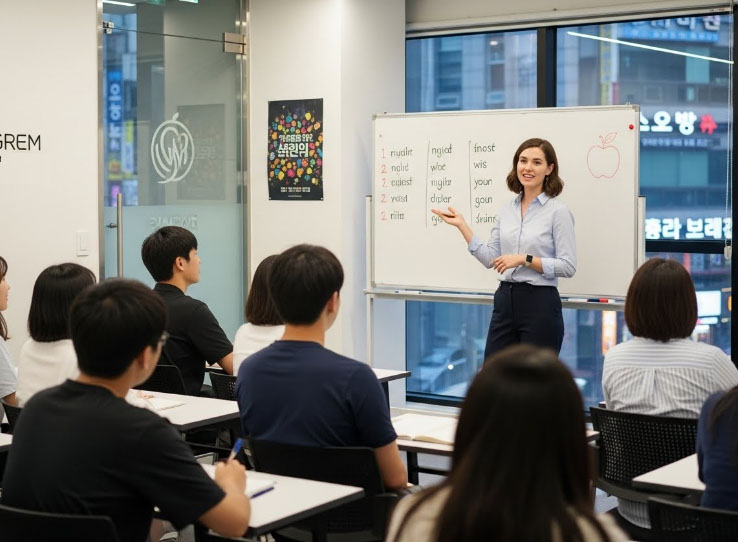
Public schools are run by the government and offer a highly structured environment focused on academic consistency.
O: Pros (Why Teachers Love It)
Work-Life Balance is King: You get the best vacation time in the industry typically 4 weeks of paid vacation per year, plus all national holidays. Your working hours are fixed (usually 8:30 AM to 4:30 PM).
Predictable Curriculum: You often co-teach with a Korean co-teacher, which reduces planning pressure.
Excellent Benefits: They offer a large settlement allowance upon arrival and secure access to the National Health Insurance and Pension.
X: Cons (The Challenges)
Lower Salary Ceiling: The salary is strictly based on a fixed government pay scale (education/experience). Your growth potential is limited compared to top Hagwon positions.
Location Risk: You often have less control over where you are placed. You might end up in a remote, rural area instead of a major city like Seoul or Busan.
Co-Teacher Dependence: You rely heavily on your Korean co-teacher for classroom management, cultural translation, and administration. This relationship can be great, but a bad match can make work difficult.
2. Private Academies (Hagwons – 학원): The Fast-Paced Grind
Hagwons are private businesses focused on supplementing public education, offering intensive after-school classes.
O: Pros (Why Teachers Choose It)
Higher Salary Potential: Hagwons often offer a higher base salary (especially for experienced or specialized teachers) and sometimes offer performance bonuses.
Location Control: You apply directly to a specific city and neighborhood, giving you more control over your living situation.
Teaching Autonomy: You often teach solo classes, giving you more freedom to design lessons and execute your own teaching style.
X: Cons (The Challenges)
Brutal Workload and Hours: Expect long hours, often late into the evening (2 PM to 10 PM), as classes are held after students finish public school. You may have frequent split shifts.
Minimal Vacation: Vacation time is severely limited often only 7–10 days per year. Taking time off can be difficult.
Job Stability Risk: Hagwons are private businesses. They can close, and contract violations (though illegal) are reported more frequently than in the public system. You must research the academy heavily before signing.
The Final Choice: What is Your Priority?
Choose Public School (EPIK): If your priority is stability, minimal stress, saving money on living expenses, and maximizing vacation time for travel.
Choose Hagwon: If your priority is higher monthly disposable income, living in a specific metropolitan area, and having more control over your classroom teaching style.
Know your non-negotiables, vet your contract meticulously, and prepare for a rewarding teaching career in Korea!