
Myanmar-Korean Families Living in Korea
When people think of multicultural families in Korea, they usually imagine Vietnamese-Korean or Filipino-Korean households. But there’s another group that quietly contributes to Korea’s increasingly diverse society: Myanmar-Korean families. These families some formed through marriage migration, others through resettlement and asylum programs bring their own mix of traditions, challenges and resilience to life in Korea.
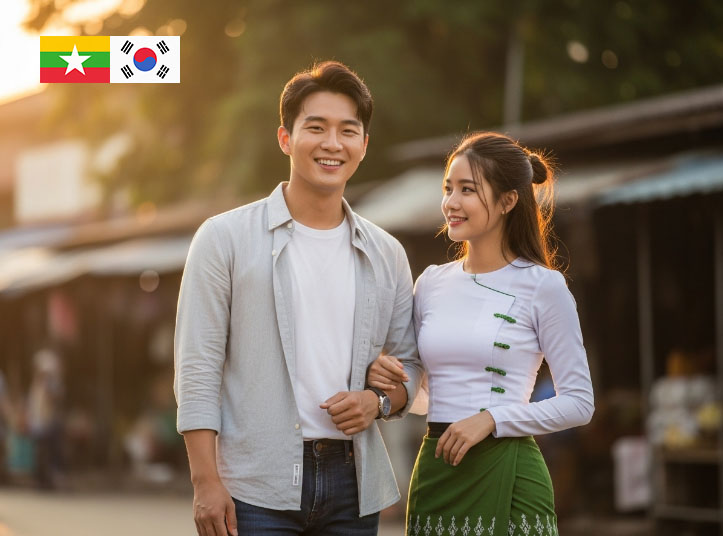
A Growing Myanmar Community in Korea
First, let’s set the stage. According to diaspora research, roughly 27,000 Burmese nationals live in South Korea among the largest Southeast Asian communities in the country. They include migrant workers, students, asylum seekers, refugees, and families settled here long-term.
Many of them cluster in places like Bupyeong District in Incheon, a neighborhood that locals sometimes call “Myanmartown” due to its concentration of Myanmar restaurants, grocery stores, and temples.
This community isn’t new. It gradually grew over decades starting with migrant laborers and later with refugees arriving through UN-supported programs. Some of these early arrivals have now lived in Korea for decades, become permanent residents, and started families here.
How Myanmar-Korean Families Come Together
There are a few paths to how families form between Myanmar and Korean people:
Marriage migration: Like other multicultural households in Korea, some Myanmar individuals marry Koreans and build families. These unions bring two cultures together under one roof.
Refugee resettlement and humanitarian stays: Families coming through refugee pathways such as from ethnic minorities like the Karen—may settle here with spouses and children, creating multicultural identities.
Labor migration leading to long-term settlement: Some Myanmar workers first come under employment programs, build community ties, and eventually form families that merge cultures.
What connects all these families is not just a shared life in Korea but also a complex identity at the intersection of preserving heritage and adapting to Korean society.
Daily Life and Cultural Balance
Life for Myanmar-Korean families often looks like a blend of cultures. Inside the home, households may speak both languages, celebrate traditional Myanmar festivals like Thingyan (Myanmar New Year), and also navigate Korean school schedules and holiday customs.
It’s not always simple. Many parents, especially those who came as adults, find Korean language and culture challenging to master fully. This makes things like doctor’s appointments, school meetings, and official paperwork feel intimidating at first.
But over time, community networks and informal support systems like local Myanmar grocery shops, temples, and weekend gatherings in districts like Bupyeong help families retain a sense of cultural continuity while learning to navigate Korea.
Children growing up in these households often become the bridge between cultures. They pick up Korean quickly at school, help at home with translation, and often develop a bicultural identity that’s uniquely theirs.
For many parents, watching this process is both joyful and bittersweet: a sign of integration, but also a reminder of the cultural roots they carry with them.
Community, Challenges and Solidarity
One remarkable thing about the Myanmar diaspora here is how strongly people connect with each other in community organizations. Beyond family life, many Myanmar nationals in Korea are involved in efforts for democratic movements back home, fundraising, and cultural advocacy in collaboration with Korean civil society groups.
These joint activities have given the community visibility and brought mutual understanding between Koreans and Myanmar residents.
At the same time, families face challenges familiar to many immigrant communities: navigating educational systems for their children, securing stable work, and dealing with cultural misunderstanding.
Some smaller towns across Korea are even exploring inviting Myanmar refugees and families to settle in order to revitalize local populations, reflecting broader demographic needs.
How Korea Sees Multicultural Families
Korean society has evolved rapidly over the last decade. Once a relatively homogenous country, Korea now has over 2.7 million people with migrant backgrounds about one in every 20 residents according to official statistics.
For Myanmar-Korean families, this changing value system means better access to resources like multicultural family support programs, Korean language classes, and community centers. It also means more public recognition of the fact that family life in Korea comes in many forms some rooted in local traditions, others woven from global stories.
Looking Forward: Life, Identity, and Belonging
When I meet Myanmar-Korean families, what strikes me most is their resilience and adaptability. From cooking traditional dishes for Korean neighbors to celebrating cultural holidays side by side, these families are quietly shaping what it means to be multicultural in today’s Korea.
Their stories may not always make headlines, but they are a genuine part of the modern Korean narrative one where global movement, cultural exchange, and the everyday joys and struggles of family life converge.