
The 10-Year Rule: Why Most International Marriages in Korea Succeed or Fail
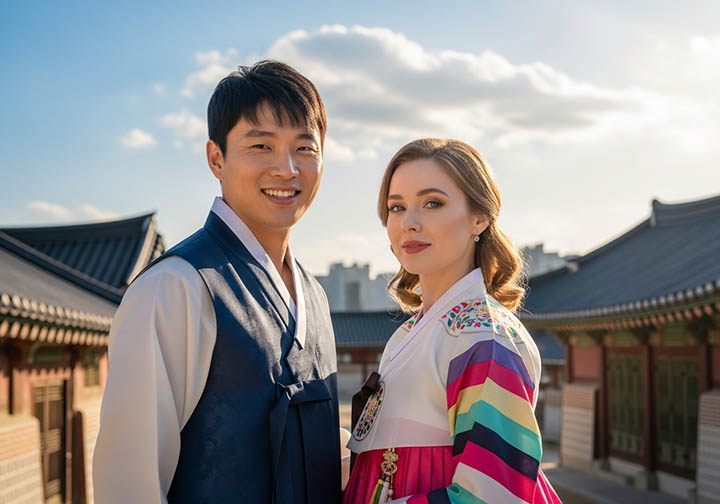
The Decade Milestone: More Than Just an Anniversary
In the world of international marriage in South Korea, the ten-year mark is often whispered about like a mythical finish line. If you make it to a decade, you’ve survived the visa hurdles, the linguistic barriers, and the initial shock of meeting the in-laws. But why do some couples become an inseparable power duo while others find themselves at a lawyer’s office in Seocho-dong exactly at the ten-year mark?
As a consultant who has watched the evolution of multicultural families in Korea for years, I can tell you that the “10-year rule” isn’t about luck. It is about a fundamental shift in how you navigate “K-Reality” once the K-drama filters have completely faded away. Here is the unvarnished truth about what keeps these marriages together and what pulls them apart in 2026.
The “Individual vs. Family” Identity Crisis
The most common reason for failure at the ten-year mark is the delayed explosion of cultural friction regarding family roles. In the beginning, the “passion” carries the weight. But around year seven or eight, as parents age or children reach school age, the traditional Korean “family-first” hierarchy often clashes with Western “individual-first” values.
Success stories come from couples who have negotiated a “Third Culture” within their home. They don’t try to be 100% Korean or 100% Western. The couples who fail are often those where one partner feels they have “erased” their original identity to fit into a rigid Korean family structure. By year ten, that resentment becomes a wall that no amount of affection can climb over.
The Linguistic Glass Ceiling
You would think that after ten years, language wouldn’t be an issue. However, “survival Korean” is very different from “emotional Korean.” Many international marriages hit a plateau where the couple can discuss dinner plans and bills perfectly, but they struggle to discuss deep philosophical fears or complex emotions in a shared language.
The marriages that thrive are those where both partners have made a continuous effort to meet in the middle. If the foreign spouse reaches an advanced level of Korean, and the Korean spouse maintains an active interest in the foreign spouse’s native tongue, the “emotional intimacy gap” closes. Without this, the ten-year mark often feels like living with a very familiar, very friendly stranger.
The Financial Pivot: From Renting to Investing
Money in Korea is a team sport. By the ten-year mark, most couples are looking at serious milestones like buying an apartment (the “Apartment Dream”) or planning for retirement. This is where many international couples clash. In Korea, financial transparency often extends to the extended family. If one partner wants to send money to their parents or invest in a way the other finds risky, it creates a unique kind of stress.
Successful couples are those who have mastered the “Korean Banking” mindset understanding how Jeonse, high-yield savings, and real estate work while maintaining the Western value of financial autonomy. Those who fail to synchronize their 10-year financial plan often find themselves arguing about “The Future” until there isn’t one left.
The Parenting Trap and Education Fever
Nothing tests a marriage in Korea like the education system. When the kids hit elementary or middle school, the “Tiger Parent” instinct often kicks in for the Korean side, while the foreign side may prioritize “Happiness and Creativity.”
I have seen countless marriages crumble under the pressure of Hagwon (private academy) schedules. The “succeeders” are the couples who decide early on what their “Family Brand” of education is. They stand as a united front against societal pressure. The “failers” are those who let the education of their children become a proxy war for whose culture is “superior.”
The Social Support Network: Building a “Village”
Finally, the ten-year mark is where isolation takes its toll. If the foreign spouse’s only social outlet is their partner, the marriage will eventually suffocate under the weight of being “everything” to that person.
Successful long-term expats in Korea have built their own independent “villages”a mix of Korean friends, fellow expats, and professional networks. They have a life that exists outside of their marriage. When a couple is two whole individuals choosing to be together, rather than two halves leaning on each other for survival, they breeze past the ten-year mark and into a lifelong partnership.