
Korean Romance vs Mexican Romance
Korea and Mexico are thousands of miles apart, and their dating cultures developed from very different histories and social traditions. Yet when you look closely at relationships in both countries, there are some interesting similarities, especially when it comes to family, loyalty, celebrating relationships, and spending time together.
The biggest differences often appear in how affection is expressed. Korean romance can feel more subtle and structured, while Mexican romance may feel warmer and more openly expressive. These are broad cultural tendencies rather than rules, and personality always matters more than nationality.
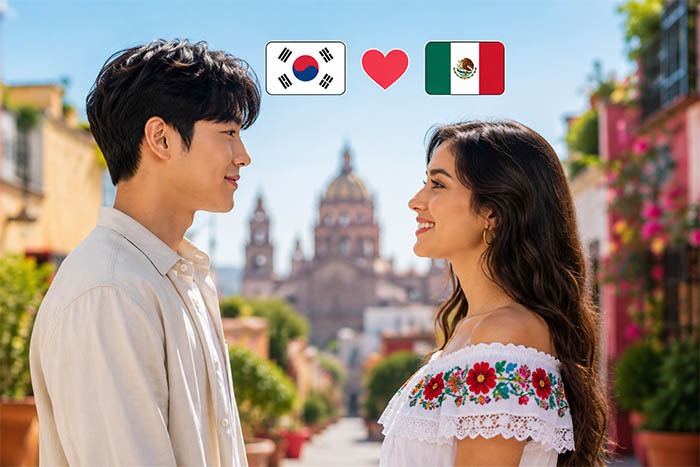
Korean Romance Often Starts More Carefully
In Korea, relationships can begin quite cautiously. Some couples meet through friends, work, university, social gatherings, or dating apps, while introductions arranged through mutual acquaintances are also familiar.
A first date may be relatively simple, such as meeting at a cafe or having dinner together. Instead of making the evening overly romantic from the beginning, both people may spend time deciding whether they are genuinely comfortable with each other before showing stronger affection.
Mexican Romance Can Feel More Expressive
Mexican dating culture is diverse, but affection can often feel more openly expressed than what some foreigners experience in Korea. Compliments, warm conversation, physical closeness, and direct expressions of interest may appear relatively naturally once two people become comfortable.
For someone accustomed to a more reserved dating style, this warmth can initially feel intense. However, it should not automatically be interpreted as a sign that the relationship is already serious, since friendliness and emotional expressiveness can also be part of ordinary social interaction.
Communication Can Feel Very Different
Korean couples often communicate frequently through messaging, and everyday updates can become part of the relationship. A message in the morning, conversation during lunch, and checking whether your partner arrived home safely can feel completely ordinary for many couples.
Mexican couples may also communicate frequently, but emotional expression can sometimes be more direct. Instead of only showing affection through routine contact, feelings may be expressed more openly through words, humor, compliments, and physical warmth.
KakaoTalk Is Part of Korean Dating Life
In Korea, KakaoTalk is closely connected to everyday relationships. Couples use it to arrange dates, send photos, share daily experiences, and stay connected throughout the day.
This can surprise foreigners who are accustomed to less frequent messaging. If one partner expects regular communication while the other thinks one or two messages a day are enough, a simple cultural difference can quickly turn into an unnecessary relationship problem.
Korean Couples Often Enjoy Structured Dating
One noticeable part of Korean dating culture is how naturally couples build activities around their relationship. Dinner may be followed by a cafe, a walk, shopping, a movie, or another activity rather than ending immediately after the meal.
Korea’s cities make this particularly easy because restaurants, cafes, cinemas, parks, shopping districts, and entertainment are often located close together. A date can continue for hours without requiring much advance planning.
Mexican Dating Can Be More Social
Dating in Mexico can sometimes become connected to a wider social circle earlier. Friends, siblings, cousins, and family gatherings may gradually become part of the relationship, particularly once the couple becomes more serious.
This can feel different from a Korean relationship that begins with more private time between two people. However, both cultures can place considerable importance on family once a relationship moves toward long term commitment.
Family Matters in Both Cultures
This is where Korea and Mexico may have more in common than many people expect. Family relationships can remain important well into adulthood, and marriage may involve building a relationship with your partner’s family as well as your partner.
In Korea, parents may have opinions about marriage, employment, housing, education, and future children. Mexican families can also be close and influential, although every family handles relationships differently.
Meeting the Parents Can Change the Relationship
Casually dating someone and being formally introduced to their parents are not always the same thing. In Korea, meeting parents in a serious context can suggest that the relationship is moving toward a more committed stage.
The same can be true in Mexico, although family interaction may sometimes begin more casually. For an international couple, meeting the family can also bring questions about language, nationality, religion, where the couple will live, and what happens if they eventually marry.
Korean Couples Love Relationship Milestones
Korean dating culture is well known for relationship anniversaries. Some younger couples celebrate their 100th day together, and couple rings or matching items can symbolize the relationship without necessarily meaning engagement.
Not every Korean couple does this, especially as people get older, but relationship milestones remain familiar. A foreign partner who considers anniversaries unimportant may therefore want to ask what their Korean partner actually expects rather than simply ignoring them.
Romantic Gestures Can Look Different
Korean romance is sometimes expressed through small practical gestures. Bringing your partner something they like, making sure they get home safely, remembering an important date, or buying coffee on a difficult day can carry a lot of meaning.
Mexican romance may sometimes appear more openly emotional through affectionate language, compliments, music, celebrations, or physical closeness. Neither approach is more romantic. They simply communicate affection in different ways.
Public Affection Can Feel Different
Holding hands and walking arm in arm are completely normal for Korean couples, while casual hugging and other moderate affection are also common. More intense displays of affection may attract attention depending on the location and generation.
Mexican social culture can feel physically warmer to some Korean visitors, with affection expressed more naturally through hugs, kisses, and closer personal interaction. International couples should remember that comfort with physical affection is ultimately personal rather than something nationality can predict perfectly.
Who Pays for the Date?
Traditional expectations that men pay for dates still exist in both cultures to some degree, but younger generations are changing these habits. In Korea, it is common for one person to pay for dinner while the other buys coffee or pays for the next activity.
The same basic principle is increasingly relevant in international relationships. Instead of arriving with assumptions based on gender or nationality, couples usually avoid misunderstandings by discussing money naturally as the relationship develops.
Jealousy Can Become a Cultural Misunderstanding
International couples sometimes discover that they have very different ideas about friendships with the opposite sex, nightlife, social media, and how much information partners should share about their daily lives.
These disagreements should not automatically be explained as Korean jealousy or Mexican jealousy. Healthy boundaries depend on the individuals involved, and controlling behavior should never be excused simply because someone claims it is part of their culture.
Language Changes the Relationship
Dating across Korean, Spanish, and English can be exciting in the beginning. Learning romantic expressions and laughing about translation mistakes can actually bring a couple closer.
The challenge appears when the relationship becomes serious. Discussing marriage, finances, family conflict, jealousy, children, or future plans requires much more language ability than ordering food together, which is why international couples benefit greatly from learning each other’s language.
Marriage Makes Cultural Differences More Important
During dating, cultural differences can feel interesting and even romantic. After marriage, those same differences become practical questions about where to live, how to manage money, which language to use at home, and how often to visit each family.
For Korean and Mexican couples, distance can become especially important because maintaining relationships with two families on opposite sides of the world requires time and money. These issues are much easier to discuss before marriage than after they become urgent.
Do Not Date a Stereotype
K-Dramas can create unrealistic expectations about Korean men and women, just as romantic stereotypes about Latin culture can create exaggerated ideas about Mexican partners.
Real people are much more complicated. Some Koreans are extremely affectionate and spontaneous, while some Mexicans are quiet and reserved. National culture can influence a relationship, but it does not determine someone’s personality.
Which Dating Culture Is More Romantic?
There is no meaningful winner. Korean romance may appeal to someone who enjoys frequent communication, thoughtful everyday gestures, couple activities, and relationship milestones, while aspects of Mexican romance may appeal to someone who appreciates warmer emotional expression and strong social connections.
The interesting part of an international relationship is not deciding which culture is better. It is discovering which traditions and habits from both cultures actually work for the two people involved.
Final Thoughts
Korean and Mexican romance can feel very different on the surface. Korean dating may appear more structured and subtle, while Mexican dating can sometimes feel more emotionally expressive and socially warm.
Look deeper, however, and both cultures can place significant value on family, loyalty, spending time together, and maintaining close relationships. Those similarities can become important when a casual international relationship turns into something serious.
The best Korean Mexican relationships are unlikely to succeed because one partner completely adapts to the other’s culture. They work when both people become curious about each other’s way of expressing love and gradually create a relationship culture of their own.
Culture explains some differences, but it should never replace communication. In the end, understanding the person sitting across from you matters much more than understanding every dating rule associated with their passport.