
How Filipinos Find Jobs in Korea Without Speaking Perfect Korean
For many Filipinos, one question comes up again and again before applying for jobs in South Korea. Do I need to speak perfect Korean before I can get hired?
The short answer is no. Perfect Korean is not a requirement for every job. While speaking Korean certainly creates more opportunities, many Filipinos have successfully started careers in Korea with only basic language skills. After living in Korea and meeting workers from different countries, I have seen that employers often value reliability, attitude, and willingness to learn just as much as language ability.
Understanding where language matters and where it matters less can help you build a realistic plan for working in Korea.
Not Every Job Requires Advanced Korean
One of the biggest misunderstandings is that every company expects foreigners to speak fluent Korean. In reality, language requirements vary depending on the type of work.
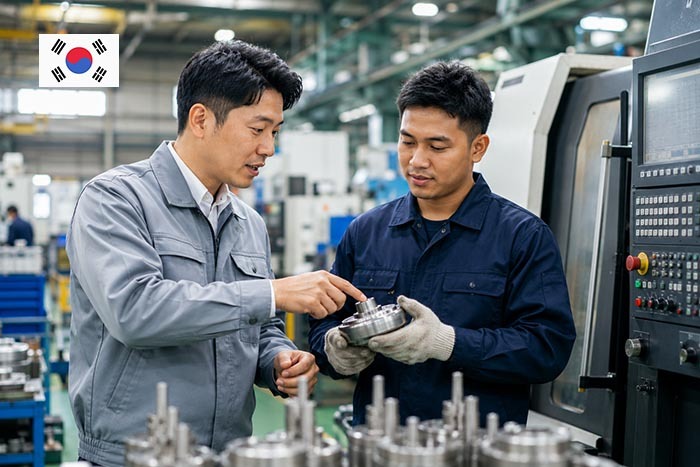
Manufacturing companies, logistics centers, food processing factories, farms, fisheries, and some construction sites often provide training that relies heavily on demonstrations and teamwork. Workers gradually improve their Korean naturally while working every day.
Jobs involving customer service, office administration, sales, healthcare, or education usually require much stronger Korean communication because employees regularly interact with customers and colleagues.
Why Employers Still Hire Workers with Basic Korean
Many Korean employers understand that foreign workers arrive with different language abilities. Companies that regularly hire international employees often have experienced supervisors who know how to communicate clearly using simple Korean, visual instructions, and practical demonstrations.
In many workplaces, experienced foreign employees also help newcomers understand daily tasks. This supportive environment allows workers to improve their language skills while gaining valuable work experience.
From the employer’s perspective, dependability, punctuality, and a positive attitude often matter more during the first few months than perfect pronunciation.
Basic Korean Still Makes a Huge Difference
Although perfect Korean is unnecessary for many entry level positions, learning the basics before arriving in Korea provides a significant advantage.
Simple greetings, workplace vocabulary, numbers, safety instructions, and common expressions reduce misunderstandings and help workers gain confidence more quickly.
Supervisors also appreciate employees who actively try to communicate in Korean, even when their grammar is not perfect. Many Filipino workers tell me that learning practical workplace Korean before arriving made their first months much less stressful.
The Importance of Workplace Safety Language
One area where Korean language should never be ignored is workplace safety. Understanding warning signs, emergency instructions, machine labels, protective equipment requirements, and supervisor directions helps prevent accidents.
Fortunately, these essential expressions can be learned relatively quickly because the vocabulary is repetitive and used every day. Many successful workers focus on safety related Korean first before expanding into more advanced conversations.
How Filipino Workers Improve Korean Naturally
One interesting pattern I have noticed is that many Filipinos become much more confident after only a few months of working in Korea.
Daily conversations during lunch breaks, commuting, shopping, and interacting with coworkers create constant opportunities to practice. Because the language is connected to real situations, vocabulary becomes easier to remember.
Many workers who initially worried about speaking Korean eventually discover they can handle everyday conversations far sooner than they expected.
Which Industries Are Most Accessible?
Several industries continue hiring foreign workers each year.
Manufacturing remains one of the largest employers, especially in electronics, automotive parts, plastics, food production, and machinery.
Agriculture and fisheries also employ many international workers, particularly in rural regions.
Hotels, restaurants, logistics companies, warehouses, and distribution centers have gradually increased international hiring as Korea experiences labor shortages.
Each industry has different language expectations, but many employers prioritize work ethic over language perfection.
Can English Help You Find Work?
English can certainly be an advantage, especially in international companies, tourism, education, and multinational corporations.
However, relying only on English limits the number of available opportunities. Combining English with even basic Korean creates a much stronger profile.
Many Filipino applicants already have excellent English communication skills. Adding practical Korean makes them considerably more competitive in the Korean job market.
The Right Attitude Matters More Than You Think
Whenever I speak with Korean employers, one quality comes up repeatedly. They appreciate employees who continue learning.
Workers who actively ask questions, practice Korean after work, arrive on time, and cooperate with coworkers often receive better evaluations than those who already know more Korean but show little motivation.
Language skills improve with time, but professionalism and responsibility are qualities employers notice immediately.
Common Mistakes New Workers Make
Some applicants delay applying because they believe their Korean is not good enough. Others memorize advanced grammar but never practice speaking.
The most successful workers usually take the opposite approach. They learn practical vocabulary related to their job, speak even when making mistakes, and improve naturally through daily experience.
Waiting for perfect Korean often delays opportunities that could already be available.
How to Prepare Before Coming to Korea
Preparation does not require years of study. Learning Hangul, numbers, directions, workplace vocabulary, transportation, shopping expressions, and basic conversations creates a strong foundation.
Watching Korean workplace videos, listening to simple conversations, and practicing pronunciation every day builds confidence before arrival. Even thirty minutes of daily study over several months produces noticeable improvement.
Building a Long Term Career in Korea
Many Filipinos begin with entry level positions but later move into more specialized roles as their Korean improves. Some become team leaders, machine operators, office coordinators, translators, quality inspectors, or supervisors.
The combination of work experience, stronger Korean ability, and professional skills opens doors that were unavailable during the first year.
Learning never truly stops, but every month brings new confidence and better career opportunities.
Final Thoughts
Perfect Korean is not the starting point for working successfully in South Korea. It is often the result of living, working, and interacting with people every day.
Many Filipino workers arrive with only basic Korean and gradually build both language ability and professional experience. The key is preparing realistically, learning practical communication, staying patient, and continuing to improve after arrival.
For those willing to learn, South Korea offers opportunities that extend well beyond the first job. Language grows naturally through daily life, and every conversation becomes another step toward a stronger career.