
Filipino-Korean Families Living in Korea
A Local Korean’s View
Korea is no longer a society made up of only one cultural thread. Over the past two decades, international marriages have reshaped the social fabric here, bringing together people from all over the world including many from the Philippines to form Filipino-Korean families.
When we talk about multicultural families in Korea, we’re referring to households where one spouse is Korean and the other comes from another country, where children grow up with two languages and two cultural heritages, and where everyday life means mixing traditions and navigating differences.
Filipino-Korean families are part of this broader shift, and their experiences illuminate how Korea’s society is changing sometimes beautifully, sometimes challengingly as it moves toward greater cultural diversity.
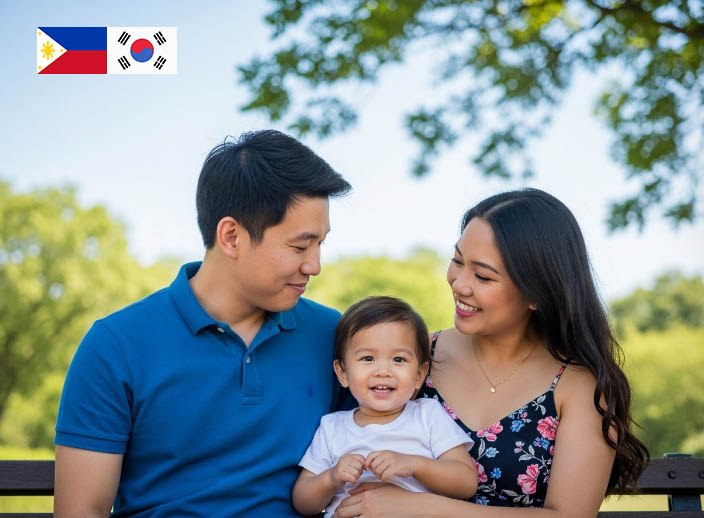
A Growing Reality in Modern Korea
International marriages are not uncommon in Korea today. In census and social surveys conducted by the government, families made up of Korean nationals and foreign spouses have increased steadily. These households now make up a significant portion of Korea’s family landscape, helping redefine what a modern Korean family looks like.
Filipino-Korean families often begin when a Filipino spouse moves to Korea after marriage sometimes through work or study in the Philippines, sometimes through online or offline connections before deciding to build life here. Once here, they become part of the multicultural family network that spans every corner of Korea, from big cities like Seoul and Busan to smaller towns across the country.
Blending Cultures at Home
At the heart of a Filipino-Korean family lies a blend of cultural rhythms. Filipino and Korean traditions are both rich and deeply rooted, but they express themselves in different ways.
Inside the home, it’s common to see:
- Filipino dishes shared with Korean friends and neighbors, whether it’s adobo, pancit, or lumpia alongside kimchi, bibimbap, and Korean barbecue.
- Language mixing where children might speak Korean in school and Filipino or English at home, creating a truly bilingual environment.
- Celebrations of both sets of holidays, like Christmas and New Year traditions from the Philippines and Korean traditions like Chuseok (harvest festival) or Lunar New Year.
This blending isn’t always seamless parents often have to intentionally plan time to teach both languages and explain cultural meanings behind holidays and rituals but it’s also part of what makes these families rich with shared experience.
Raising Children in Two Worlds
Children in Filipino-Korean families grow up with unique cultural identities. Many attend Korean schools and participate in after-school activities like their peers, learning Korean history and traditions as part of their education. But at home, they also hear another language and learn values from Filipino culture like extended family celebrations and community support.
The Multicultural Families Support Act in Korea provides frameworks to support such families, including language education and community programs designed to help children and parents adjust socially and academically. These resources aim to help multicultural children integrate fully into Korean society while retaining connections to their heritage.
Despite these supports, challenges remain. Some children feel pulled between cultural worlds, and parents often work hard to make sure their kids feel comfortable and confident in both settings.
Community and Support Networks
One thing that many Filipino-Korean families share is the importance of community support. Korean multicultural support centers, churches, neighborhood groups, and school networks often become lifelines for parents learning Korean bureaucracy, school expectations, and social norms.
These centers operated under government and local initiatives offer practical assistance with language learning, counseling, and community events. They provide spaces where different cultural practices are acknowledged and respected, helping families connect with others who share similar backgrounds or challenges.
For many Filipino spouses, finding friends from the Philippines who are living in Korea or connecting with multicultural family groups becomes a source of comfort. These networks often help parents share tips about schools, daily life, language classes, and even how to explain cultural differences to curious neighbors or classmates.
Cultural Challenges and Everyday Life
Life in Korea as a multicultural family isn’t always smooth. Korea is historically a more homogeneous society, and people with mixed backgrounds or foreign spouses including Filipino-Korean families sometimes encounter misunderstandings or social biases. Terms that once circulated to describe individuals of mixed heritage have drawn criticism and debate about identity and respect, underscoring the sensitivity around cultural labels.
At the same time, many Koreans are becoming more open and curious about diverse cultures, and children from multicultural families are increasingly visible in school and community activities. One hopeful sign is that more than half of marriage migrants and naturalized citizens have now lived in Korea for more than 15 years, showing that these families are not temporary — they’re building long-term roots.
Parents often focus on teaching respect for both cultures, helping their children feel secure in who they are — which means explaining not just food and holidays but also the deeper values that shape family life in both the Philippines and Korea.
Daily Life From Local Markets to Family Gatherings
A Filipino-Korean family’s day-to-day life might look familiar to many Korean families mornings filled with school runs and work, weekend markets or picnics but it also often includes a bit of cultural fusion. Mealtime conversations might mix Tagalog and Korean phrases. Weekend family gatherings might bring together cousins who celebrate Easter the Filipino way and Chuseok with Korean relatives.
In public, these families help shape a Korea that’s becoming more diverse and interconnected with the global community. Their children are not just bridges between cultures they are a new generation of Koreans with dual heritages, adding fresh voices to conversations about identity and belonging.