
Do Apartments in Korea Allow Pets
If you are planning to live in Korea with a pet, one of the first questions you will probably ask is whether apartments here actually allow animals. I get this question a lot from foreign friends who want to move to Korea but cannot imagine leaving their dog or cat behind.
The short answer is yes, many apartments in Korea do allow pets. But the real answer is a little more complicated than that. Pet ownership has become very common in Korea in recent years, yet housing rules have not always kept up with this trend.
So if you are hoping to bring a furry companion with you, it helps to understand how pet policies usually work in Korean housing.
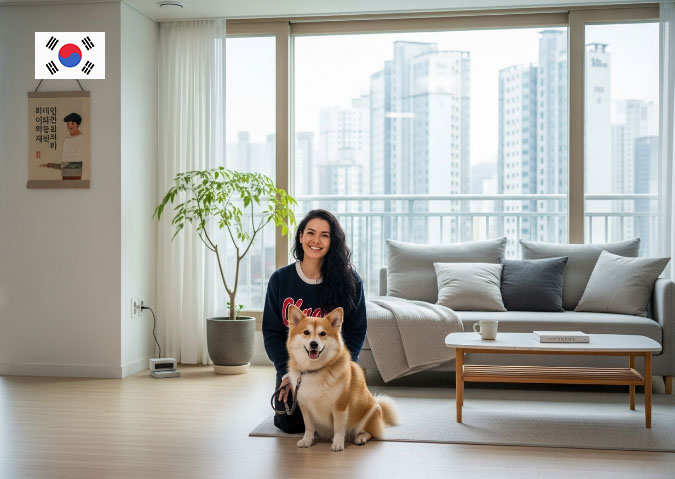
Pet Ownership in Korea Has Grown Rapidly
Not long ago, pets were less common in Korean cities. Many people grew up in apartments where animals were rarely seen in hallways or elevators.
But things have changed quickly. Today, dogs and cats are everywhere. Walk through almost any neighborhood in Seoul or Busan and you will see people walking small dogs in the evening or carrying pets in little strollers.
Because of this shift, more landlords and apartment buildings have slowly become open to tenants with pets. However, the rules still vary quite a bit depending on the building and the landlord.
Apartments Versus Villas
One thing that surprises many foreigners is that the type of housing makes a difference. Large apartment complexes, the tall modern buildings you often see in Korean cities, sometimes have stricter rules. Some complexes allow pets, but others place restrictions on size or number.
On the other hand, smaller buildings known as villas are often more flexible. Villas are low rise residential buildings that usually have fewer units and more direct involvement from the property owner.
Because of this, pet policies in villas are often decided by the landlord personally rather than by building management. If you are apartment hunting with a pet, many real estate agents will tell you that villas give you more options.
Landlord Preferences Matter a Lot
In Korea, the landlord’s personal preference plays a big role in whether pets are allowed.
Two apartments in the same neighborhood can have completely different policies simply because the owners feel differently about animals. Some landlords love pets and have no problem with them. Others worry about noise complaints or potential damage to the apartment.
When you search for housing, you will often hear real estate agents use the phrase pet possible. This means the landlord has agreed to allow tenants with pets. If you do not see this clearly stated, it is always best to ask directly before signing a contract.
Size and Type of Pets Can Affect Approval
Even in buildings that allow pets, there are sometimes informal limits.
Small dogs and cats are usually the easiest to get approval for. Many Korean apartments have limited space, so landlords may hesitate if a tenant wants to keep a large dog. Exotic animals or multiple pets may also raise concerns, especially in older buildings where soundproofing is not perfect.
However, attitudes are gradually changing. As pet ownership becomes more common, more landlords are realizing that responsible pet owners can be excellent tenants.
Pet Deposits Are Not Always Common
Another difference foreigners notice is that pet deposits are not always standard in Korea. In some countries, landlords charge an extra deposit or monthly fee if you have a pet. In Korea, the larger housing deposit system already covers potential damage in many cases.
Because deposits for Korean rentals can be quite high, landlords often feel that additional pet fees are unnecessary. That said, some owners may request a slightly higher deposit if they know you have an animal.
Neighbors and Apartment Culture
Even if your apartment allows pets, it is important to remember that Korean apartment living places strong emphasis on being considerate of neighbors.
Noise complaints can be taken seriously in densely populated buildings. A dog that barks frequently while the owner is away could create tension with nearby residents. For this reason, many pet owners in Korea put effort into training their dogs to stay calm indoors. Some also use pet cameras to check on their animals during the day.
Keeping shared spaces clean is also important. Picking up after pets and being mindful in elevators helps maintain good relationships with neighbors.
Pet Friendly Spaces Are Increasing
The good news is that Korea is becoming much more pet friendly overall.
Pet cafes, dog parks, and pet friendly restaurants have become much more common in major cities. Many apartment complexes now include nearby walking paths or small green areas where people can walk their dogs.
Even real estate listings have started to highlight pet friendly properties more clearly than they did in the past. For foreigners moving to Korea with pets, this shift has made things significantly easier than it was ten years ago.
The Most Important Advice
If you are planning to move to Korea with a pet, the most important thing is simply to be transparent during the housing search. Tell your real estate agent early that you have a pet. Agents usually know which buildings or landlords are comfortable with animals and can help you avoid unnecessary stress.
And once you find a pet friendly apartment, being a responsible tenant goes a long way. In Korea, word travels quickly between landlords and agents, and respectful tenants with well behaved pets are always welcome.
Living in Korea with a pet is definitely possible. It just requires a little patience during the apartment search and an understanding of how housing culture works here.