
D-2 Student Visa Guide Application Process and Documents
If you have been accepted to a Korean university, first of all congratulations. Getting that acceptance letter is a big moment. But before you start imagining life in Seoul or planning your first weekend trip to Busan, there is one important step you need to complete.
You need a student visa.
Most international students who plan to study at a Korean university apply for the D 2 visa. This is the main visa category for students enrolled in degree programs such as undergraduate, master’s, or doctoral studies.
From the outside, the visa process can look a little confusing. Different websites list slightly different requirements, and every country has its own embassy procedures. But once you understand the basic steps, the process is actually quite straightforward.
Let me walk you through how it usually works.
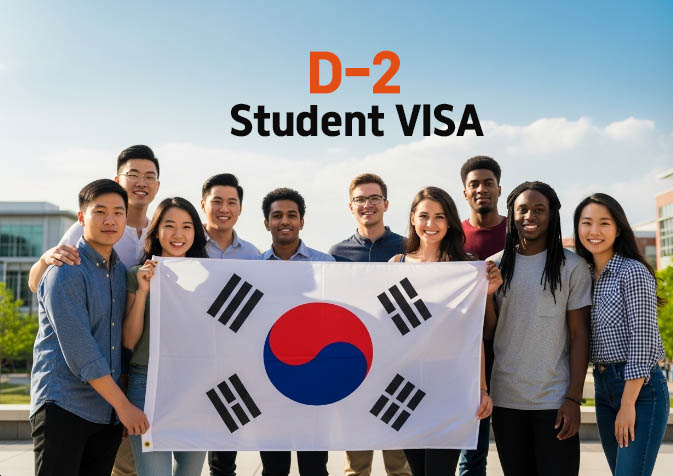
What Is the D-2 Student Visa
The D-2 visa is the official student visa issued by the South Korean government for international students enrolled in accredited universities or graduate schools. This visa allows students to live in Korea while completing their academic program.
It typically covers several types of programs including
- Undergraduate degree programs
- Master’s and doctoral programs
- Exchange student programs at universities
- Certain research programs
The length of the visa usually matches the length of your academic program or the semester you are enrolled in. Once you arrive in Korea, you will also apply for an Alien Registration Card, which functions as your official residence ID during your stay.
Step One Receive Your Admission Documents
The visa process begins after you receive official admission from your university. Once accepted, the university will send important documents that confirm your enrollment. These documents are required for your visa application.
Typically the most important document is the Certificate of Admission issued by the university. This proves that you have been officially accepted into a Korean academic program.
Many universities also provide additional documents specifically prepared for visa applications. Without these papers, the embassy will not be able to process your visa request.
Step Two Prepare Your Visa Application Documents
The next step is preparing the documents required by the Korean embassy or consulate in your country. Although requirements can vary slightly depending on location, most students will need the following documents.
- A completed visa application form
- Your valid passport
- Passport sized photographs
- The certificate of admission from your university
- Proof of financial support such as bank statements
- Academic transcripts or graduation certificates
- Application fee
Some embassies may also ask for additional materials such as a study plan or proof of accommodation. Financial documents are especially important because they demonstrate that you can support yourself while living in Korea.
Most universities and embassies provide clear instructions about the required financial amount.
Step Three Submit Your Application to the Embassy
Once your documents are ready, you will submit your application to the Korean embassy or consulate in your country. In many cases, you will need to visit the embassy in person, although some locations allow applications through visa service centers.
During submission, embassy staff will check your documents and collect your visa application fee. Processing times vary depending on the country and the season. On average, it usually takes around two to four weeks for a student visa to be issued.
During peak periods such as summer and early winter, processing can take slightly longer because many students apply at the same time.
Step Four Receive Your Visa and Prepare for Departure
After the visa is approved, the embassy will place the visa sticker in your passport. At that moment, things start to feel very real. Many students begin booking flights, arranging housing, and preparing for life in Korea.
Universities usually send additional instructions about arrival dates, orientation programs, and dormitory move in schedules. It is a good idea to review those instructions carefully before traveling.
What Happens After You Arrive in Korea
Getting the visa is not the final step. Within about ninety days of arriving in Korea, international students must apply for an Alien Registration Card at the local immigration office. This card is extremely important. It allows you to open a bank account, sign a phone contract, and access many services in Korea.
Universities usually help new international students complete this process during orientation. Once you receive your registration card, you are officially settled as a student resident in Korea.
A Few Practical Tips from Someone Living in Korea
Over the years, I have met many international students going through the visa process for the first time. The most common advice I give them is simple.
Start early.
Do not wait until the last minute to prepare documents. Embassy requirements sometimes change, and gathering financial documents or notarized papers can take time.
It is also helpful to double check everything before submitting your application. Small mistakes such as missing signatures or incorrect forms can delay the process.
The good news is that once the visa is approved, most of the complicated paperwork is behind you. After that, the focus shifts to something much more exciting.
Starting your life as a student in Korea.