
Best Tuition-Free Universities in Regional Korea for Global Students
If you are dreaming of studying in South Korea but are worried about the rising cost of living in Seoul, I have some incredible news for you. In 2026, the real “hidden gems” of the Korean education system are located in the regions.
As someone who has spent years counseling international students, I have seen a massive shift this year: the best deals meaning zero tuition and monthly stipends are now found in cities like Busan, Daejeon, and Gwangju.
These regional national universities are desperate for global talent and are willing to pay for it. Here is how you can get a world-class education for free.
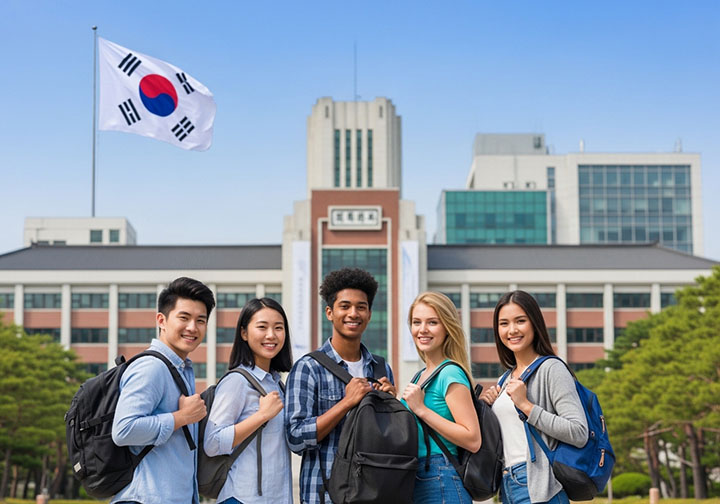
The Power of the Global Korea Scholarship (GKS) Regional Track
In 2026, the GKS Regional University Track is the undisputed king of scholarships. While the “Embassy Track” is highly competitive, the Regional Track allows you to apply directly to a university outside of the Seoul metropolitan area.
If you are selected, the benefits are legendary. You get 100 percent tuition coverage, a monthly living allowance of roughly 1,000,000 to 1,500,000 KRW, round-trip airfare, and even medical insurance. Regional universities like Pusan National University (PNU) and Kyungpook National University (KNU) have specific quotas for this track, meaning your chances of winning a full ride are significantly higher than if you were competing for a spot in a crowded Seoul-based program.
Pusan National University: Engineering and Marine Excellence
Located in Korea’s second-largest city, Pusan National University is often ranked as the top regional national university in the country. In 2026, PNU has expanded its own internal “PNU Global Scholar” program, which offers tuition waivers to top-performing international students even if they aren’t on a government scholarship.
For those in mechanical engineering, shipbuilding, or international trade, PNU is a powerhouse. The university has deep ties with global corporations like Hyundai Heavy Industries and Samsung Heavy Industries. Studying here for free doesn’t just save you money; it puts you in the middle of Korea’s industrial heart, making it much easier to secure a high-paying job after graduation.
Chungnam National University: The Science and Tech Gateway
I have mentioned this school before, but it bears repeating: Chungnam National University (CNU) in Daejeon is a strategic masterpiece for STEM students. In 2026, CNU is a leader in the “K-STAR Visa” track, which I have discussed extensively.
Beyond the visa benefits, CNU offers the Global Plus Scholarship, which effectively makes the university “tuition-free” for most qualified graduate students. Because it is a national university, even the “full” tuition is about 50 percent cheaper than private schools in Seoul. When you combine this with the low cost of rent in Daejeon, a student on a basic research assistantship can live very comfortably without spending a dime of their own savings.
Chonnam National University: Agriculture and Energy Innovation
If you are interested in the “Future of Energy” or “Smart Agriculture,” Chonnam National University in Gwangju is the place to be in 2026. The Gwangju/Jeonnam region is the center of Korea’s new energy cluster, and the university has received massive government grants to fund international researchers.
Many departments at Chonnam offer 100 percent tuition waivers for the first two semesters for all incoming international students who meet a basic language requirement (TOPIK 3 or 4). After that, as long as you maintain a decent GPA, the scholarship continues. This “Zero-Tuition” model is specifically designed to attract brilliant minds from Southeast Asia, Central Asia, and Europe who want to be at the forefront of green technology.
Kyungpook National University: The Hub of IT and Semiconductors
Daegu might not be on your radar yet, but in 2026, Kyungpook National University (KNU) is one of the most aggressive recruiters of global talent. Their IT and Semiconductor programs are world-class, and they offer a variety of “KNU International Graduate Scholarships.”
These scholarships often cover 100 percent of the entrance and tuition fees. What makes Daegu special in 2026 is the cost of living. You can find a modern, safe studio apartment near the campus for nearly half the price of a similar room in Seoul. When you aren’t paying tuition and your rent is cheap, your part-time work or stipend goes much further, allowing you to actually enjoy your life in Korea instead of just surviving.
How to Secure Your Free Education in 2026
The key to getting these tuition-free spots is Language and Early Application. While many of these programs are taught in English, having a TOPIK (Test of Proficiency in Korean) score of Level 4 or higher almost guarantees you a scholarship at a regional national university.
Also, start your process at least eight months in advance. The 2026 fall admissions often close as early as March for many scholarship tracks. Reach out to the international offices of these universities directly; they are often much more responsive and helpful than the giant, overwhelmed offices in Seoul.
Final Expert Advice: Look Beyond the City Lights
I know the allure of Seoul is strong, but in 2026, the smart move is regional. You get the same (or sometimes better) laboratory equipment, a much higher quality of life, and most importantly, you graduate without debt. By choosing a regional national university, you are choosing a path where the Korean government and the university are invested in your success. Take advantage of these tuition-free opportunities and build your future in the heart of Korea’s rising regional hubs.