
Korean Dating Culture Explained in Simple Terms
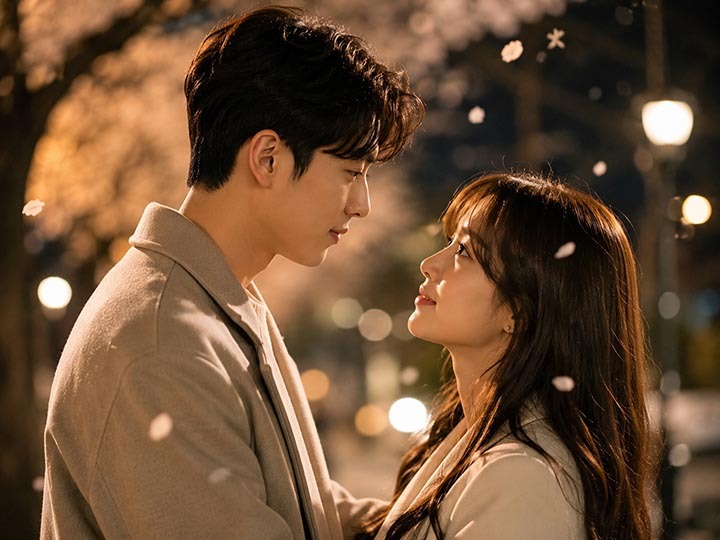
If you are looking at South Korea from the outside, it is incredibly easy to get swept away by the highly aesthetic, deeply emotional world of local pop culture. The entire world has fallen in love with the country’s television dramas and music, creating a beautifully curated image of what romance looks like on the streets of Seoul.
But when foreign travelers, international students, or digital nomads arrive here in real life and attempt to navigate the local dating market, they quickly realize that the rules of engagement are entirely unique. South Korea has developed a highly specific, fast-moving, and incredibly organized romantic ecosystem that operates on unspoken social contracts that can leave outsiders feeling entirely lost without a proper field guide.
To understand dating in contemporary South Korea, you have to look past the dramatic screen tropes and view it through the lens of a highly connected, deeply collectivist, and fast-paced modern society. This is a place where romance is treated as a major lifestyle investment, a shared social identity, and a beautifully coordinated project between two people.
If you want to successfully navigate the local scene without causing accidental misunderstandings, you need a straightforward, practical breakdown of how love actually functions on the ground in Seoul.

The Golden Gatekeeper: The Uncompromising Power of the Confession
In many Western dating environments, relationships exist in a blurry, gray comfort zone for an extended period. People hang out, go on dates, sleep together, and casually see each other for weeks or months without ever defining what they actually are to one another. In South Korea, this fluid ambiguity is practically non-existent and is often viewed as a complete lack of respect or serious intent.
The entire Korean romantic universe revolves around a singular event known as the confession, or gobaek. In simple terms, you are not a couple until one person explicitly, verbally asks the other to be their official boyfriend or girlfriend, and the other person says yes.
Until that precise verbal contract occurs, you are simply in the ssum phase, a local term derived from the English word some, meaning there is some chemistry, but absolutely no commitment. The transition from ssum to an official relationship usually happens remarkably fast, typically within three to five high-quality dates.
If you try to string someone along in the ambiguous phase for more than a month without making a formal confession, a local partner will assume you are playing games and will abruptly disappear from your life.
The Digital Umbilical Cord: Constant Texting as Basic Respect
One of the most immediate shocks for foreigners dating in Korea is the sheer volume and frequency of daily text messaging. In the West, heavy texting is sometimes stigmatized as needy, suffocating, or overly attached, with many dating guides advising people to wait hours to reply to maintain an aura of mystery. In Korea, playing hard to get via text is a guaranteed way to kill a relationship before it even starts.
In local culture, constant digital communication is the absolute baseline of emotional safety, consideration, and respect. It is treated as a warm, continuous background presence throughout the day. A typical day with a Korean partner features a steady stream of quick, low-pressure updates.
You will send a text when you wake up, a photo of your lunch, a quick message when you leave the office, and a notification when you get home. It is not about control or tracking your movements; it is a cultural way of saying, I am busy, but you are still a priority in my mind.
If you disappear for several hours without an explanation, it is interpreted as a clear signal that you are losing interest or actively ignoring them.
The Math of Love: Celebrating Milestones in Hundred-Day Blocks
For most people around the world, relationship anniversaries are a straightforward, once-a-year affair. You celebrate the day you became official when that date rolls around twelve months later. In South Korea, relationship milestones are calculated with mathematical precision, utilizing a unique calendar system based on hundred-day increments.
Instead of waiting an entire year, Korean couples celebrate Day 100, Day 200, Day 300, and Day 500 of their relationship. Because keeping track of these exact dates can be incredibly difficult, almost everyone uses specialized smartphone apps that countdown the exact days to the next major milestone.
These hundred-day anniversaries are taken very seriously, especially in the early phases of a relationship. They involve booking beautiful dinners, exchanging thoughtful gifts, and planning memorable dates. Missing Day 100 because you forgot to check your relationship tracking app is considered a major romantic offense that can cause significant emotional damage.
The Visual Contract: Coordinated Style and Public Teamwork
In many global cities, relationships are treated as private arrangements, and couples often retain highly individualized public identities. In South Korea, however, a relationship is meant to be celebrated outwardly, proudly, and with immense visual flair. Love is treated as a team sport, and the entire world is expected to know exactly whose team you are on.
This is the driving force behind South Korea’s legendary couple culture, most visibly manifested in couple looks, or coordinated outfits. It is incredibly common to see couples walking through trendy neighborhoods like Seongsu or Hongdae wearing perfectly matched sneakers, color-coordinated coats, or identical sweaters.
This extends to matching smartphone cases, shared social media profiles, and exchanging couple rings, which are often worn around the hundred-day mark as a symbol of exclusive commitment, long before any talk of marriage. Far from being viewed as embarrassing or cliché, these public displays of visual synchronization are treated as a beautiful, comforting way to show mutual pride and security in the partnership.
The Bill Protocol: Navigating the Financial Etiquette of Dates
When it comes to paying for dates, modern South Korea has moved away from older, purely patriarchal expectations, but it has not entirely adopted the Western style of splitting every single bill straight down the middle down to the exact cent. Instead, local dating uses a fluid, alternating system based on rounds.
A typical date night in Seoul rarely stays in one location; it is a multi-round journey. Round one might be a dinner at a Korean barbecue restaurant, round two is drinks at a trendy lounge or a visit to an aesthetic cafe, and round three might be a movie or a session at a coin karaoke booth.
The general rule of thumb is that if one partner pays for the substantial meal in round one, the other partner will automatically step up and cover the coffee, dessert, or drinks in round two. This creates a natural, respectful financial balance over time without the awkwardness of pulling out a calculator at the dinner table.
It turns the financial aspect of dating into an ongoing act of mutual generosity and care, ensuring that both partners feel equally invested in creating a beautiful experience together.