
From War Ruins to Global Powerhouse How Each Korean Generation Built Modern South Korea
Introduction How South Korea Rebuilt Itself After the Korean War
After the Korean War in 1950, South Korea was one of the poorest countries in the world, ranking near the very bottom globally.
When the armistice was signed in 1953, the country was completely devastated. Rebuilding stability was incredibly difficult. In Seoul, temporary shacks filled entire neighborhoods. Running water and electricity were unreliable or unavailable, and beggars could be seen throughout the streets.
From a war devastated land with almost no resources to one of the most technologically advanced and developed nations in the world, how did the people of South Korea achieve such a transformation?
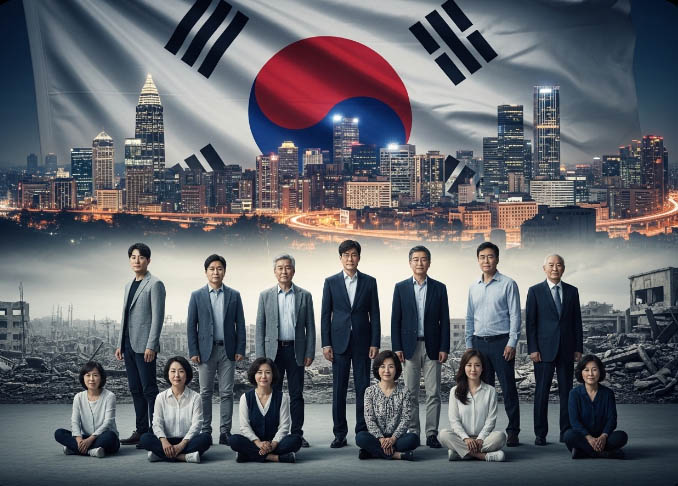
Each generation living in Korea today contributed in different ways to the nation’s development. Understanding these generational roles is one of the most important keys to understanding modern Korean history.
Below is an overview of how different generations from those now in their eighties to those in their twenties helped shape the development of South Korea.
The 80 Plus Generation Rebuilding a Nation From Ruins
Birth Period
Before liberation from Japanese colonial rule, roughly before 1945.
This generation lived through the Japanese occupation, liberation, political chaos, the outbreak of the Korean War, and the early recovery period. They also witnessed the beginning of the government’s Five Year Economic Development Plans in the early 1960s.
Industrial and Economic Contributions
This generation rebuilt the country from the ground up after nearly all infrastructure had been destroyed during the war. They laid the foundation for basic industries such as agriculture and light manufacturing under extremely difficult conditions.
They endured severe poverty and food shortages while slowly restoring the country’s production capacity. During the Vietnam War, South Korea supported U.S. military operations, and in return received economic assistance that helped fund infrastructure projects such as the construction of the Gyeongbu Expressway.
Many Koreans from this generation also worked overseas. Coal miners and nurses were sent to Germany, while construction workers worked in the Middle East. Their remittances brought valuable foreign currency back to Korea and helped finance early industrial development.
This generation embraced values like diligence, perseverance, and the belief that hard work could overcome any obstacle. Slogans such as We Can Do It became symbolic of the era. Perhaps their greatest contribution was investing heavily in their children’s education, even when they themselves lived in poverty. This laid the foundation for Korea’s strong human capital in later decades.
Cultural and Social Contributions
Traditional Confucian values remained strong during this period. Family centered values, respect for elders, and filial piety played a central role in maintaining social order. Having survived war and hardship together, communities developed a strong culture of mutual support and collective cooperation.
Early Korean popular culture also began during this time, including trot music and melodramatic films and theater that were commonly enjoyed through radio and early black and white television.
The 70s Generation Driving Industrialization and the Miracle on the Han River
Birth Period
Mid 1940s to mid 1950s.
This generation came of age during the rapid industrialization of the 1960s and 1970s, a period often referred to as the Miracle on the Han River.
Industrial and Economic Contributions
They were the workforce behind Korea’s major industrial expansion, particularly in heavy industries such as steel, shipbuilding, construction, automobiles, and textiles. They played a central role in export driven economic growth. Lifetime employment was common, and employees often demonstrated strong loyalty to their companies.
Long working hours and personal sacrifice were widely accepted as part of building the nation’s economy. This generation helped establish the organizational structures and work culture of today’s large Korean corporations.
Through steady employment and asset accumulation such as real estate, they also built the foundation of Korea’s middle class. They witnessed the rise of the first generation of Korean entrepreneurs who built major companies from nothing, inspiring a culture of bold ambition and entrepreneurial spirit.
Cultural and Social Contributions
Parents in this generation were known for their intense dedication to their children’s education. This strong educational focus dramatically improved Korea’s human capital.
They also experienced the growth of modern youth culture during the 1970s, including folk music and acoustic guitar culture. As television became widely available, they became the main consumers of mass media such as television dramas and popular music.
Their workplace culture tended to be hierarchical and collective. Organizational goals and instructions from superiors were typically prioritized over individual opinions.
The 60s Generation Democratization and Global Opening
Birth Period
Late 1950s to early 1960s.
This generation includes much of Korea’s baby boom generation.
Industrial and Economic Contributions
Many entered large corporations that had already been established by earlier generations. They helped modernize corporate management systems, introduce professional management techniques, and strengthen research and development.
With higher levels of university education, they became professional managers and middle level leaders rather than relying solely on experience based work practices. During the 1990s wave of globalization, they played key roles in expanding Korean companies abroad through overseas offices and international partnerships.
Cultural and Social Contributions
This generation was also at the forefront of Korea’s democratization movement in the 1980s, challenging military rule and pushing for democratic reforms.
The democratic transition that followed became a major turning point in Korean society. They also experienced a golden age of Korean popular culture, with explosive growth in television entertainment and music across genres such as ballads, rock, and dance music.
The 50s Generation Surviving the IMF Crisis and Leading the IT Revolution
Birth Period
Mid 1960s to early 1970s.
Industrial and Economic Contributions
This generation experienced the early spread of personal computers and internet communication. They became the first generation to actively use online technology and played a key role in Korea’s early internet and startup boom in the early 2000s.
When the Asian financial crisis struck in 1997, they experienced corporate restructuring directly. At the same time, they helped companies adapt to new standards of efficiency and competitiveness. They also introduced global business practices such as transparency, professional management, and international accounting standards.
Cultural and Social Contributions
This group is often associated with the rise of Korea’s X Generation. They began rejecting rigid collective culture and started expressing individuality in fashion, music, and lifestyle. They also challenged authoritarian workplace culture and encouraged more democratic communication within organizations.
The 40s Generation Driving Digital Transformation
Birth Period
Mid 1970s to early 1980s.
Industrial and Economic Contributions
This generation played a central role in integrating high speed internet and mobile technology into corporate operations. They helped spread data driven decision making and strategic management approaches within Korean companies.
With strong foreign language skills and global awareness, they have led many of Korea’s international business expansions. They are also one of the most influential consumer groups, particularly in housing, education, and financial markets.
Cultural and Social Contributions
This generation values practicality and work life balance more than previous generations. They began openly questioning rigid corporate hierarchies and advocating for fair compensation based on performance. Through early online communities, blogs, and forums, they helped shape public opinion and online social networks in Korea.
The 30s Generation Platform Economy and New Work Culture
Birth Period: Mid 1980s to early 1990s.
Industrial and Economic Contributions
This generation grew up during the expansion of smartphones and the digital economy. They are both major users and workers within platform based industries such as food delivery services, ride sharing, and streaming platforms.
Having faced intense competition in the job market, many possess strong academic qualifications, language skills, and professional certifications. They also show strong interest in financial investments including stocks, cryptocurrency, and real estate.
Cultural and Social Contributions
They strongly reject rigid hierarchical workplace cultures and consistently demand transparency and horizontal leadership. This generation invests heavily in self development through online education, language learning, and career training. Through platforms such as YouTube, Instagram, and TikTok, they also help shape fast moving internet culture and online trends.
The 20s Generation Digital Natives and the Future of Korea
Birth Period
Mid 1990s to early 2000s.
Industrial and Economic Contributions
This generation grew up entirely in the smartphone and internet era. They adapt quickly to emerging technologies such as artificial intelligence, the metaverse, and short form digital media.
They often act as early adopters of new digital products and services, accelerating technological innovation. Many also pursue multiple income streams through online platforms, content creation, and digital entrepreneurship.
Cultural and Social Contributions
Through social media, they participate in global cultural exchange and play a major role in spreading Korean culture such as K pop worldwide. They also tend to have strong awareness of issues such as gender equality, racial diversity, and social justice.
This generation values authenticity and open expression, contributing to a more transparent and inclusive communication culture in Korean society.
Conclusion A Nation Built by Generations
South Korea’s transformation from war devastation to global success is one of the most remarkable development stories of the modern era.
Each generation contributed something unique. The oldest generation rebuilt the country from ruins. The next generations industrialized the economy, fought for democracy, modernized businesses, built the digital economy, and now lead cultural and technological innovation.
Together, these generations created the modern South Korea that the world sees today. Understanding these generational contributions helps explain not only Korea’s past but also its future direction as a dynamic and influential global society.