
A Complete Guide to Marriage Registration for Turkish Citizens in Korea
When a Turkish citizen and a Korean partner decide to make their relationship official in Korea, there’s a clear legal path you need to follow one that ensures your marriage is recognised by Korean authorities and ready for things like visas, residency, and family planning. In Korea, marriage isn’t legally recognised just by a ceremony, it must be registered at a government office to take effect.
From my perspective as someone living in Korea, I’ll walk you through the entire process from eligibility to paperwork, submission, and what happens next.
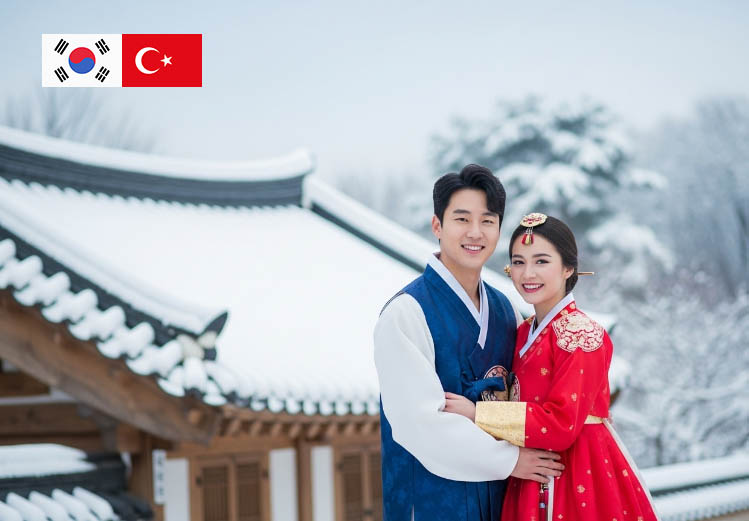
Where and How Marriage Registration Happens
Marriage registration in Korea is a civil process handled by a local city, district (gu), or county (eup/ myeon) office. It’s not tied to a ceremony, so many couples choose to celebrate later or in multiple locations the important legal act is filing the paperwork.
If one spouse is Korean, you can usually file at the office where the Korean spouse is registered, but it’s also possible to file in the area where either spouse resides.
Korean law doesn’t require a particular visa to register a marriage. Whether the Turkish partner is in Korea on a tourist visa, student visa (D-2), or another short-term permit, you can still register your marriage as long as you have the required documents.
Step 1: Meet the Legal Requirements
Both partners must meet the basic conditions for marriage:
- Be at least 18 years old.
- Neither partner should be currently married under the laws of their home countries.
- Both must have legal capacity to marry which for Turkish citizens means obtaining certain documents from Turkish authorities.
For many international couples, the most important paperwork is the Certificate of Legal Capacity to Marry (sometimes called Certificate of No Impediment to Marriage), which confirms under Turkish law that the person is free to marry.
Step 2: Prepare Required Documents
Here’s an overview of what you’ll typically need for marriage registration in Korea:
For the Turkish Spouse:
- Passport (valid and not expired) and copies.
- Certificate of Legal Capacity to Marry (issued in Turkey and later translated and notarised for Korean use).
- Translation of foreign documents into Korean. Translations usually need to be certified by a translator or embassy.
- Other identity documents if required (birth certificate, single status certificate).
For the Korean Spouse:
- Valid Korean ID or Resident Registration Card.
- Joint Requirements:
- Marriage Registration Form (available at the district office).
- Witnesses (sometimes required depending on the local office).
Once prepared, all foreign-language documents should be translated into Korean and, in many cases, either notarised or apostilled (or otherwise certified) before submission.
Step 3: Visit the Local Office and File Your Registration
With your documents ready, you and your partner go to the local district office (gu, si, eup/myeon) to submit the marriage registration.
At the office, you’ll:
- Fill out the Marriage Registration Application.
- Submit your prepared documents.
- Provide identification (passports, Korean ID if applicable).
- Include witnesses if required.
The good news? Once everything is in order, the actual registration is usually completed on the same day. Many couples leave the district office with their Certificate of Acceptance of Marriage Registration (Soori Jeungmyongseo) within a few hours. This certificate is your official proof of marriage under Korean law and is essential for the next steps especially visa applications.
Step 4: Registering Your Marriage Back in Turkey
After your marriage is legally recognised in Korea, most Turkish citizens also choose to register the marriage with Turkish authorities. This typically involves:
- Translating the Korean marriage certificate back into Turkish.
- Legalising documents at the Turkish embassy or consulate.
- Submitting them to the relevant civil registry in Turkey.
This isn’t required by Korean law, but it helps ensure your marriage is recognised globally and in your home country’s records.
Step 5: What Happens After Registration Visa and Residency
Registering your marriage in Korea is the legal foundation for future residency plans, but it doesn’t automatically change your immigration status. If your Turkish spouse plans to stay in Korea long-term, the next big step is the F-6 marriage immigrant visa, which lets them live, work, and eventually pursue permanent residency or naturalisation.
To apply for the F-6 visa, you’ll typically need:
- The marriage registration certificate you obtained.
- Proof of a genuine marriage (photos, joint bank accounts, correspondence).
- Proof of financial stability and suitable housing.
- Passport and other identity documents.
Visa requirements can vary slightly from year to year, and sometimes language or criminal background checks apply, so it’s wise to check with the Korean embassy or an immigration service for up-to-date advice before applying.
Tips to Make It Smooth
1. Prepare early: Turkish documents often need translation, notarisation, and embassy certification before you land in Korea.
2. Call ahead: Local offices can vary slightly in documentation requirements, so a quick call before your visit can save time.
3. Keep copies: Always have multiple copies of every document both originals and translations in case the office requests them.
4. Be patient: Paperwork can feel tedious, but careful preparation helps everything go quickly on the day.
A Local’s Take
From where I live in Korea, one thing I’ve learned about international couples is that paperwork may seem bureaucratic at first but once you understand the steps, it becomes a series of small, manageable tasks.
And when you leave that district office with your certificate of registration in hand, it’s a pretty special moment because that piece of paper is your legal start as a married couple in Korea.
Love brought you here; thoughtful preparation makes it official.