
Why More Mexicans Are Learning Korean
If you take a look at the global statistics for language learning over the past few years, you will stumble upon a trend that seems to defy traditional geographical and linguistic logic. Tens of thousands of young people across Mexico are bypassing traditional European languages like French, Italian, or German, and are instead dedicating their evenings to mastering Hangul, the Korean alphabet.
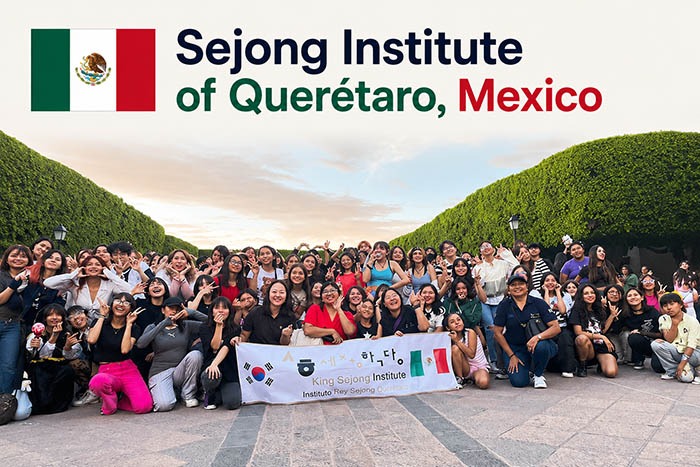
This is not just a minor internet subculture or a passing hobby for a select group of hardcore music fans. It has officially transformed into a massive educational movement, with major Mexican universities opening dedicated Korean language faculties and local language schools struggling to keep up with the overwhelming demand.
To understand why a country deeply rooted in the Spanish language and Latin American traditions is suddenly falling in love with the complex linguistic structures of East Asia, you have to look past the surface level.
It is a phenomenon driven by a powerful mixture of emotional cultural alignment, strategic economic synergy, and a generational desire to participate in what is arguably the most dynamic cultural force of the twenty-first century.
The Emotional Spark of Hallyu and the Pure Desire for Cultural Connection
The foundation of this linguistic boom is undeniably rooted in the massive, unstoppable global spread of the Korean Wave, known as Hallyu. For over a decade, Mexican audiences have been major consumers of Korean media, but recently, that consumption has transitioned from passive viewing to active engagement.
When a Mexican fan falls in love with a K-pop group or becomes emotionally invested in a sixteen-episode K-drama, a natural barrier eventually presents itself: the limitation of subtitles.
Learning Korean becomes the ultimate tool of empowerment for these fans. They do not want to wait for translation teams to upload captions; they want to understand the raw, immediate emotion in an actor voice during a dramatic scene. They want to sing along with their favorite artists, understanding the poetic nuances of the lyrics rather than relying on rough internet translations.
Furthermore, because Mexican culture is inherently expressive, communal, and deeply social, young Mexicans are naturally inclined to build direct relationships with the people behind the culture they admire.
Learning the language is seen as the ultimate gesture of respect. It opens digital and physical doors, allowing Mexican learners to form genuine international friendships, exchange cultural insights, and communicate their passion with perfect clarity.
The Extraordinary Phonetic Harmony and Hidden Linguistic Advantages
From a purely structural perspective, you might think that moving from Spanish to Korean would be an absolute nightmare for a student. The grammar systems are polar opposites, with Korean utilizing a Subject-Object-Verb structure that feels completely backward to a native Spanish speaker.
However, look beneath the complex grammar rules, and you will find an incredible phonetic advantage that makes the learning journey surprisingly intuitive for Mexicans.
Spanish and Korean share a remarkably clean, crisp vocalic and consonantal structure. Unlike English, which is notorious for its silent letters, erratic spelling rules, and complex vowel variations, both Spanish and Korean are fundamentally phonetic languages. Once you learn the basic sounds of the Korean alphabet, what you see is exactly what you get.
Mexican students often find that they can pronounce Korean words with an astonishing level of accuracy almost immediately, far outpacing native English speakers who often struggle with the crisp, un-aspirated consonants of the Korean tongue.
This early victory provides a massive psychological boost. Being able to read a storefront sign in Seoul or correctly pronounce a long vocabulary word with zero accent gives Mexican learners the immediate confidence to tackle the more intimidating grammatical challenges down the road.
Strategic Career Expansion and the Economic Boom of Korea-Mexico Relations
While the initial spark for learning Korean is almost always cultural, the fuel that keeps modern students dedicated for years is increasingly economic. Over the past decade, South Korea and Mexico have forged an incredibly powerful, multi-billion-dollar industrial partnership.
Major Korean global conglomerates, including Kia Motors, Samsung, LG, and POSCO, have established massive manufacturing hubs, corporate offices, and supply chains throughout major Mexican states like Nuevo Leon, Baja California, and Queretaro.
This industrial influx has completely altered the local job market. Mexican engineering, business, and tech graduates quickly realize that possessing conversational or professional fluency in Korean is the single most valuable asset on a modern resume.
It transforms an applicant from a standard local candidate into an invaluable cross-cultural bridge capable of managing communication between Mexican factory floors and corporate headquarters in Seoul.
The financial incentives are undeniable, as local bilingual professionals often command significantly higher salaries and enjoy fast-tracked career advancement. Young Mexicans are looking at the massive factories and corporate towers rising in their home cities and realizing that learning Korean is no longer just a hobby; it is a direct investment in a stable, lucrative future within the global economy.
The Prestigious Allure of Global Education and Academic Scholarships
Another massive factor driving the obsession with the language is the growing desire among ambitious Mexican youth to experience the world-class education system of South Korea firsthand. Korean universities have climbed dramatically in global rankings, becoming recognized hubs for technological innovation, engineering excellence, and creative media production.
For a student in Guadalajara or Puebla, the idea of studying in a hyper-modern, safe, and culturally vibrant city like Seoul or Busan is an incredibly alluring prospect.
The South Korean government has actively capitalized on this interest by expanding generous academic initiatives, most notably the Global Korea Scholarship. This fully-funded program covers everything from round-trip airfare and university tuition to intensive, mandatory language training for a full year before degree classes even begin.
Because the selection process for these scholarships is fiercely competitive, Mexican students start studying the language independently years in advance to gain a vital edge.
They know that arriving at an interview with a pre-existing foundation of the language demonstrates a level of maturity, respect, and serious dedication that instantly separates them from casual applicants, turning their international academic dreams into an attainable reality.
The Deep Shared Values of Respect, Community, and Human Attachments
Ultimately, language is a mirror of a society soul, and Mexicans find themselves drawn to Korean because the social values embedded within the vocabulary feel deeply respectful and familiar.
Both Mexican and Korean cultures reject cold, distant individualism. Both societies are built on a foundation of collectivist warmth, deep respect for elders, and a profound devotion to the family unit.
When a Mexican student begins to study the intricate levels of honorifics in the Korean language, they do not just see difficult grammar rules. They recognize a linguistic manifestation of the respect they were taught to show their own grandparents back home.
The unique Korean concept of Jeong, a deep, collective feeling of lifelong attachment, loyalty, and warm hospitality toward others, makes perfect sense to a Mexican heart. It is the exact equivalent of the passionate, open-armed hospitality that defines Mexican life.
By learning the language, Mexican students are discovering a brand-new way to express their own deeply held human values.
They are realizing that despite the thousands of miles of ocean and the centuries of separate history, the core of how they view human connection is beautifully aligned, making the journey of learning Korean feel less like studying a foreign tongue and more like uncovering a long-lost connection to a sister culture across the globe.