Why International Couples in Korea Should Use Multicultural Family Support Centers
When foreign spouses first move to Korea after marriage, many imagine that their biggest challenge will be learning Korean or adapting to Korean food. While those can certainly be obstacles, the reality is often much more complicated.
Daily life in Korea involves navigating government paperwork, understanding healthcare systems, raising children in a different culture, communicating with in-laws, finding employment opportunities, and building an entirely new social network.
For many international couples, these challenges can feel overwhelming during the first few years. What surprises many foreigners is that Korea already has an extensive support system designed specifically to help multicultural families succeed.
These organizations are called Multicultural Family Support Centers, and they are one of the most valuable resources available to international couples living in Korea. Yet many foreign spouses either do not know these centers exist or underestimate how useful they can be.
As someone who has spent years working with international families in Korea, I have seen firsthand how these centers help foreign spouses adapt more quickly, build confidence, and create happier family lives.
What Are Multicultural Family Support Centers?
Multicultural Family Support Centers are government-supported community organizations created to assist international families living in Korea. They can be found throughout the country, from major cities like Seoul and Busan to smaller regional communities.
Their mission is simple. Help foreign spouses and multicultural families successfully integrate into Korean society while maintaining healthy family relationships and cultural diversity.
Most services are either free or heavily subsidized by the Korean government. This makes them accessible even for families with limited financial resources.
Korean Language Classes Designed for Real Life
One of the biggest challenges facing new foreign spouses is communication. Many arrive in Korea knowing only a few basic Korean phrases. Even those who have studied Korean abroad often discover that real-life conversations are much harder than textbook exercises.
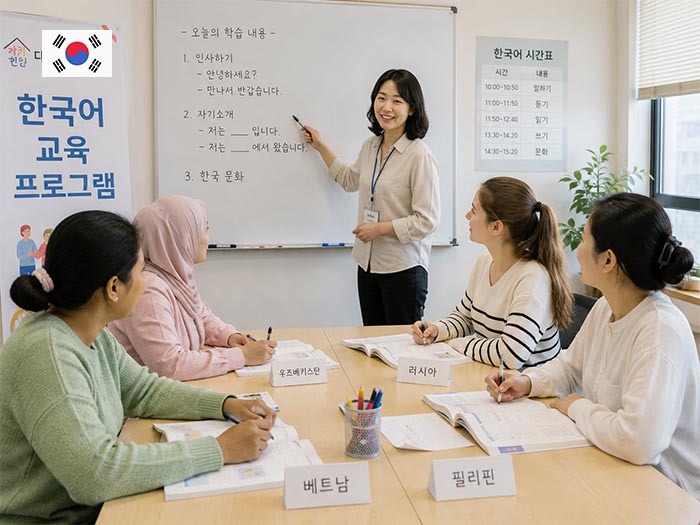
Multicultural Family Support Centers provide practical Korean language classes focused on everyday situations. Students learn how to communicate at hospitals, schools, banks, government offices, and workplaces.
Unlike many commercial language academies, these classes are specifically tailored for married immigrants adjusting to life in Korea. Many participants find that they gain confidence much faster because the lessons directly reflect their daily experiences.
Parenting Support for Multicultural Families
Raising children in a multicultural household can be both rewarding and challenging. Parents often wonder which language to use at home, how to handle cultural differences, and how to help children develop a strong identity.
Support centers offer parenting education programs, family counseling, child development workshops, and educational activities. These programs help parents understand both Korean educational expectations and the unique needs of multicultural children. Many international couples discover that these services reduce stress and strengthen family relationships.
Professional Counseling When Couples Face Difficulties
Every marriage experiences challenges. International marriages often face additional pressures related to language barriers, cultural misunderstandings, financial expectations, and family dynamics. Many couples hesitate to seek help because they assume counseling is expensive or difficult to access.
Multicultural Family Support Centers frequently provide professional counseling services at little or no cost. Counselors understand the specific issues international couples face and can provide practical guidance before problems become serious. In many cases, early counseling helps couples avoid years of unnecessary conflict.
Building Friendships and Reducing Isolation
One of the most common complaints from foreign spouses is loneliness. After moving to Korea, many leave behind family members, childhood friends, and familiar support networks. This can create feelings of isolation, especially in smaller cities.
Support centers regularly organize community events, cultural exchanges, support groups, and social gatherings. These activities allow foreign spouses to meet others facing similar experiences. Some of the strongest friendships in multicultural communities begin through these programs. Having people who truly understand your situation can make a tremendous difference.
Employment and Career Assistance
Many foreign spouses eventually want to work, study, or start a business in Korea. However, understanding the Korean job market can be confusing.
Support centers often provide career counseling, vocational training, resume workshops, computer education, and employment information. For some participants, these programs become the first step toward long-term financial independence and professional growth.

Help Navigating Korean Government Systems
Korea’s administrative systems can be intimidating for newcomers. Immigration procedures, health insurance registration, tax documents, pension enrollment, and educational paperwork can seem overwhelming.
Multicultural Family Support Centers regularly assist families in understanding these processes. Rather than spending hours searching online or worrying about making mistakes, families can receive guidance from professionals familiar with the system. This support saves both time and stress.
Support During Pregnancy and Childbirth
Many foreign women experience anxiety during pregnancy in a new country. Medical terminology, hospital procedures, and communication barriers can create uncertainty. Many support centers offer programs specifically designed for expectant mothers and young families.
These services often include healthcare information, parenting preparation classes, and community support networks for mothers. This can be especially valuable for women whose relatives live overseas.
Helping Children Maintain Both Cultures
A successful multicultural family does not require abandoning one culture in favor of another. Many support centers actively encourage children to appreciate both their Korean heritage and their foreign parent’s cultural background.
Special educational programs, cultural activities, language support initiatives, and family events help children develop pride in their multicultural identity. This balanced approach often strengthens family unity and promotes healthy emotional development.
The Biggest Mistake Many International Couples Make
The biggest mistake I frequently see is waiting too long to seek support. Some couples assume they should solve every problem on their own. Others believe support centers are only for families experiencing serious difficulties.
In reality, the most successful international couples often use these resources proactively. They attend language classes early, participate in community programs, build friendships, and learn about available services before problems arise. By doing so, they create stronger foundations for their future in Korea.
A Valuable Resource That More Couples Should Use
Korea’s multicultural family support system is one of the country’s most overlooked resources. These centers provide practical assistance, emotional support, education, counseling, and community connections that can significantly improve quality of life.
For international couples adjusting to life in Korea, success is not simply about learning Korean or obtaining a visa. It is about building a stable, healthy, and fulfilling life together.
Multicultural Family Support Centers help make that goal far more achievable. Many foreign spouses who use these services later say the same thing. They wish they had discovered them sooner.