
Study in Korea: What Canadian Students Should Know Before Applying
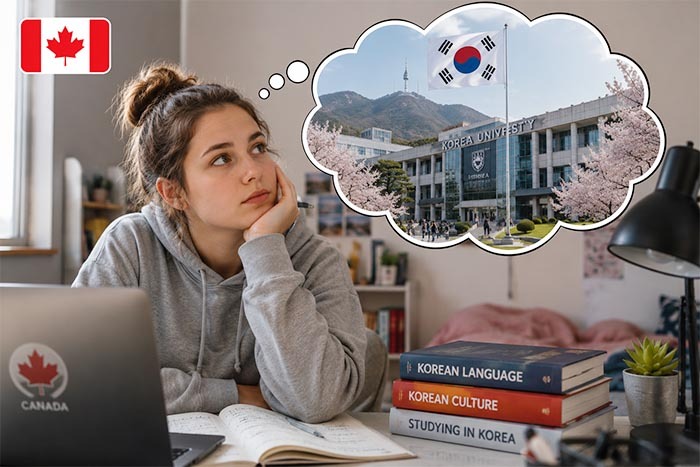
Studying in Korea can look incredibly appealing from Canada. You might imagine studying in Seoul, taking the subway to class, eating Korean food with friends, improving your Korean, and traveling around the country on weekends.
Much of that experience is possible. But choosing Korea because you love K pop, Korean dramas, or Korean culture is very different from choosing a Korean university that actually fits your academic and career plans.
Before applying, there are several things Canadian students should understand.
Choose the Program Before You Choose the City
Many international students start by saying they want to study in Seoul. I would approach the decision differently. Start with your major, academic reputation, English taught courses, scholarship opportunities, and career goals. Then compare universities and locations.
Seoul has an enormous amount to offer, but universities in Busan, Daejeon, Daegu, Ulsan, Gwangju, and other regions can provide strong programs while sometimes offering a more manageable cost of living.
Check the Language of Instruction Carefully
Korean universities offer many English taught courses and some programs with substantial English instruction, but the percentage varies enormously between universities and departments. Always check the actual curriculum for your intended major.
If you plan to complete a Korean taught program, universities may also require evidence of Korean proficiency such as TOPIK.
Your Canadian Academic Documents Matter
Admission requirements vary by university, but international applicants commonly need academic transcripts, graduation documents, identification, and documents establishing educational eligibility.
Universities can have very specific rules concerning certification, translations, document submission, and deadlines. Do not prepare one application package and assume every Korean university will accept exactly the same documents. Check each university’s international admission guide before paying application fees.
You Will Usually Need a Student Visa
Students entering regular degree programs generally use D-2 status. The Korean government’s Study in Korea portal identifies D-2 categories for associate, bachelor’s, master’s, doctoral, research, and exchange programs.
Typical D-2 documentation includes a passport copy, photograph, university admission letter, proof of previous education, and evidence of financial ability. Exact requirements can depend on the applicant and program, so students should confirm the current requirements before applying. Do not leave the visa process until the last minute.
Scholarships Can Change the Entire Cost
One reason Korea deserves serious consideration is the availability of scholarships. The Global Korea Scholarship is the best known government program. GKS can provide support including airfare, Korean language training, tuition, and a monthly allowance for selected students.
For 2026, Korea also announced undergraduate and graduate GKS programs, with the graduate program alone planning to invite 2,000 international students. Competition is naturally strong, but Canadian students with solid academic records should investigate the program rather than assuming studying abroad must be entirely self funded.
University Scholarships Are Just as Important
Do not look only at GKS.
Korean universities themselves offer substantial scholarships to international students. The official Study in Korea information notes that many universities provide tuition scholarships ranging from 30 percent to 100 percent based on academic performance.
When comparing universities, therefore, compare the tuition you would actually pay after scholarships rather than simply comparing the advertised tuition price.
Seoul Can Be Expensive
Korea is sometimes marketed internationally as an inexpensive study destination. That description needs context. Daily transportation and local food can feel reasonably affordable compared with some Canadian cities, but housing in Seoul can take a significant part of a student’s budget. Dormitory availability can therefore make a major difference.
Before applying, calculate tuition, accommodation, food, transportation, insurance, textbooks, phone service, and personal spending together.
Dormitories Can Make Your First Year Easier
For a Canadian arriving in Korea for the first time, university housing can remove several immediate problems. You avoid navigating Korea’s unfamiliar rental system, large housing deposits, contracts, furniture, and utility arrangements immediately after arrival. You also live close to other students, which can make building friendships easier.
Check dormitory application dates early because admission to a university does not necessarily guarantee you a room.
Learn Korean Even If Your Degree Is in English
You can study in an English taught program without becoming fluent in Korean, but your life outside the classroom changes dramatically when you understand the language. Restaurants, banking, medical appointments, shopping, university administration, part time work, friendships, and everyday conversations become easier.
Even basic Korean makes Korea feel less like a place you are temporarily observing and more like somewhere you can actually live.
Part Time Work Has Rules
International students should never assume that holding a student visa automatically allows unrestricted employment. Korean immigration rules regulate part time work for international students, and requirements can depend on factors such as visa status, academic program, Korean proficiency, and permission procedures.
If you expect part time income to fund your studies, investigate the rules before building your financial plan around that income.
University Culture May Feel Different From Canada
Canadian students may notice differences in classroom hierarchy, communication with professors, group projects, attendance expectations, and relationships between older and younger students.
International programs can feel quite global, while other departments may operate mainly in Korean. The experience can therefore vary dramatically even within the same university. Give yourself time to observe how people communicate before assuming that something unfamiliar is necessarily unfriendly.
Do Not Choose Korea Only Because You Love Korean Culture
Enjoying Korean music, dramas, food, fashion, or beauty can be a wonderful reason to become interested in Korea. It should not be the main reason you choose a four year degree.
Ask a harder question. Will this university and degree help you five years after graduation?
Look at academic quality, research opportunities, international recognition, internships, language development, employment possibilities, and whether the qualification fits your long term plans in Canada, Korea, or another country.
Korea Can Offer More Than a Degree
For the right Canadian student, studying in Korea can provide something difficult to reproduce through a short vacation. You experience Korean society from inside it. You learn how people study, work, communicate, build friendships, use technology, travel, and handle everyday life.
You may arrive thinking Korea will simply give you an international degree. You can leave with Korean language ability, professional connections, international friendships, and a much deeper understanding of East Asia.
Final Thoughts
Studying in Korea can be an excellent choice for Canadian students, but the smartest decision begins with research rather than excitement.
Choose the academic program first, check the real language of instruction, investigate scholarships, calculate your complete living costs, understand the D-2 visa process, and think carefully about what the degree will do for your future.
Korea can give you an unforgettable international experience. But the best reason to study here is not simply that Korea is interesting.
It is that the right Korean university can offer the education, skills, language experience, and international perspective that fit the future you actually want.