
Korea’s Strong Community Spirit: What Happens During Emergencies
If you have spent any significant time in South Korea, you have probably noticed something peculiar about the atmosphere here. On a normal day, the pace is frantic, the competition is fierce, and people seem focused on their own “Pali-Pali” lives.
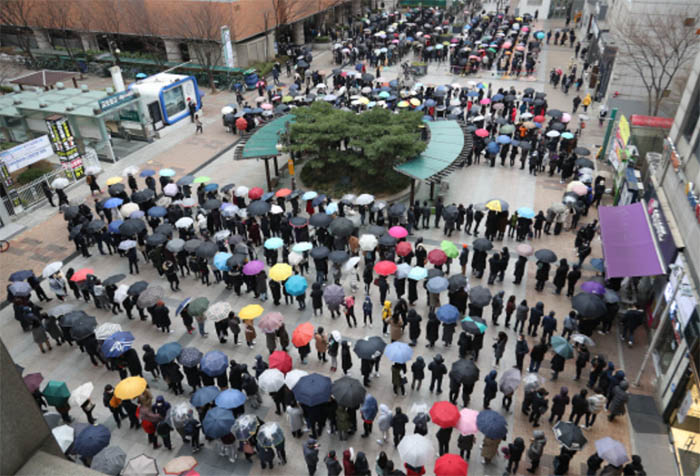
But the moment a national crisis strikes, something almost supernatural happens. The entire country shifts. The competition vanishes, and in its place, a massive, synchronized wave of collective action takes over.
As a global expert living in Korea and working with international residents at Studying-Korea.com, I am often asked: How does a country so modernized and technologically advanced maintain such a “village-like” unity during an emergency?
The answer lies in a complex blend of history, a deep-seated sense of communal responsibility, and the uniquely Korean concept of “Jeong.”
The Historical Blueprint: Resilience Born of Struggle
To understand why Koreans unite so fiercely today, you have to look at the scars of the past. For centuries, the Korean Peninsula was a small nation surrounded by giants, constantly facing invasions and internal strife.
This history of survival taught Koreans that the individual cannot survive without the group. Whether it was the struggle for independence or the lightning-fast rebuilding of the nation after the Korean War, the “miracle” was always a collective effort.
This historical memory is passed down through generations. When a crisis hits in 2026, the modern Korean subconsciously taps into this survival instinct the deep knowledge that “if the nation falls, we all fall.”
The Gold Collection Campaign: A Legacy of Sacrifice
If you want to see the ultimate example of this unity, look back at the 1997 IMF financial crisis. When the country was on the brink of bankruptcy, millions of ordinary citizens from grandmothers to students lined up at banks to donate their personal gold.
They gave up wedding rings, gold teeth, and baby jewelry to help the government pay off its national debt. It was a moment that stunned the world and redefined what “patriotism” looks like.
That same spirit is very much alive today. It is the gold standard of Korean solidarity, proving that for Koreans, the well-being of the “Uri” (We/Us) often outweighs the “I.”
The Power of “Jeong” and Collective Responsibility
There is no perfect English translation for the word “Jeong,” but you can feel it everywhere in Korea. It is a deep, emotional bond that connects people, even strangers.
In times of emergency, “Jeong” transforms into a powerful sense of duty toward the community. During recent public health crises or natural disasters, you didn’t see the level of social fragmentation found in many Western countries.
Instead, you saw people wearing masks without complaint, businesses sacrificing profits for safety, and volunteers rushing to affected areas. Koreans tend to view themselves as part of a giant family. You don’t abandon your family when the house is on fire; you grab a bucket.
Digital Solidarity: Unity in the Hyper-Connected Era
In 2026, this traditional unity has been turbocharged by technology. Korea is the most connected nation on earth, and during an emergency, the internet becomes a tool for rapid social mobilization.
Whether it is real-time disaster reporting, crowdfunding for victims, or the organized distribution of resources, the digital landscape in Korea reflects the physical one: organized, fast, and unified.
While the internet in many places can be a source of division, in Korea, during a crisis, it serves as a central nervous system that allows the entire country to react as one body within minutes.
The Disciplined Individual: Personal Choice for the Common Good
One thing that often surprises foreigners is the high level of voluntary compliance in Korea. It isn’t that Koreans love rules—anyone who has seen the traffic in Seoul knows that isn’t true.
However, there is a strong social pressure to not be the “one person” who ruins it for everyone else. This sense of social shame, or “Che-myeon” (saving face), acts as a powerful regulator.
If the community agrees on a course of action to survive an emergency, the individual falls in line. This isn’t about blind obedience; it is about a sophisticated understanding that self-interest is best served through the safety of the group.
Education and National Narrative
From a young age, Korean children are taught about the “Miracle on the Han River” and the various times the nation came together to overcome impossible odds.
The education system emphasizes the “Collective Over the Self” in social studies and history. This creates a national narrative where the citizen is a hero who saves the country.
By the time they are adults, this “Powerful Unity” isn’t a forced choice it is a core part of their identity. For a foreigner looking to integrate, understanding this narrative is the key to understanding the heart of the Korean people.
A Model for a Fragmented World
In an era where many nations are becoming more polarized, the Korean model of emergency unity offers a fascinating alternative. It shows that modernity doesn’t have to mean the death of the community.
Korea manages to be a leading global tech power while retaining an ancient, iron-clad solidarity. As we navigate the uncertainties of 2026 and beyond, the “Powerful Unity” of the Korean people remains a beacon of what is possible when a nation decides to face the storm as one.