
Is Studying in Korea Worth It? Pros and Cons
Studying in Korea can look extremely attractive from overseas. Modern universities, convenient public transportation, relatively safe cities, Korean culture, technology, K-pop, food, and the possibility of learning Korean while living here make the country appealing to international students.
But studying in Korea and visiting Korea are very different experiences. Once you become a student, you have tuition, housing, exams, immigration requirements, language barriers, and career decisions to think about. For the right student, Korea can be an excellent choice, but it is worth understanding both sides before making the move.
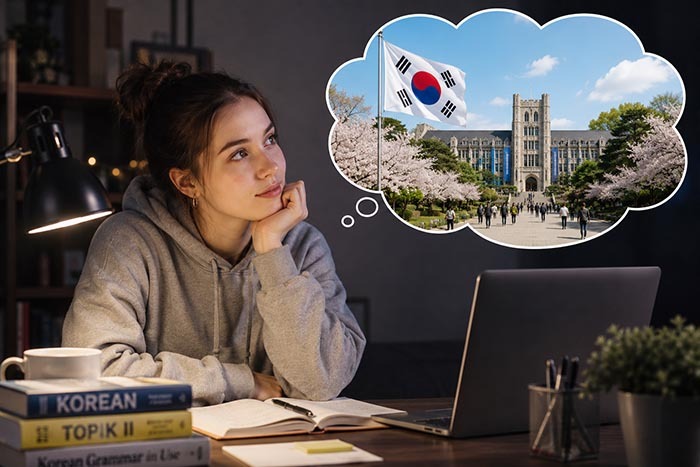
Pro: Korea Has Many Strong Universities
Korea has a highly developed higher education system with universities offering programs in engineering, business, computer science, medicine, biotechnology, international studies, design, and many other fields. Some universities also provide courses or entire programs taught in English.
International enrollment has expanded significantly. According to Korea’s Ministry of Education, the number of international students in Korean higher education reached 253,434 in 2025, up from 208,962 in 2024.
That growth means foreign students are no longer unusual on many campuses. Universities have become more experienced with international admissions, orientation programs, Korean language education, and student support.
Pro: Scholarships Can Make Korea Surprisingly Affordable
One of Korea’s biggest advantages is the availability of scholarships. The Korean government’s Global Korea Scholarship, commonly called GKS, supports selected international students with benefits that can include airfare, Korean language training, tuition, and study allowances.
Universities also offer their own scholarships, often based on academic performance or Korean language proficiency. The official Study in Korea portal notes that many universities provide international students with scholarships covering between 30 and 100 percent of tuition depending on academic performance.
For students who qualify, this can make studying in Korea much more affordable than studying abroad in countries with very high tuition fees.
Pro: Daily Life Is Extremely Convenient
This is something students often appreciate only after arriving. Public transportation is excellent in major Korean cities, convenience stores stay open late, food delivery is highly developed, and many everyday services are available within walking distance.
Seoul is the obvious example, but cities such as Busan, Daejeon, Daegu, Gwangju, Suwon, and other university areas can also provide comfortable student environments.
You can finish class, take the subway or bus, eat inexpensively near campus, study at a café, and return home late without needing a car. That convenience makes student life much easier.
Pro: Korea Is a Great Place to Learn Korean
You can study Korean anywhere in the world, but living in Korea changes the learning process. The language follows you outside the classroom.
You hear Korean on buses, in restaurants, at university, in stores, and when dealing with banks or government offices. Even something as ordinary as ordering lunch becomes language practice.
Students who actively use Korean outside class can improve much faster than those who remain entirely inside an English-speaking international student circle. If Korean language ability is one of your main goals, studying here provides an environment that textbooks cannot reproduce.
Pro: Korea Can Be Valuable for Certain Careers
Studying in Korea makes particular sense if your future career is connected to Korea or Korean industries. Semiconductors, batteries, automobiles, electronics, biotechnology, gaming, beauty, entertainment, international trade, and technology are obvious examples.
International students can also build connections with Korean professors, companies, laboratories, classmates, and alumni while studying. Those relationships can become valuable if you later want to work in Korea or build a career connecting Korea with your home country.
However, a Korean degree alone does not guarantee employment. Your major, skills, Korean ability, visa eligibility, and professional experience still matter.
Con: The Korean Language Barrier Is Real
You can study in an English-taught program and still discover that much of your life happens in Korean. University announcements, club activities, internships, banking, hospital visits, administrative procedures, and conversations with local students may require Korean.
This is one of the biggest differences between studying Korea from abroad and actually living here.
You do not need perfect Korean before arriving, but learning at least practical everyday Korean will make your experience considerably easier. Students planning to work in Korea after graduation should take Korean even more seriously.
Con: Academic Pressure Can Be Strong
Korean universities can be demanding, especially when students enter competitive majors or programs. Exams, presentations, group projects, attendance requirements, and assignments can accumulate quickly.
International students sometimes arrive expecting their semester to feel like a long cultural experience and then discover that they have an actual degree to complete. Exchange students and full-degree students can also have very different experiences.
If your priority is academics, choose the university and department based on educational quality rather than simply choosing a campus because it is located in Seoul.
Con: Seoul Can Be Expensive
Korea is not automatically a cheap study destination. Tuition varies significantly by university and major, while housing can become one of the largest expenses, especially in Seoul.
University dormitories can reduce costs, but places may be limited. Students living independently need to think about deposits, monthly rent, utilities, transportation, food, mobile service, and everyday spending.
Studying outside central Seoul can sometimes provide a very different financial experience. A good university in another Korean city may offer lower living costs while still providing excellent education and access to Korean culture.
Con: Making Korean Friends Can Take Time
Many international students imagine that they will immediately develop a large group of Korean friends. Sometimes that happens, but it is not automatic.
Korean students already have classes, friends, clubs, military service, job preparation, and other commitments. Language differences can create another barrier, particularly when conversations become faster or groups naturally switch back to Korean.
Joining university clubs, volunteering, participating in language exchanges, and attending departmental activities usually works better than simply waiting for friendships to happen.
Con: Working in Korea After Graduation Is Not Guaranteed
This is probably the most important reality for students who hope to stay permanently. Graduating from a Korean university does not automatically lead to a Korean job.
Companies need a reason to hire you. Strong Korean ability can help, but employers also look for technical skills, professional experience, market knowledge, communication ability, and qualifications relevant to the position.
Your best strategy is to start preparing before graduation. Build Korean ability, take internships when possible, attend career fairs, develop professional skills, and research industries where your international background creates an actual advantage.
Who Should Seriously Consider Studying in Korea?
Korea can be an excellent choice for students genuinely interested in the country, language, academic program, or industries connected to their future career. It is especially attractive for students willing to learn Korean rather than expecting Korea to operate entirely in English.
It can also be a good choice for students looking for a highly developed Asian study destination with strong infrastructure, modern technology, convenient transportation, and opportunities to experience a culture very different from their own.
But choosing Korea only because you love K-pop or K-dramas is not enough reason for a four-year degree. Entertainment can introduce you to the country, but your university decision should be based on education, finances, career plans, and the kind of life you actually want.
So, Is Studying in Korea Worth It?
For many international students, yes. Korea offers good universities, scholarship opportunities, convenient daily life, a strong technology-driven economy, and one of the best environments for learning Korean.
The disadvantages are equally real. Language barriers, academic pressure, housing costs, cultural adjustment, and uncertainty about employment after graduation can make the experience more difficult than it appears from overseas.
The question is therefore not simply whether Korea is a good country for international students. It is whether Korea fits your goals.
If you choose the right university, prepare your finances carefully, learn Korean, and use your time here to build both academic and professional experience, studying in Korea can become much more than an overseas adventure. It can become the foundation for the next stage of your career.