
Can Indians Marry Koreans?
As Korean culture becomes more popular around the world, more Indians are visiting Korea to study, work, or travel. Along the way, many develop meaningful relationships with Korean partners. This naturally leads to one important question that appears frequently in online searches. Can an Indian legally marry a Korean?
The simple answer is yes. There are no laws in South Korea that prevent an Indian citizen from marrying a Korean citizen simply because of nationality. Every year, international marriages between Koreans and foreign nationals, including Indians, are officially registered. However, while the legal process is straightforward, building a successful international marriage requires much more than completing paperwork.
Understanding Korean family culture, immigration procedures, communication styles, and daily life expectations is equally important. Couples who prepare for these differences before marriage usually enjoy a much smoother transition into married life.
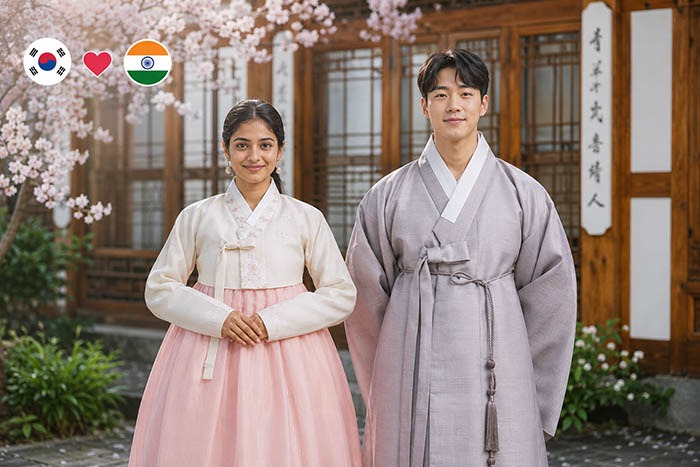
Yes, It Is Completely Legal
South Korean law allows Korean citizens to marry foreign nationals, including Indian citizens, provided both individuals meet the legal requirements for marriage.
Each person must prove that they are legally free to marry, submit the required identification documents, and complete the official marriage registration process. Once the marriage is properly registered, it is legally recognized in Korea.
Many couples also choose to register their marriage in India so that their marital status is recognized in both countries. This is especially helpful for future visa applications, inheritance matters, and family documentation.
The Required Documents Are Usually Straightforward
Although the exact paperwork may vary depending on individual circumstances, most couples need passports, birth information, proof that neither person is currently married, and several officially translated documents.
Indian documents usually require authentication before they can be accepted by Korean authorities. Because regulations occasionally change, couples should always verify the latest requirements before submitting paperwork.
Preparing documents early can save weeks of unnecessary delays during the registration process.
Communication Is More Important Than Language
Many people assume language is the biggest challenge in international marriage.
In reality, communication goes much deeper than vocabulary. Successful Korean and Indian couples often spend time discussing expectations about finances, careers, future children, family responsibilities, and long term goals before getting married.
Even couples who speak fluent English sometimes misunderstand each other because cultural assumptions can be very different.
Family Approval Often Matters in Both Countries
Family relationships remain important in both Korean and Indian society.
Although modern couples make their own decisions, parents often play a meaningful role during marriage discussions. Meeting each other’s families respectfully helps build trust and reduces unnecessary misunderstandings.
Many Korean parents may initially know very little about India, just as many Indian parents may have limited knowledge of Korean culture. Taking time to introduce traditions, food, and customs often helps both families become more comfortable.
Daily Life Can Feel Different After Marriage
Marriage involves much more than a wedding ceremony.
Daily routines such as meal times, holiday celebrations, budgeting, household responsibilities, and communication styles may differ significantly between Korean and Indian families.
Rather than viewing these differences as problems, successful couples usually treat them as opportunities to learn from each other and create their own family traditions.
Religion Deserves Honest Discussion
Religion can become an important topic for some international couples.
Korea has people from many different religious backgrounds, including Christianity, Buddhism, and people with no religious affiliation. India is equally diverse, with Hinduism, Islam, Christianity, Sikhism, Buddhism, and several other faiths.
Couples should openly discuss religious practices, future children’s education, holiday celebrations, and family expectations long before marriage.
Living in Korea as an International Couple
Many Indian spouses adjust surprisingly well to life in Korea.
Modern Korean cities offer excellent public transportation, quality healthcare, safe neighborhoods, and growing multicultural communities. Large cities such as Seoul, Incheon, Suwon, and Busan have increasing numbers of foreign residents, making it easier to find international food, cultural events, and English speaking services.
Many local multicultural family support centers also provide Korean language classes, parenting education, counseling, and practical assistance for international families.
Understanding Korean Relationship Culture
Dating culture in Korea may feel different from what many Indians are used to.
Korean couples often celebrate relationship milestones, exchange thoughtful gifts, and spend considerable time together despite busy work schedules. Open communication about personal space, career goals, and future plans is becoming increasingly common among younger generations.
Rather than expecting one culture to replace the other, healthy couples usually combine traditions from both countries.
Marriage Visas Come After Legal Marriage
After legally registering the marriage, many foreign spouses apply for a Korean marriage visa.
Immigration officers generally review whether the marriage is genuine and whether all legal requirements have been satisfied. Couples should prepare accurate documents and provide truthful information throughout the application process.
Once approved, many foreign spouses begin building their new lives in Korea while gradually adapting to the language and local culture.
Respect Builds Stronger International Marriages
The happiest Korean and Indian couples rarely succeed because they share identical backgrounds.
Instead, they succeed because they remain curious about each other’s culture, respect family traditions, communicate honestly, and solve problems together.
Learning Korean, understanding Indian customs, celebrating holidays from both countries, and remaining patient during cultural adjustments create a stronger foundation than legal documents ever could.
International marriage is not simply about connecting two individuals. It is about bringing together two histories, two families, and two cultures into one shared future. Couples who embrace that journey with mutual respect often discover that their cultural differences become one of the greatest strengths of their relationship.