
A New Solution to Korea’s Labor Shortage: Kazakhstan Becomes the 18th E-9 Sending Country
South Korea has relied on foreign workers for many years to support industries facing labor shortages. Manufacturing companies, farms, fisheries, construction sites, and small businesses all depend on skilled and reliable employees from overseas.
Now, Kazakhstan has become the 18th country to participate in Korea’s Employment Permit System under the E-9 visa program. While this may sound like a simple policy change, it actually represents an important milestone in the growing relationship between South Korea and Kazakhstan. It also creates new opportunities for workers who want to build careers and gain international experience in Korea.
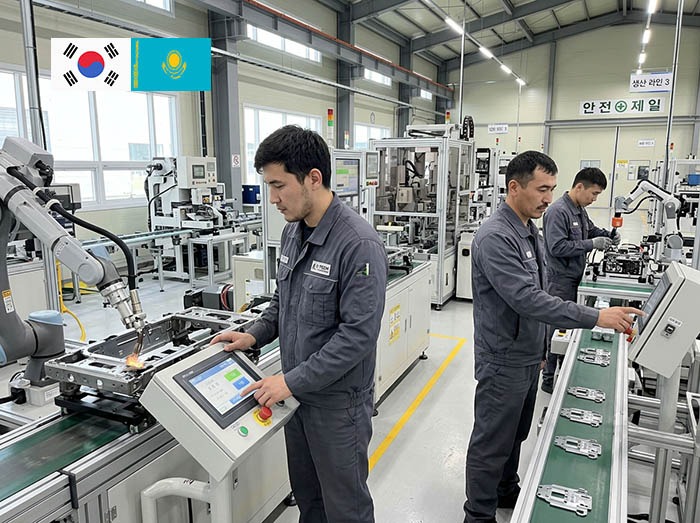
What Is the E-9 Visa?
The E-9 visa is South Korea’s Employment Permit System visa for non professional foreign workers.
It allows qualified workers to take jobs in industries where Korean employers have difficulty finding enough local employees. These industries include manufacturing, agriculture, livestock farming, fisheries, construction, and selected service sectors.
The program is carefully managed by the Korean government to match employers with overseas workers while protecting legal employment conditions.
Why Kazakhstan’s Participation Matters
Kazakhstan’s inclusion is about much more than increasing worker numbers.
It reflects growing trust between the governments of South Korea and Kazakhstan. Over the past several years, cooperation has expanded in trade, investment, education, technology, labor, and cultural exchange. Agreements on labor cooperation have helped lay the foundation for closer employment ties between the two countries.
For many people in Kazakhstan, Korea is no longer seen only as a country famous for K Pop and Korean dramas. It is increasingly viewed as a destination where people can develop professional skills, earn competitive wages, and build international careers.
Why Korean Companies Need More Foreign Workers
South Korea is experiencing one of the world’s fastest aging populations.
Many younger Koreans prefer office jobs or technology related careers rather than physically demanding work in factories or farms. As a result, thousands of small and medium sized businesses struggle to recruit enough employees.
The Employment Permit System helps solve this challenge by allowing companies to legally hire workers from partner countries.
Higher Earnings Create New Opportunities
For many Kazakhstan workers, one of the biggest attractions is the opportunity to earn higher wages than may be available in similar jobs at home.
Many workers hope to save money, support their families, invest in education, or eventually start businesses after returning home.
Although living costs in Korea are higher than in Kazakhstan, many workers still find that the overall financial opportunities are attractive when employment is stable.
Life in Korea Is About More Than Work
People often imagine that foreign workers spend all their time inside factories.
The reality is quite different.
Many workers explore Korean cities during weekends, visit historical sites, hike mountains, experience local festivals, and enjoy Korean food with coworkers and friends. Living in Korea also provides opportunities to experience a completely different culture while building international friendships.
Learning Korean Makes a Huge Difference
Language is one of the biggest challenges for newcomers.
Workers who invest time learning Korean usually adapt much faster. Simple communication improves workplace safety, strengthens relationships with coworkers, and makes everyday activities much easier.
Many long term foreign workers say learning Korean became the single most valuable investment they made after arriving.
The Korean Workplace Has Its Own Culture
Every country has different workplace expectations, and Korea is no exception.
Punctuality, teamwork, attention to quality, and respect for safety procedures are highly valued. New workers sometimes find these standards demanding during the first few months.
However, many also say these experiences help them develop stronger professional habits that benefit them throughout their careers.
Growing Cooperation Between Korea and Kazakhstan
Employment is only one part of a much broader partnership.
South Korea and Kazakhstan continue expanding cooperation in trade, manufacturing, technology, energy, education, logistics, and scientific research. Direct flights, university exchanges, and business partnerships have also strengthened connections between the two countries.
As economic cooperation continues to grow, the movement of skilled workers is expected to become even more important.
Challenges Every Worker Should Expect
Moving abroad always requires adjustment.
Workers must adapt to a new language, different food, unfamiliar weather, and a different workplace culture. Winters in Korea can be much colder than many parts of Kazakhstan, and homesickness is common during the first year.
Those who arrive with realistic expectations, patience, and a willingness to learn usually adapt much more successfully.
A Long Term Opportunity Rather Than a Short Term Trend
Kazakhstan becoming an E-9 sending country is not simply about filling vacant jobs.
It reflects Korea’s continuing effort to build sustainable international labor partnerships while giving foreign workers legal pathways to employment and valuable international experience.
For many Kazakhstan workers, Korea represents more than higher salaries. It offers professional development, modern industrial experience, cultural exchange, and the opportunity to create a better future for themselves and their families.
Final Thoughts
Kazakhstan’s participation as the 18th E-9 sending country marks another important step in the growing partnership between South Korea and Central Asia. As labor cooperation expands alongside trade, education, and investment, more Kazakhstan citizens will have opportunities to live and work legally in Korea through the Employment Permit System.
For Korean employers, this helps address labor shortages. For Kazakhstan workers, it opens the door to new careers, valuable international experience, and long term opportunities that extend well beyond the workplace.