How Do Korean Women Manage Stress?
Living in South Korea, particularly in a hyper-connected metropolis like Seoul, means navigating an environment that operates at a relentless, lightning-fast pace. The concept of ppalli-ppalli, or the cultural obsession with doing everything quickly, drives the economy, the infrastructure, and daily social expectations.
For modern Korean women, who are juggling demanding corporate careers, academic goals, intricate family dynamics, and high personal standards, life can often feel like an intense pressure cooker.
Yet, if you look at the women walking through the trendy districts of Hannam-dong or Seongsu-dong, they consistently project an aura of effortless composure, radiant health, and balanced energy. This is not an accident. Over generations, and especially within the modern wellness movement, Korean women have developed a highly sophisticated, deeply intentional ecosystem of stress management.
They do not just survive the hustle; they design specific, accessible escape valves into their weekly schedules. To understand how they protect their peace, let us explore the realistic, everyday self-care rituals and healing methods that define modern life in Korea.
Spicy Food Therapy: Chills and Thrills at the Dinner Table
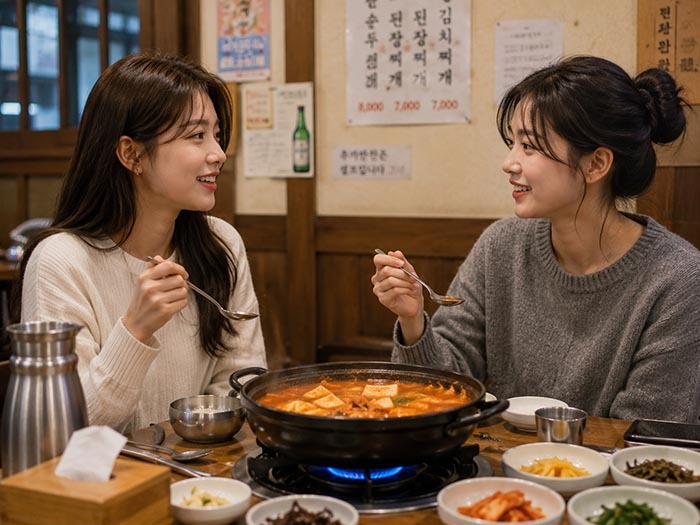
When Westerners experience a stressful day, they might reach for sweet comfort foods like ice cream or baked goods. In South Korea, the absolute go-to remedy for mental exhaustion is intense, fiery spice. This culinary phenomenon is known locally as maeun-mat, or spicy flavor therapy.
The science behind this is treated as common knowledge in local circles. Eating dishes packed with hot chili peppers, such as tteokbokki, spicy braised chicken, or fire noodles, triggers a genuine physical rush. The capsaicin causes a mild burning sensation on the tongue, which prompts the brain to release a sudden flood of endorphins and serotonin, the body’s natural stress-relieving chemicals.
Sweating over a steaming, bright red bowl of food alongside close friends is viewed as a highly therapeutic clearance ritual. It is a sensory experience that forces you entirely into the present moment, washing away corporate anxieties through sheer physical stimulation.
The Aesthetic Escape: Café Culture as Sanctuary
In many parts of the world, a coffee shop is merely a place to grab a quick caffeine fix before running your next errand. In South Korea, cafés serve a much more profound psychological purpose: they are an extension of the domestic living room and a primary destination for emotional decompression.
Because private apartments in major cities can be compact and often shared with family members, commercial spaces have evolved into beautifully curated sanctuaries.
Korean women utilize café hopping as a deliberate form of visual and mental therapy. Whether it is a minimalist space filled with lush indoor plants, a quiet tea house overlooking a historic palace wall, or a modern bakery with massive glass windows catching the afternoon sun, the environment is chosen with extreme care.
Spending two hours sipping a meticulously crafted matcha latte, reading a book, or engaging in deep, unfiltered conversations with a confidante provides a temporary buffer against the noise of the city. It is a way to slow down time in a country that is constantly rushing forward.
The Jjimjilbang and Spa Legacy: Deep Body Reset
Physical relaxation has always been tightly bound to mental wellness in Korean culture. The traditional bathhouse, or jjimjilbang, along with modern luxury aesthetic spas, forms the backbone of the physical reset routines that local women swear by.
A visit to a high-end spa or a traditional sauna is viewed as essential maintenance rather than an occasional indulgence. On weekends, it is entirely normal for women to spend hours moving between mineral-rich hot pools, cold tubs, and heated clay chambers designed to pull toxins from the body and improve blood circulation.
Many women also commit to regular professional body scrubs and facial drainage massages. These intense treatments do not just keep the skin glowing; they manually release the physical tension carried in the shoulders, neck, and jaw from long hours at an office desk. It is a ritual of stripping away the week’s armor and allowing the body to completely surrender to rest.

Coin Karaoke: Shaking Off Frustration in Three Minutes
If you need a fast, immediate release of pent-up emotional frustration, nothing beats the efficiency of the Coin Norebang, or coin karaoke booth. These are small, private, soundproof glass booths scattered across every entertainment district in the country, where you can insert a few coins to sing a small selection of songs.
Unlike large, traditional karaoke rooms that require booking an entire evening with a massive group of colleagues, coin booths are designed for quick, spontaneous, and often solitary visits. It is incredibly common for a woman to slip into a booth during a lunch break or immediately after a stressful meeting.
Inside, behind closed doors, she can belt out powerful ballads, scream along to high-energy pop tracks, or dance out her frustrations without any fear of judgment. It is loud, cathartic, incredibly cheap, and provides an instant psychological release that resets the mood within a matter of minutes.

The Han River Retreat: Finding Nature in the Concrete Jungle
When the weather permits, the Han River Park system acts as the ultimate natural lung for the residents of Seoul. For local women, a trip to the riverbank is a peaceful, accessible way to reconnect with nature and gain mental clarity without leaving the city.
The routine is beautiful in its simplicity. Women gather with friends, or venture out entirely alone, renting picnic mats, setting up small tents, and watching the sunset cast colors over the water.
There is a specific comfort in the collective tranquility of the space, thousands of people sharing the same fresh air, listening to buskers playing acoustic guitars, and watching the city lights flicker to life across the river. The simple act of looking at a wide, open horizon and moving water provides an immediate, soothing counterweight to the narrow confines of office cubicles and crowded subway cars.
The Modern Synthesis of Peace
Ultimately, the way Korean women handle stress is a masterclass in lifestyle architecture. They do not wait for a major breakdown to seek relief; instead, they integrate micro-doses of healing into their daily and weekly routines.
By balancing the fiery, cathartic energy of spicy food and karaoke with the serene, quiet spaces of aesthetic cafés, luxury spas, and riverside retreats, they create a sustainable rhythm that protects their mental well-being.
For anyone looking to understand the resilience and grace of modern Korean women, recognizing this intentional commitment to self-care is the ultimate insight. It shows that even in the most fast-paced environments, peace is something you can actively carve out, one intentional ritual at a time.