
What Nobody Tells You About Living in Korea With Kids
When foreigners first imagine raising children in South Korea, they usually picture the good parts first. Safe streets. Clean public spaces. Fast delivery. Excellent healthcare. Modern apartment complexes with playgrounds everywhere. On the surface, Korea can look like one of the most convenient countries in the world for families.
And honestly, in many ways, it is. But once you actually start living in Korea with kids, you quickly realize there are many things nobody talks about openly. Some are surprisingly positive. Others can be emotionally exhausting. Most foreign parents end up experiencing both at the same time.
Living in Korea with children is not simply about adapting to a new country. It is about entering an entirely different parenting culture.

Korea Feels Extremely Safe for Families
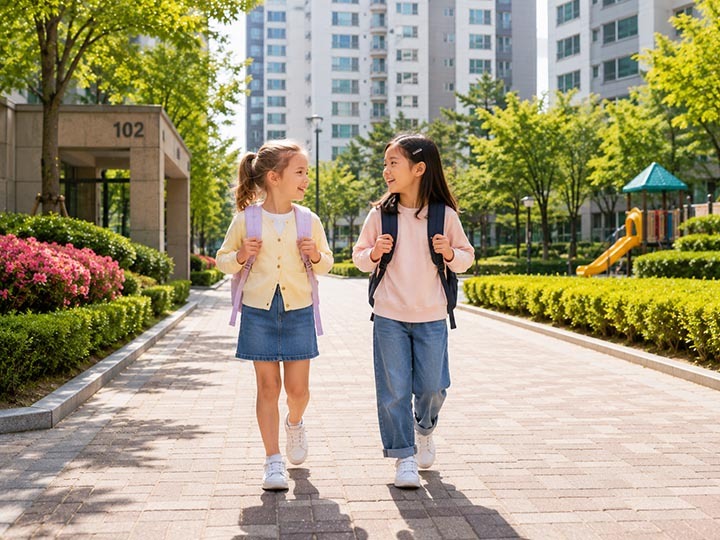
One of the first things foreign parents notice in Korea is the level of safety. Children walk to school alone. Elementary students ride buses without adults. Kids play outside apartment complexes late into the evening while parents watch casually from nearby benches or cafes.
For parents coming from countries where safety is a constant concern, this can feel almost unreal. Many foreigners living in Korea say they became far less anxious after having children here. Losing a wallet, leaving a phone somewhere, or letting children move around independently does not create the same level of fear that exists in many other countries.
For families with young kids, this changes daily life in a huge way. Parents often feel more comfortable allowing children to explore independence earlier than they normally would back home.
Apartment Complexes Become Entire Parenting Communities
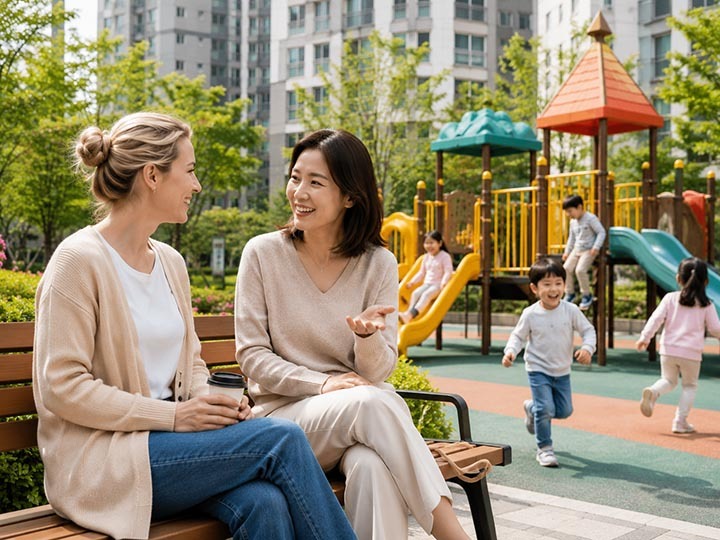
Something many outsiders do not expect is how important apartment complexes are in Korean family life. In Korea, large apartment communities often function almost like small neighborhoods within the city. Children play together every day, parents recognize each other, and grandparents regularly gather around playgrounds or walking paths.
Foreign families are often surprised by how community-centered parenting can feel. At the same time, this closeness can also create pressure. Other parents notice which academies your child attends. They notice schedules, behavior, school performance, and even how involved parents appear to be.
For some foreign parents, this creates warmth and support. For others, it can feel like constant social observation. Many eventually realize parenting in Korea is rarely treated as a completely private matter.
The Education Pressure Starts Earlier Than Expected
This is the part many foreigners underestimate the most. Before living in Korea with children, many people hear about Korea’s competitive education system but assume it mainly affects teenagers preparing for university exams.
The reality starts much earlier. Children as young as five or six may already attend multiple academies every week. English classes, math lessons, taekwondo, piano, coding programs, and reading schools quickly become part of normal childhood routines.
Foreign parents are often shocked by how busy Korean children’s schedules can become. Some kids leave home early in the morning and return after several academies late at night. Even kindergarten children sometimes carry packed schedules that resemble working adults.
What nobody tells you is how easy it becomes to slowly enter this system yourself. Many foreign parents initially resist the academy culture, only to eventually feel pressured after seeing other children advancing faster academically or socially.
Grandparents Play a Much Bigger Role Than Many Foreigners Expect
Another major difference in Korea is the role grandparents play in childcare. In many Korean families, grandparents are deeply involved in daily parenting. They help with school pickups, meals, babysitting, emotional support, and even financial assistance.
For multicultural families, this can be both incredibly helpful and occasionally stressful. Some foreign parents appreciate the strong family support system Korea offers. Others struggle with the amount of involvement older generations may have in parenting decisions.
Differences in discipline, food habits, education priorities, and cultural expectations sometimes create tension inside international families living in Korea. Still, many foreigners eventually admit that Korean grandparents often provide a level of childcare support rarely seen in Western countries today.
Foreign Children Still Attract Attention in Korea
Although Korea has become far more international than it was a decade ago, multicultural children still attract curiosity, especially outside Seoul. Foreign parents sometimes notice strangers commenting on their child’s appearance, language ability, or nationality in public spaces.
Most of the time, the attention is harmless curiosity rather than hostility. Still, it can occasionally feel uncomfortable for families not used to being noticed constantly. Children with mixed backgrounds may also experience moments where they feel different at school or within social groups.
At the same time, Korea is clearly changing. Younger generations are becoming more globally minded, and multicultural families are far more visible in Korean media, schools, and everyday life than before. Many foreign parents say acceptance has improved significantly over recent years.
Convenience in Korea Makes Parenting Easier
One thing almost every foreign parent praises about Korea is convenience. Food delivery arrives incredibly fast. Pediatric clinics are easy to access. Pharmacies are everywhere. Public transportation is stroller-friendly in major cities. Convenience stores operate all night.
When raising children, these small conveniences become life-changing. Parents can order diapers at midnight and receive them the next morning. Sick children can visit clinics quickly without massive waiting times. Everyday errands feel efficient compared to many countries.
Foreign families often say Korea reduces many of the small logistical stresses that make parenting exhausting elsewhere. This is one reason why some expat families end up staying in Korea far longer than originally planned.
Many Parents Quietly Feel Burned Out
What outsiders rarely see, however, is how emotionally demanding parenting culture in Korea can become. There is enormous pressure to help children succeed academically, socially, and professionally. Parents constantly compare schools, neighborhoods, English ability, and extracurricular activities.
Mothers especially often carry a heavy emotional workload. Managing school schedules, homework, academy transportation, parent groups, and educational planning can become mentally exhausting over time.
Even foreign parents who admire Korean education sometimes admit the overall system can feel overwhelming. This hidden exhaustion is one reason Korea continues struggling with extremely low birth rates today.
Living in Korea With Kids Changes How You See Korea Entirely
Many foreigners say becoming parents in Korea completely changed their understanding of the country. Before children, Korea may feel exciting, modern, convenient, and fast-paced.
After becoming parents, people begin noticing deeper parts of Korean society the pressure, sacrifice, family expectations, educational competition, and parenting intensity hidden beneath everyday life.
Some foreign families eventually leave Korea because the pressure becomes too much. Others stay because they value the safety, structure, convenience, and strong family-centered culture Korea provides.
In the end, what nobody tells you about living in Korea with kids is that it is both wonderful and exhausting at the same time. And once you experience it yourself, you never look at Korean society the same way again.