
Why Korean Men Are Popular Among Indian Women
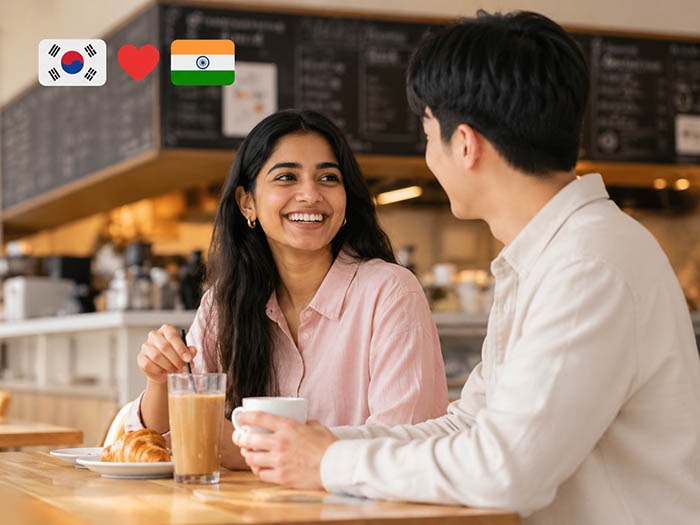
Step into any bustling cafe in modern Seoul, scroll through international lifestyle forums, or look closely at the changing demographics of multicultural couples, and you will notice a fascinating shift that is redefining cross-cultural relationships.
For the longest time, international dating narratives were dominated by regional or Western-centric pairings. Today, however, a completely fresh, deeply passionate connection is quietly emerging between South Korea and India.
Specifically, the growing fascination and romantic interest that Indian women hold for Korean men has moved far beyond a fringe internet trend. It has evolved into a genuine, highly discussed social phenomenon that bridges East Asia and South Asia in ways that economic or political treaties never could.
To casual observers, this sudden romantic interest is often dismissed as a superficial byproduct of the massive global Korean Wave, or Hallyu. Skeptics assume it is simply the result of young women falling in love with stylized television characters on screen.
However, when you speak directly to the Indian women who are navigating real-life relationships, marriages, and dating experiences with Korean men, a much more profound story emerges.
This popularity is built on a foundation of deeply rooted cultural compatibility, a shared understanding of family structures, and a modern evolution of romantic values that directly aligns the aspirations of contemporary Indian women with the societal traits of Korean men.
The Emotional Resonance and the Gentle Masculinity Concept
To truly grasp why this connection runs so deep, you have to look at the psychological shift in how modern romance is perceived. For decades, global media heavily promoted a highly specific archetype of Western masculinity, one defined by a rugged, emotionally distant, and highly independent persona.
Contemporary Indian women, who are increasingly highly educated, emotionally articulate, and career-driven, are finding that this traditional Western mold does not necessarily satisfy their emotional needs.
Korean culture offers a completely refreshing alternative through the concept of soft, attentive masculinity. In Korean dating culture, men are raised in an environment that actively encourages emotional expressiveness, meticulous personal grooming, and a deep, active dedication to their partner’s daily well-being.
This gentle approach is not perceived as a lack of strength, but rather as a highly sophisticated form of romantic respect. Indian women frequently note that Korean partners display an unmatched level of attentiveness, from remembering tiny personal details to celebrating milestones and maintaining constant, caring communication.
This high emotional intelligence creates a profound sense of security and validation that feels incredibly fulfilling to women raised in environments where male emotional vulnerability is historically suppressed.
The Sacred Shared Blueprint of Family and Elder Respect
While emotional chemistry is vital for any initial romantic spark, long-term relationship sustainability invariably depends on shared foundational values. This is where the connection between India and South Korea becomes uniquely powerful. Both societies are fundamentally anchored in a collectivist, family-first worldview that sets them completely apart from individualistic Western dating dynamics.
In India, a relationship is never just between two individuals; it is an intricate union of two families, requiring deep respect for parental guidance, community harmony, and generational legacy. South Korean society operates on an identical moral frequency, heavily shaped by centuries of deeply ingrained Confucian ethics.
Korean men grow up with an innate understanding of filial piety, meaning they naturally respect their elders, prioritize parental well-being, and understand the lifelong commitments required to maintain family honor. When an Indian woman introduces a Korean partner to her family, there is no jarring culture shock regarding social boundaries.
The Korean partner instinctively knows how to show deference to parents, understands the importance of multi-generational gatherings, and embraces the idea of long-term family integration without needing any prior explanation.
This shared social blueprint eliminates the friction that often tears international relationships apart, creating an immediate, comfortable sense of mutual understanding.
The Appeal of a High-Tech, Ambitious, and Structured Work Ethic
Beyond the realms of emotion and family tradition, modern romantic stability requires a shared outlook on career ambition, financial security, and lifestyle standards. Contemporary Indian women are breaking barriers globally, excelling in corporate sectors, academia, and creative industries.
Naturally, when seeking a life partner, they look for individuals who match their drive, discipline, and commitment to building a progressive future.
South Korea is globally renowned for its hyper-competitive, deeply disciplined work ethic, often encapsulated by the fast-paced lifestyle of corporate excellence. Korean men are socialized from early childhood to pursue high educational standards and maintain a rigorous, goal-oriented approach to their professional lives.
This intense dedication to self-improvement and career stability resonates perfectly with ambitious Indian women. They see in Korean partners a reliable, hardworking contemporary who values economic stability and shares a mutual desire for a sophisticated, high-quality urban lifestyle.
This alignment creates a powerful professional synergy, allowing couples to support each other’s career trajectories while building a modern, organized household together.
The Evolution of Modern Gender Equality in Cross-Cultural Spheres
A highly nuanced element driving this relationship dynamic is the mutual desire to break free from restrictive, archaic gender expectations within their respective home countries. Both India and South Korea are navigating complex social transitions where younger generations are actively challenging traditional patriarchal norms in favor of more egalitarian partnership models.
Young Korean men, particularly those open to international dating, are increasingly moving away from the rigid expectations of their grandfathers’ generation. They actively welcome independent, career-focused partners and embrace a highly cooperative approach to domestic life, sharing household responsibilities, cooking, and childcare equally.
For an Indian woman who may feel pressured by traditional domestic expectations at home, a relationship with a progressive Korean man offers a beautiful middle path. It allows her to preserve those core cultural elements she deeply cherishes, such as intense family loyalty and communal respect, while simultaneously enjoying a modern, liberated romance defined by genuine gender equality and mutual personal freedom.
Spicing Up Life: The Natural Fusion of Food, Aesthetics, and Joy
Finally, on a purely daily experiential level, the cultural fusion between an Indian woman and a Korean man is an incredibly vibrant, joyful experience. When you look past the macro-societal factors, everyday life together is a beautiful celebration of complimentary passions.
From a shared culinary philosophy that worships bold spices, complex marinades, and communal table-sharing, to a mutual appreciation for highly aesthetic living environments, trendy cafes, and cinematic storytelling, their daily routines blend seamlessly.
The initial romantic curiosity might begin with a shared television drama or a favorite musical track, but it rapidly matures into a deep, cross-continental brotherhood and romantic devotion.
This relationship trend is a powerful testament to the fact that true human connection does not require identical geographic or linguistic histories.
By combining the passionate, expressive warmth of India with the gentle, sophisticated devotion of South Korea, these couples are writing a brilliant new chapter in global romance, proving that when two cultures align on the values that truly matter, the distance between them completely vanishes.