
Korean Apartment Living Explained
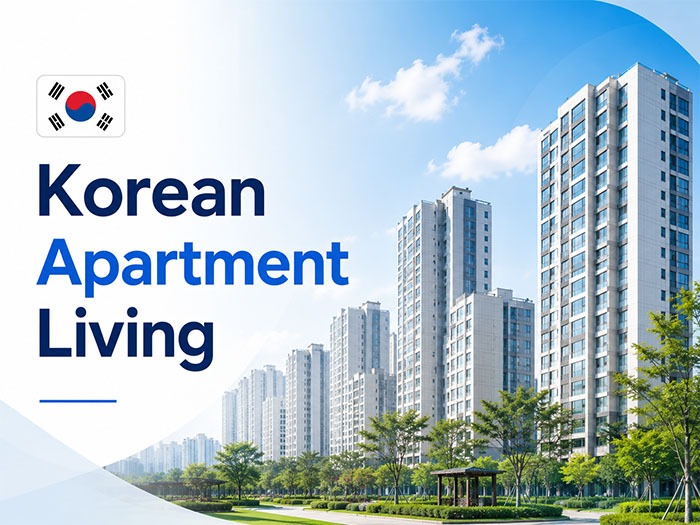
To the untrained eye flying into Incheon International Airport and driving toward Seoul, the landscape of South Korean residential areas can look starkly dystopian. Towering monoliths of concrete, identical blocks stamped with giant numbers, stretch as far as the eye can see, dominating the skyline of every major city.
For many Westerners accustomed to suburban sprawling lawns, historical brick buildings, or individualized townhouses, the first impression of a Korean apartment complex, known locally as an Danji, is that it looks incredibly clinical and uniform.
But judging Korean apartments by their exterior is one of the biggest mistakes a newcomer can make. Step inside one of these concrete structures, and you instantly realize that you have walked into a highly sophisticated, hyper engineered blueprint for futuristic living.
In South Korea, the apartment is not just a housing unit, it is the ultimate status symbol, a self contained ecosystem, and the gold standard of modern convenience. To live comfortably in a Korean apartment means looking past the clinical facade and understanding the intricate tech, unspoken social rules, and cultural engineering that dictate daily life inside these vertical villages.
The Self Contained Ecosystem of the Danji
When you move into a Korean apartment complex, you are not just renting or buying a set of rooms. You are gaining access to a massive, gated community that functions almost like an independent small town. Modern complexes are designed so that residents theoretically never have to leave the property boundaries to fulfill their basic daily needs.
Beneath the towering buildings lies a sprawling underground network that completely isolates car traffic from the surface. The ground level is entirely pedestrianized, filled with beautifully manicured parks, artificial streams, walking trails, and elaborate children playgrounds.
Nestled within the complex, you will almost always find a centralized commercial center housing premium grocery stores, dry cleaners, medical clinics, bakeries, and banks. Furthermore, modern complexes offer community centers that rival luxury hotels, featuring indoor golf ranges, fully equipped fitness centers, public study rooms, and even high end cafes reserved exclusively for residents.
It is a level of collective convenience that redefines urban planning, transforming what looks like a dense concrete jungle into a highly livable sanctuary.
The Smart Home Revolution and the Digital Gatekeepers
For Western expats, the sheer amount of integrated technology inside a standard Korean apartment is an immediate culture shock. The days of carrying physical metal keys are practically ancient history here. Every home is accessed via heavy reinforced doors equipped with electronic smart locks that open with biometric fingerprints, numeric passcodes, or smartphone tokens.
Once inside, the nerve center of the home is the Wall Pad, a centralized touchscreen device located in the living room that controls virtually everything. Through this interface, you can monitor your real time electricity and water consumption, call elevators to your floor before you even step out of your front door, check available parking spaces in the subterranean garage, and view CCTV footage of the communal areas.
This digital synchronization extends to how the building operates. When a delivery vehicle enters the complex or a package is placed in your designated smart locker downstairs, your wall pad chimes to notify you. It is a seamless, friction free lifestyle where the physical boundaries of your home are entirely integrated with a local digital network.
Dismantling the Wet Bathroom Concept
One of the most frequent sources of confusion for foreigners moving into an older or mid tier Korean apartment is the layout of the bathroom. Unlike Western bathrooms that strictly isolate the shower area with glass doors or heavy curtains to keep the rest of the floor dry, traditional Korean design embraces the wet bathroom concept.
In a standard wet bathroom, the entire space is intended to get soaked. The shower head is often attached directly to the sink faucet, and there is a central drain embedded in the tiled floor. The entire room has a slight slope toward this drain, and the entry door features a significant raised lip to prevent water from spilling out into the hallway or bedroom.
While this setup initially horrifies Westerners who dread stepping onto a soggy floor in their socks, it is actually incredibly practical. It allows you to clean the entire bathroom in minutes by simply spraying down every surface with a high pressure hose.
Just remember the golden rule of Korean apartments: always look down before walking into the bathroom, and keep a pair of dedicated plastic bathroom slippers sitting inside the doorway at all times.
The Magic of Ondol and Floor Centered Living
If you visit a Korean apartment during the brutal sub zero winter months, you will notice a glaring absence of traditional radiators or noisy forced air vents blowing dry heat from the ceiling. Instead, the home is heated by Ondol, a centuries old radiant underfloor heating system that has been masterfully adapted for modern high rises.
Instead of heating the air, heated water pipes run beneath the entire floorboards of the apartment, warming the room from the ground up. This system does not just change the temperature of the house; it fundamentally dictates the entire domestic lifestyle.
Because the floor is the warmest and cleanest surface in the room, Korean furniture culture is traditionally low to the ground. Even in contemporary apartments filled with modern sofas and elevated beds, you will find locals naturally gravitating toward the floor to watch television, eat meals, or study.
It creates a uniquely cozy atmosphere where the home feels like a thermal sanctuary, though newcomers must learn to balance the thermostat carefully, as letting the floor heat run continuously can result in astronomical utility bills.
The Collective Discipline of Trash Separation
Living in a Korean apartment requires adopting a level of community civic duty that completely catches most foreigners off guard. Waste management in South Korea is not a passive act of throwing everything into a single bin; it is a highly regulated, intensely scrutinized system known as Jongnyangje.
Every week, residents must sort their waste into hyper specific categories: plastics, vinyls, styrofoam, paper, glass, metals, general waste, and food waste. General waste and food waste must be discarded in official, government issued bio degradable bags purchased at local convenience stores.
For food waste, many modern complexes utilize electronic RFID disposal bins where you scan your resident card, the machine weighs your organic waste to the exact gram, and charges the fee directly to your monthly apartment maintenance bill.
The trash disposal areas are heavily monitored by security guards and cameras, and failing to separate your recyclables properly will quickly result in public notices or direct fines. It is a system that demands absolute discipline, but it is the reason why a nation of fifty million people manages to be one of the global leaders in recycling efficiency.